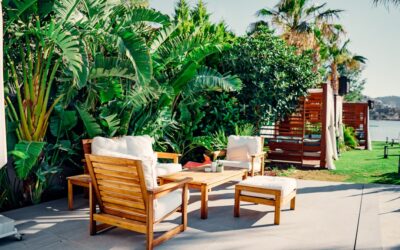
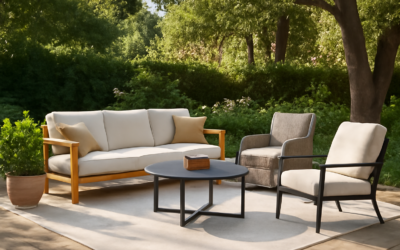
Modern outdoor design is defined by what it leaves out — no scrollwork, no barrel-shaped wicker, no glass-and-lattice dining sets. Modern patio furniture is built from clean rectilinear frames, low profiles, and honest materials: powder-coated aluminum, teak slats, rope weave, and performance fabric in restrained colors. Done well, it makes a 12×14 patio look like an architect drew it. Done carelessly, it’s cold, glare-hot metal with cushions that slide off. This guide covers the design language first, then where to actually buy it at three budgets.
Part of our Decks & Outdoor guide — explore the full guide →
- The Silhouette: Low, Long, and Rectilinear
- The Material Palette
- High Budget: The Design-Brand Tier ($3,000+)
- Mid Budget: The Sweet Spot ($1,000–$3,000)
- Entry Budget: Modern on a Real-World Number ($300–$1,000)
- Styling Moves That Sell the Look
- Cushions and Fabric in the Modern Palette
- Scale and Layout Math for Low Furniture
- Practical Buying Checks
- Where to Splurge, Where to Save
- The Takeaway
The Silhouette: Low, Long, and Rectilinear
Modern outdoor seating sits lower than traditional — seat heights of 14 to 16 inches versus the standard 17 to 19 — with wide arms, deep 25-to-30-inch seats, and strong horizontal lines. Sofas read as rectangles floating on slim legs or platform bases. Dining tables drop the pedestal for four square legs or a sled base, usually in a slatted top that drains rain instead of pooling it. If you sketch the furniture and everything reduces to boxes and lines, you’re in modern territory. One practical caveat: those low, deep seats are lounge-perfect and dinner-awkward, so keep dining chairs at standard height even in a fully modern scheme.
The Material Palette
Four materials carry the style, often mixed within one piece:
- Powder-coated aluminum in matte black, charcoal, or white — the skeletal frame material of the look.
- Teak (or acacia at lower budgets) as slatted seats, tabletops, and arm caps that warm up all that metal; left unoiled it grays to driftwood, which suits the style.
- Rope and textile weave — flat polyester rope wrapped over frames, the current signature detail borrowed from high-end Danish brands.
- Concrete and ceramic for coffee tables, planters, and fire tables that anchor the composition.
Color stays disciplined: black or bronze frames, natural wood, and cushions in oatmeal, slate, olive, or rust. One saturated accent — a terracotta lounge chair, a green ceramic stool — is plenty.
High Budget: The Design-Brand Tier ($3,000+)
At the top, you’re paying for marine-grade builds and proportions that photograph like resort furniture. Outer’s wicker-and-teak sofas ($3,000–$6,000) ship with a clever built-in cover system and 316 stainless hardware. Design Within Reach carries the actual Danish pedigree (Skagerak, Cane-line) at $2,000-plus per seating piece. RH Outdoor sells enormous teak-and-rope sectionals north of $8,000. These pieces genuinely last 15+ years outdoors — the math works only if you’ll still own the patio then.
Mid Budget: The Sweet Spot ($1,000–$3,000)
This is where most people should shop, because the modern look survives the price drop better than traditional styles do. Article’s Sommer and related teak-and-aluminum collections deliver the low-slung silhouette at $1,200–$2,500 for a sofa-and-chairs grouping. Castlery’s rope-weave outdoor line runs similar money with unusually good cushion density. West Elm’s Portside and Telluride collections bring the FSC-wood modern look at $800–$2,000 per piece on sale — and West Elm runs 20-to-30-percent-off outdoor events several times a year. CB2 is the pick for sculptural accent pieces: concrete-top tables, cane-look loungers, black-frame dining chairs in the $300–$900 band.
Entry Budget: Modern on a Real-World Number ($300–$1,000)
Big retailers now copy the design-brand silhouettes closely enough to fool a dinner guest. AllModern (Wayfair’s modern label) sells rope-arm lounge chairs and slat-top dining sets in the $400–$1,000 range. IKEA’s outdoor line delivers legitimately modern eucalyptus-and-steel pieces — a full dining setup under $600 — if you commit to annual oiling. The compromises at this tier are thinner aluminum, acacia instead of teak, and polyester cushions that fade by year three: acceptable trades on a starter patio, and the clean-lined style hides budget builds better than ornate styles ever could.
Styling Moves That Sell the Look
Modern patios are compositions, not furniture piles. Keep pieces on one or two lines — align the sofa with the pavers, square the coffee table to the sofa — and leave negative space; the style dies when the floor plan gets crowded. Layer texture rather than pattern: a chunky-knit outdoor pillow, a flatweave rug in a tone-on-tone geometric, a concrete planter with one architectural plant (snake plant, agave, or an olive tree in warm zones). Lighting finishes it — a black-cord festoon strung in straight runs, not swags, or a cordless cylinder lamp on the side table. Skip matching sets entirely; buying sofa, chairs, and tables from two or three sources is what separates a designed patio from a showroom clone.
Cushions and Fabric in the Modern Palette
Modern outdoor cushions run slimmer than traditional — 4-to-5-inch box cushions with clean knife edges rather than overstuffed rolls with contrast piping — and that restraint only works if the fill is dense enough to hold the line. Look for high-density or reticulated quick-dry foam; soft polyfill in a slim profile flattens into sadness by August. Fabric-wise the style leans on texture over pattern: heathered solution-dyed acrylics in oatmeal, slate, and olive, with the occasional broad awning stripe as the one permitted pattern. Solution-dyed acrylic or olefin is worth insisting on here for a second reason beyond fade resistance — the muted natural tones the look depends on show fading faster than busy patterns do, so cheap fabric betrays a modern scheme earlier than a traditional one.
Scale and Layout Math for Low Furniture
Low-slung furniture eats more floor than its height suggests. Modern sofas run 32 to 36 inches deep versus 30 for traditional, chairs sprawl wider, and the whole composition needs breathing room to read as intentional — so a grouping that fits a 12×12 patio on paper wants 14×14 in practice. Keep 16 to 18 inches between sofa and coffee table, 30-inch walkways, and float the furniture off the house wall by a foot if space allows; modern arrangements photograph and live better as islands than as perimeter linings. Rug math scales up too: an 8×10 flatweave under the full seating group, front legs on at minimum, where a smaller rug makes low furniture look beached. If the numbers don’t fit, drop a piece rather than shrinking everything — one honest sofa and two chairs beats a compressed sectional every time in this style.
Practical Buying Checks
Style aside, apply the same durability tests as any outdoor purchase: aluminum over steel for frames, solution-dyed acrylic or olefin for any cushion you expect to keep past two summers, and slatted or mesh surfaces anywhere water can pool. Dark matte frames get hot in full sun — plan shade or arm caps in wood. And weigh the pieces: ultra-light modern chairs are wind toys above 25 mph, so exposed rooftops and lakefronts call for the heavier rope-wrapped or wood-based designs. For the broader material decision behind those frames, our metal patio furniture comparison covers aluminum versus steel in depth.
Where to Splurge, Where to Save
Modern schemes concentrate their money differently than traditional ones, because the style’s simplicity leaves nowhere for cheap construction to hide. Splurge on the sofa or sectional — it’s the composition’s anchor, its frame and cushion quality are visible from across the yard, and it takes the most daily load. Splurge on cushion fabric anywhere you splurge on nothing else. Save aggressively on tables and accents: a $60 concrete-look side table reads nearly identical to a $400 cast-concrete one at viewing distance, black-frame budget dining chairs pass easily among better pieces, and planters are the single best place to fake the high end (big matte pots from home centers, $30–$80, do what $300 designer versions do). Lounge chairs sit in the middle — buy the mid-tier version of the design-brand chair you actually want rather than the budget knockoff, since seat comfort is where knockoffs cut. The resulting 60/40 split — most of the budget in seating, the rest spread thin — is how mid-budget modern patios end up photographing like premium ones.
The Takeaway
Modern patio furniture is a discipline: low rectilinear shapes, an aluminum-teak-rope palette, quiet color, and room to breathe. Spend at the mid tier if you can — Article, Castlery, West Elm on sale — anchor the scheme with one concrete or ceramic piece, and resist the matched set. The result reads far more expensive than it is, which has always been the point of the style.