
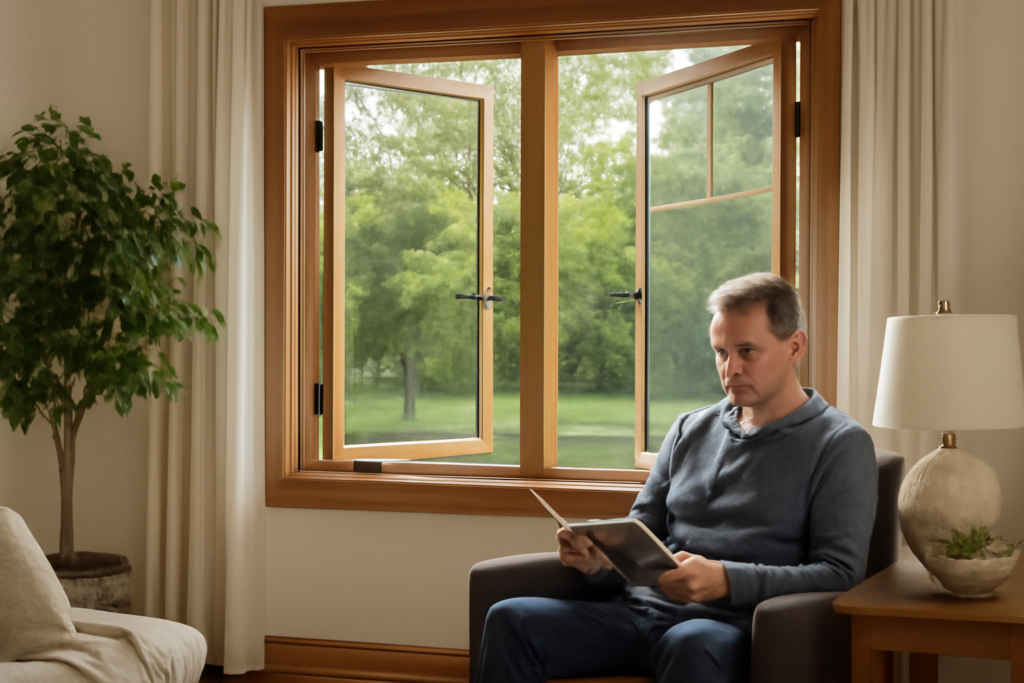
Builders installed millions of these windows through the 1990s and 2000s, which means two very different groups are researching them today: homeowners deciding whether to buy Pella’s entry wood line, and owners of 20-year-old units trying to figure out why the sash is fogging or the crank grinds. Pella ProLine casement windows are Pella’s builder-grade wood casements — real wood interiors, aluminum-clad exteriors, sold at a price meant to compete with premium vinyl. That positioning explains both their appeal and their well-documented weak spots. Here is what the line delivers, what it costs, where it fails, and what current owners can do about aging units.
Part of our Windows & Doors guide — explore the full guide →
What the ProLine Series Is
ProLine (marketed in recent years as the Pella 450 Series before Pella reshuffled its lineup) sits at the bottom of Pella’s wood window range, below the Lifestyle/Architect tiers. The casement version is a crank-out window: the sash is hinged at the side and swings outward via a fold-away crank handle, sealing against a compression gasket when latched. Construction is a solid pine frame and sash, clad on the exterior with roll-formed aluminum in a modest color palette (white, tan, brown being the classics), with a factory-primed or prefinished pine interior ready for stain or paint.
Standard glazing is a dual-pane insulated unit with Low-E coating and argon fill. Typical certified performance lands around a U-factor of 0.27 to 0.32 depending on options — solidly ENERGY STAR territory for most of the country in its era, though short of today’s triple-pane offerings. Sizes run from about 17 to 36 inches wide and up to roughly 72 inches tall for a single casement, with factory-mulled pairs and picture-window combinations common.
What They Cost
As a current purchase, budget roughly:
- Window only: $250 to $500 for common casement sizes, rising with size and options
- Installed (replacement): $400 to $800 per window in most markets; full-frame installs toward the top of that range
- Compared with: premium vinyl casements at $300 to $600 installed, and Pella’s upper wood lines at $700 to $1,400 installed
That is the entire pitch: a real wood interior for barely more than good vinyl. For a stained-woodwork interior on a budget — a Craftsman bungalow, a knotty-pine study — that trade can absolutely make sense. If the interiors will be painted white anyway, the wood advantage evaporates and fiberglass or vinyl gives you less maintenance for the same money.
Strengths Owners Consistently Report
Casements as a style are the tightest-sealing operable windows made — the sash compresses against the gasket like a refrigerator door, so air leakage runs a fraction of a double-hung’s. ProLine units inherit that advantage, and their crank hardware makes them practical over kitchen sinks and in hard-to-reach spots. The aluminum cladding has held its finish well; 25-year-old brown-clad units generally still look presentable. Wood interiors take stain beautifully and can be refinished, something no vinyl window will ever offer. And because Pella sells through Lowe’s as well as its own dealer network, parts, service, and replacement sashes remain easier to source than for defunct builder brands — a real consideration for a 20-year ownership horizon.
The Known Weak Spots
Three issues dominate ProLine’s track record. First, sash and glass-seal failure: dual-pane units from the late 1990s and 2000s develop fog between panes as perimeter seals age, and on wood sashes the bottom rail can wick moisture where the cladding joints and glazing bead meet, leading to soft wood. Pella faced a class-action settlement over moisture intrusion in ProLine-era clad windows, so inspect the sash bottoms of any units from that period. Second, crank hardware wear: the operator gears strip or grind after years of forcing a sticky sash — cranks feel notchy, or spin without moving the window. Third, weatherstrip compression: gaskets flatten and leak air after 15-plus years, noticeable as winter drafts at the latch side.
None of this is unusual for builder-grade windows of that vintage; the point is to walk into ownership or repair with open eyes.
Fixing Aging ProLine Casements
The good news is that almost every common failure is repairable without replacing the window. Fogged glass calls for a replacement sash or IGU: Pella can supply sashes for many older ProLine sizes ($150 to $350), and any local glass shop can cut a matching insulated glass unit if the sash wood is sound. Worn operators are a 20-minute swap — the Truth-hardware-style dyad and split-arm operators used on these windows run $25 to $60, and matching the arm style and hand (left or right) is the only tricky part; take the old unit to the counter or match the casting numbers. Flattened weatherstrip pulls out of its kerf and replaces for a few dollars per window. Soft wood at the sash bottom, caught early, consolidates with two-part epoxy; rot that has spread into the frame is the signal to replace the unit rather than pour money in.
ProLine vs. the Alternatives Today
Cross-shopping the current market: Andersen’s 400 Series casement is the closest rival, generally a step up in hardware feel and a step up in price. Premium vinyl casements from regional makers beat ProLine on maintenance and price but cannot give you stainable wood. Fiberglass lines (Pella’s own Impervia, Marvin Essential) match the strength and thermal numbers with zero rot risk, typically at $50 to $150 more per opening. My contractor’s-eye summary: choose ProLine/450 when a wood interior at entry price is the goal and you will keep up with exterior caulk joints and interior finish; choose fiberglass or vinyl when the priority is set-and-forget durability.
Identifying What You Have
Before ordering parts or sashes, confirm the window is actually a ProLine and find its vintage. Open the sash and look along the frame or sash edges for a small metal or foil label — Pella prints the brand, plant, and a date code there, and the glass spacer between panes often carries an etched date as well. No label? The combination of pine interior, roll-formed aluminum cladding with slightly rounded profiles, and Pella-branded crank hardware narrows it to the ProLine family on most builder homes from 1992 to 2015. Photograph the hardware castings, measure the sash width, height, and thickness to the sixteenth of an inch, and note the hinge side viewed from outside. With those details, Pella’s parts desk or the Lowe’s millwork counter can usually match components in one visit — and for windows old enough that exact sashes are discontinued, a local glass shop can rebuild the insulated glass unit into your existing sash for $100 to $200, which keeps original cladding and trim lines intact on a house where matching matters.
Maintenance That Doubles Their Lifespan
ProLine casements reward a short annual routine that most owners skip. Each spring, open every sash fully and vacuum the sill track, then hit the operator gears and hinge tracks with a dry silicone or lithium spray — never oil, which gums with dust and accelerates gear wear. Check the exterior sealant joint where the aluminum cladding meets the glass along the bottom rail; a hairline gap there is exactly where the moisture problems of this era’s windows begin, and 10 minutes with a quality sealant stops it. Inside, keep stained or painted finish intact on the sash bottoms and interior stops, because bare pine near the glass drinks winter condensation. Two habits matter in daily use as well: crank the sash fully closed before throwing the lock levers (locking against a half-seated sash bends the keeper and flattens the gasket unevenly), and in high wind, latch open casements rather than leaving them floating — the sash acts as a sail, and a gust twisting an extended operator arm is the number-one cause of the stripped cranks these windows are known for.
Verdict
Pella ProLine casement windows are exactly what they were built to be — an affordable path to real-wood casements with respectable energy numbers and the industry’s best-sealing operating style. They reward owners who maintain finishes and address small hardware issues promptly, and they punish neglect at the sash bottoms. As a purchase today, they earn a solid recommendation for stain-grade interiors on a budget. As a 20-year-old installation, they are usually worth repairing rather than replacing if the frames are sound: a $40 operator and a $200 sash beat a $700 new window every time the underlying wood checks out.
Frequently Asked Questions
How long do Pella ProLine casement windows last?
Many ProLine casements last 20 to 30 years when the exterior sealant joints and interior wood finish are kept up. The usual end of life comes from rot at the sash bottom or a frame that has gone soft, not from the aluminum cladding. Fogged glass, worn cranks, and flattened weatherstrip are repairable, so they rarely justify replacing an otherwise sound window.
Can a ProLine casement window be used as an egress window?
Yes, if the size meets code, and casements are a common egress choice because the sash swings fully out of the way. The IRC calls for a net clear opening of at least 5.7 square feet (5.0 at grade-floor level), at least 24 inches high and 20 inches wide, with the sill no more than 44 inches above the floor. Check the clear opening, not the frame size, and confirm local rules.
Where do the screens go on ProLine casement windows?
The screens mount on the inside of the window, because the sash cranks outward and would hit an exterior screen. They are removable frames that sit in the interior side of the frame, so they can come out for cleaning or for washing the glass. Replacement screens are ordered by the exact frame opening size, so measure carefully before buying.


