Most shade gardens peak in May and then coast on foliage for the rest of the season. That is a missed opportunity, because there are real perennials for shade that bloom all summer if you know which species actually keep producing flowers versus the ones that stop after June. The list is shorter than the one for sunny beds, but the plants that qualify are tough, deer-resistant, and almost unkillable once established.
What “All Summer” Actually Means
Plant tags promise June through September more often than they deliver. In reality, most shade bloomers peak for 3 to 4 weeks and then push sporadic flowers for another month. True all-summer performers rebloom heavily with deadheading, or they produce new flower stalks continuously from June through September. Be skeptical of marketing copy and cross-reference with extension service trials.
Your climate matters. A plant rated all-summer in Zone 5 Minnesota might quit in July in Zone 7 Georgia because of heat and humidity, and vice versa. The list below focuses on species that perform reliably across Zones 4 through 8, which covers most of the continental United States.
Top Tier: The Workhorses
These five plants carry the summer show in my own Zone 6 Ohio garden and consistently appear on extension service recommendation lists across the country.
- Astilbe: plumes in pink, white, red, and lavender from June through August. Loves moisture.
- Heuchera (Coral Bells): foliage star with airy flower panicles June to August.
- Japanese Anemone: late-season bloomer from August through October in part shade.
- Hardy Geranium (Rozanne variety): blue-purple flowers May through frost.
- Goatsbeard (Aruncus): astilbe-like plumes on 4-foot stalks in June and July.
Rozanne in particular earned the Royal Horticultural Society Plant of the Centenary title for a reason. It blooms 20 weeks a year in good conditions, tolerates dry shade, and scrambles through neighbors without strangling them.
Mid-Tier Options Worth Growing
These are solid performers that bloom for 6 to 10 weeks rather than a full season, but they fill gaps between the tier-one stars. Stagger them so something is always in flower.
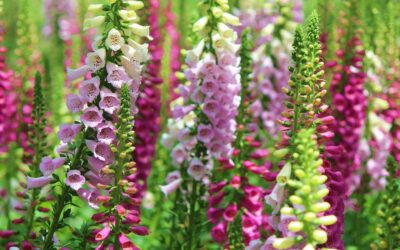
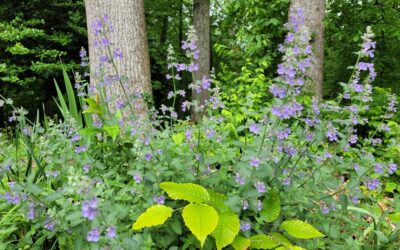
Foxglove (Digitalis) puts up 4-foot spires in June and July and is worth growing even as a biennial that self-seeds. Toad Lily (Tricyrtis) flowers in late August and September with strange orchid-like blooms on arching stems. Turtlehead (Chelone) produces pink or white snapdragon-shaped flowers from August to frost and is native to eastern North America. Bugbane (Actaea, formerly Cimicifuga) throws 5-foot bottlebrush spires in September when little else blooms in the shade.
Foliage Plants That Pull Their Weight
Not every plant in a shade border has to flower. Strong foliage fills the spaces between bloom cycles and keeps the bed interesting even when nothing is in flower. Hostas are the obvious choice with hundreds of varieties in blue, gold, variegated, and miniature forms, but Japanese Painted Fern, Brunnera Jack Frost, and Lungwort (Pulmonaria) all earn their spots.
Pair these with the summer bloomers at a 60-to-40 ratio. Roughly 60 percent of the bed as reliable foliage plants, 40 percent as bloomers, gives you a garden that looks good 10 months of the year rather than two glorious weeks in May followed by a letdown.
Care Requirements by Zone
Shade plants in the Southeast need different care than the same plants in the Upper Midwest, and the failure stories usually trace to misunderstanding local conditions. Zones 7 and warmer demand afternoon shade, not just morning shade, for astilbe and heuchera to survive a Virginia July. Water needs rise from 1 inch per week in cooler zones to 1.5 to 2 inches in hot summers.
North of Zone 5, focus on spring drainage. Plants rot faster in wet winter clay than they die from cold. Amend planting holes with 2 to 3 inches of compost and raise beds 4 to 6 inches above grade if clay is heavy. Mulch with 2 inches of shredded hardwood after the ground freezes, not before, so you do not insulate voles into your root zones.
Dry Shade: The Hardest Condition
Shade plus dry soil under mature maples or on the north side of a house with wide eaves is where most shade gardens die. Root competition from trees and lack of rain penetration create conditions that need specific plants. Epimedium (Barrenwort), Lamium (Dead Nettle), Solomon’s Seal, and Liriope all perform in dry shade where astilbe and ferns would crisp.
Budget for 2 to 3 times more supplemental water the first summer after planting. Once established, these plants can coast on rainfall. A soaker hose on a 30-minute timer twice a week saves more plants than hand watering because it delivers moisture at the root zone rather than evaporating off the leaves.
Combinations That Extend the Season
The smartest shade gardens plan for wave upon wave of bloom rather than trying to force everything to flower at once. A reliable combination for Zones 5 to 7 runs Brunnera in April, Solomon’s Seal and Heuchera in May, Astilbe and Goatsbeard in June, Hardy Geranium Rozanne from May through October, Turtlehead and Toad Lily in August and September, and Bugbane and Japanese Anemone closing the season in October.
Layer heights too. Place 4-foot bugbane and goatsbeard at the back, 2 to 3-foot astilbe and anemone in the middle, and 12 to 18-inch heuchera, hardy geranium, and pulmonaria at the front. Set plants on 18 to 24-inch centers for fastest fill, accepting that you will divide them in year three or four as they crowd.