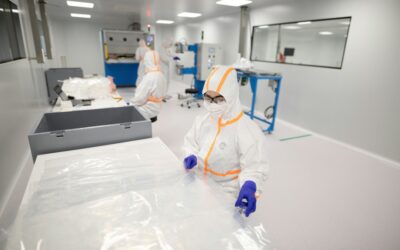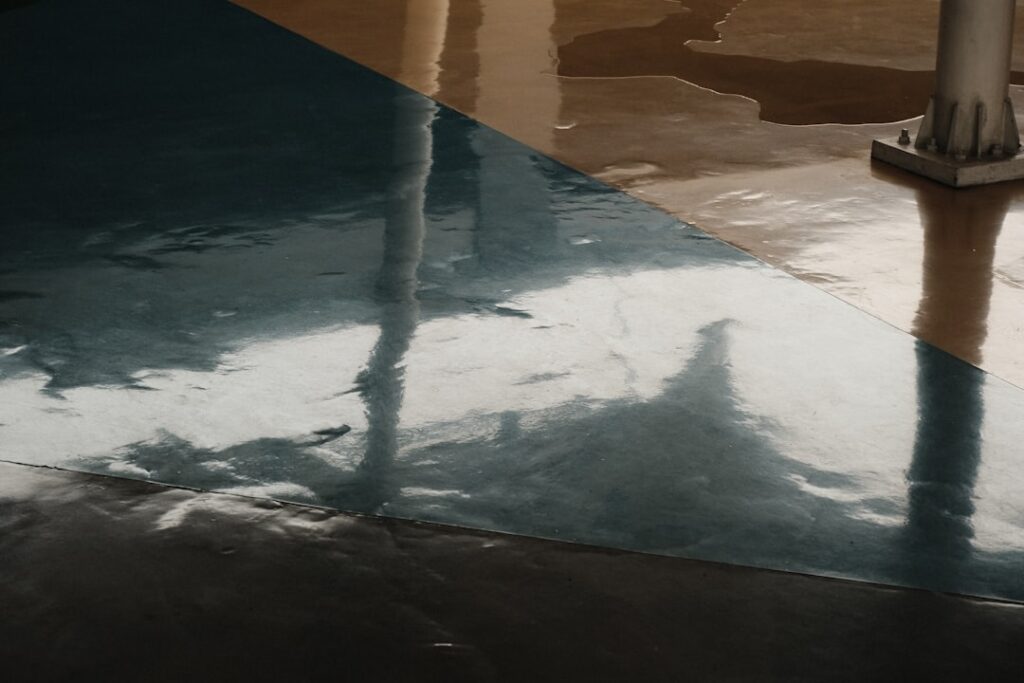
FDA inspectors fail more pharmaceutical facilities for flooring defects than for any other physical plant issue. A single hairline crack, an unsealed cove, or a worn surface that sheds particulate can trigger a Form 483 observation and millions in compliance costs. Pharmaceutical epoxy flooring is engineered to prevent all of that. The right system is seamless, chemically resistant to active pharmaceutical ingredients and cleaning solvents, electrically dissipative where required, and certified for cleanroom classification from ISO 8 down to ISO 5.
Part of our Epoxy, Concrete & Garage Floors guide — explore the full guide →
- cGMP Compliance and What Inspectors Look For
- USP 797 and 800 Compounding Pharmacy Requirements
- Cost Per Square Foot
- ESD Flooring for Electronics-Heavy Areas
- Install Sequence and Cure Times
- Validation Documentation You Will Need
- Pros and Cons
- Cleaning Protocols That Preserve the Floor
- Cleanroom Certification After Install
- How to Spec and Bid the Job
cGMP Compliance and What Inspectors Look For
FDA cGMP regulations (21 CFR 211) require pharmaceutical floors to be “smooth, hard surfaces that are easily cleanable.” That sounds simple until an inspector finds a 1/16 inch hairline crack at a column base, marks a 483, and demands a written corrective action plan within 15 business days. The floor must be seamless or fully welded, with cove bases integrally formed up the wall 4 to 6 inches, no horizontal seams, and a surface that does not shed particulate under abrasion testing.
Resin systems that pass cGMP include 100 percent solids epoxy, novolac epoxy for solvent-heavy areas, and urethane mortar for high-impact zones like packaging and receiving. Acrylic and water-based epoxy systems generally fail the abrasion and chemical resistance tests.
USP 797 and 800 Compounding Pharmacy Requirements
Compounding pharmacies under USP 797 (sterile compounding) and USP 800 (hazardous drug handling) face additional rules. ISO 5 primary engineering controls require ISO 7 ante-rooms and ISO 8 buffer rooms. Flooring in these spaces must be seamless coved 6 inches up the wall, with no horizontal joints inside controlled areas. The product must withstand sporicidal cleaning agents like sodium hypochlorite at 6,000 ppm and peracetic acid.
Stonhard StonRes ER, Florock FloroQuartz, BASF MasterTop 1325, and Sika Sikafloor 264 are all spec’d routinely for these applications. Confirm the manufacturer publishes USP 797 and 800 chemical resistance test data; not all products that claim compliance actually test against the required chemical list.
Cost Per Square Foot
Pharmaceutical epoxy flooring runs $12 to $30 per sq ft installed depending on system thickness, surface aggregate, ESD properties, and cleanroom certification level. A standard 100 percent solids epoxy at 30 to 60 mils dry film thickness costs $12 to $18 per sq ft. Quartz-broadcast troweled systems at 1/8 to 1/4 inch land at $18 to $25 per sq ft. ESD (electrostatic dissipative) systems with copper grounding straps add $4 to $7 per sq ft.
For a 5,000 sq ft compounding pharmacy, expect $60,000 to $150,000 total installed cost, plus shutdown costs during the 7 to 14 day install and cure cycle.
ESD Flooring for Electronics-Heavy Areas
Some pharmaceutical operations require electrostatic dissipative flooring, particularly in tablet coating, packaging, and dispensing areas where static can damage electronic equipment or ignite solvents. ESD epoxy systems integrate conductive carbon fibers and copper grounding grids tied to building ground at 1 grounding point per 1,000 sq ft.
Surface resistance must test between 1 x 10^6 and 1 x 10^9 ohms per ANSI/ESD S20.20. Annual recertification testing is standard. Stonhard StonchemSD and Florock FlorClad SD are common choices.
Install Sequence and Cure Times
- Shot blast existing concrete to CSP 4-5 surface profile per ICRI
- Test moisture per ASTM F2170 in-situ probe; relative humidity must be below 75 percent or apply a moisture mitigation membrane
- Patch all cracks, joints, and surface defects with appropriate epoxy patching compound
- Apply primer coat at 6 to 10 mils, allow 12 to 24 hour cure
- Apply body coat or troweled mortar at design thickness
- Broadcast quartz aggregate if slip resistance or thickness build is required
- Apply two topcoats of chemical-resistant urethane or polyaspartic sealer
- Allow 24 to 48 hours for foot traffic, 7 days for full chemical cure
Validation Documentation You Will Need
FDA-regulated facilities require IQ/OQ/PQ validation documentation for major facility components. The flooring contractor must provide installation records, material batch numbers, surface preparation reports, moisture test results, thickness gauge readings, and post-install inspection certificates. Save these documents for the life of the floor; inspectors during periodic audits will ask for them.
Most reputable pharmaceutical flooring contractors include this documentation package as a standard deliverable. Confirm in writing before signing the contract.
Pros and Cons
- Pros: seamless and cleanable, chemical-resistant to APIs and solvents, USDA/FDA approved, ESD options available, 15-25 year lifespan with proper maintenance
- Cons: $12-$30 per sq ft installed, 7-14 day install window requires facility shutdown, requires manufacturer-certified contractors, annual maintenance and recertification testing
Cleaning Protocols That Preserve the Floor
Pharmaceutical floors get cleaned aggressively and frequently. Daily cleaning with manufacturer-approved neutral pH cleaner removes routine soil and protects the urethane topcoat. Weekly sanitization with sodium hypochlorite at 200 to 1,000 ppm, peracetic acid at 800 ppm, or quaternary ammonium handles bioburden control. Monthly inspection identifies developing surface wear, joint failures, and any discoloration that signals chemical attack. Auto-scrubbers with soft brushes work best; aggressive abrasive pads thin the urethane topcoat and shorten the service life of the floor.
Cleanroom Certification After Install
Cleanroom flooring installation triggers requalification of the cleanroom space per ISO 14644-1 and ISO 14644-2. After the floor cures, the cleanroom must be cleaned, qualified for particulate count, airflow, pressurization, and other parameters, and recertified before pharmaceutical operations resume. Build this requalification time and cost into the overall project budget; it typically adds 2 to 4 weeks beyond the flooring install timeline alone.
How to Spec and Bid the Job
Write the spec around the specific regulatory framework that applies (cGMP, USP 797, USP 800, ISO 14644 cleanroom class). Reference manufacturer product numbers and require the contractor to be factory-certified by Stonhard, BASF, Sika, or Florock. Demand IQ/OQ/PQ validation documentation as a contract deliverable. Schedule the install during planned shutdown to minimize cleanroom recertification costs after the work is complete. A correctly specified pharmaceutical epoxy flooring project keeps FDA inspectors happy, protects against expensive 483 observations, and gives the facility a surface that withstands the chemicals, cleaning, and traffic of pharmaceutical manufacturing for the next two decades.