Scroll through enough pictures of spa bathrooms and you start to notice the same details appearing again and again: warm natural stone, a freestanding soaking tub, soft layered lighting, and almost nothing on the countertops. The serene feeling those images give off is not an accident or a matter of having a huge budget. It is the result of specific, repeatable design choices you can recreate in your own home. This guide breaks down the elements behind the most pinned spa bathroom photos so you can build the look intentionally rather than guessing.
- The Calm Comes From the Color Palette
- Natural Materials Do the Heavy Lifting
- The Soaking Tub as Centerpiece
- Rainfall Showers and Wet Rooms
- Lighting Sets the Mood
- Clutter-Free Surfaces and Smart Storage
- Greenery and Finishing Touches
- Texture Layering Creates Depth
- Heated Floors and Quiet Luxuries
- Bringing It All Together
The Calm Comes From the Color Palette
Almost every spa bathroom that photographs well sticks to a tight, nature-inspired palette. Think warm whites, soft greiges, sage greens, sandy taupes, and the occasional charcoal accent. These low-contrast schemes keep the eye relaxed instead of jumping between bold colors.
Bright, saturated colors and busy patterns read as energetic, which is the opposite of what a spa space should feel like. When you find a picture you love, look at how few colors it actually uses; restraint is the secret.
Natural Materials Do the Heavy Lifting
Spa design leans hard on materials that feel organic. Marble, travertine, and honed limestone show up on floors and walls. Teak shows up in bath mats, stools, and vanity accents because it resists water and adds warmth. Pebble-tile shower floors and live-edge wood shelves reinforce the connection to nature.
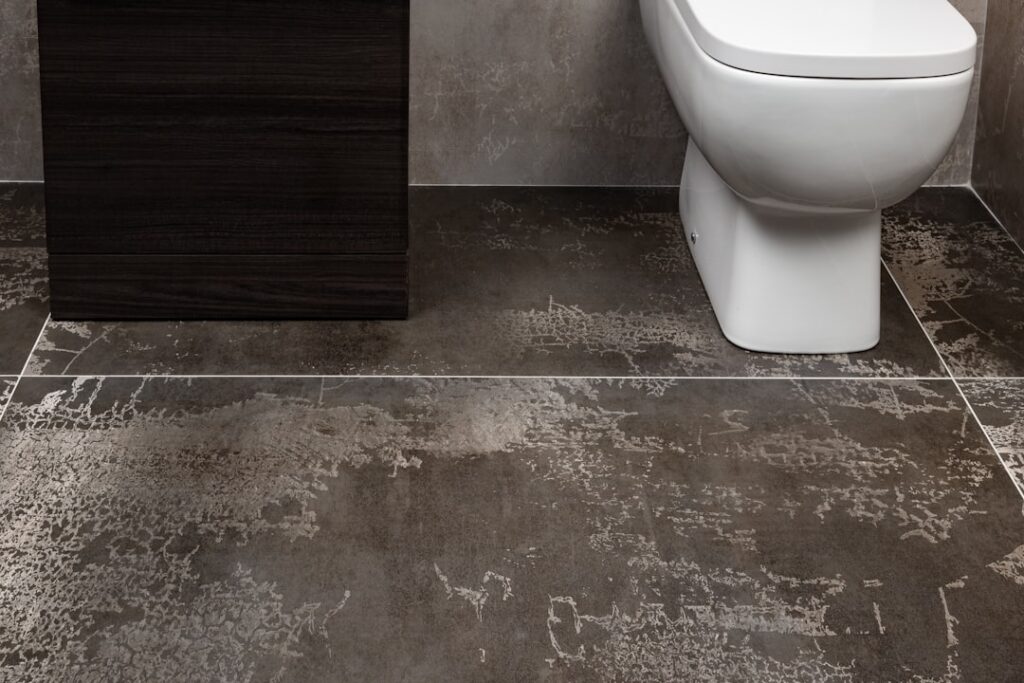
If a full stone renovation is out of budget, large-format porcelain tiles that convincingly mimic marble or travertine deliver 90 percent of the look at a fraction of the cost. A 12-by-24-inch porcelain plank runs $4 to $8 per square foot versus $15 and up for real stone.
The Soaking Tub as Centerpiece
Look at the most striking spa bathroom pictures and a freestanding soaking tub is almost always the hero. A deep acrylic or stone-resin tub, often positioned under a window or against a feature wall, signals relaxation more than any other single element.
Acrylic freestanding tubs start around $700 to $1,500, while stone-resin and cast-iron models climb to $2,000 to $5,000. Pair the tub with a floor-mounted filler faucet and a small teak caddy, and you have the photogenic focal point those images are built around.
Rainfall Showers and Wet Rooms
The second signature feature is the shower. Spa pictures favor oversized rainfall showerheads mounted directly overhead, frameless glass enclosures, and built-in benches. Many high-end examples use a wet-room layout where the tub and shower share one open, curbless space, all wrapped in continuous tile.
Add a handheld sprayer alongside the rainfall head for practicality, and include a recessed niche for bottles so the clean lines stay uninterrupted.
Lighting Sets the Mood
Harsh overhead light kills the spa feeling instantly. The bathrooms in those calming photos use layered lighting: warm 2700K to 3000K bulbs, dimmer switches, sconces flanking the mirror at eye level, and often a strip of LED accent lighting under a floating vanity or behind a mirror.
Candles appear in nearly every spa picture for a reason. If you replicate just one thing, install a dimmer so you can drop the light low for a soak, and you instantly capture that magazine glow.
Clutter-Free Surfaces and Smart Storage
The single most overlooked detail is what is missing. Spa bathrooms in pictures have empty countertops. No toothbrush clutter, no half-used product bottles, no pile of towels. That visual calm requires real storage: deep drawer vanities, recessed medicine cabinets, and built-in shower niches.
Before you renovate, plan storage for everything so daily clutter has a home behind closed doors. A floating vanity with two deep drawers hides far more than a pedestal sink and contributes to the airy, grounded look.
Greenery and Finishing Touches
A few well-placed details complete the picture. A potted snake plant or eucalyptus, which thrives in bathroom humidity, adds life. Plush, oversized towels rolled on an open teak shelf read as luxurious. Matte black or brushed brass fixtures provide a quiet point of contrast against neutral tile.
- One large plant rather than several small ones
- Towels in a single neutral color, folded uniformly
- A wood stool or bath caddy for organic warmth
- A single tray corralling a candle and one or two products
Texture Layering Creates Depth
Look closely at any high-end spa bathroom photo and you will notice it is rarely all smooth surfaces. The most inviting images layer textures: a nubby waffle-weave towel against polished marble, a rough teak stool beside a glossy tub, a pebble shower floor under a sleek rainfall head. That contrast is what keeps a neutral palette from feeling flat or boring.
You can build this depth deliberately. Pair a honed stone wall with a glossy ceramic accent, set plush cotton against smooth concrete, or add a woven basket and a linen Roman shade. The colors stay quiet while the textures do the visual work, which is the hallmark of a designed space rather than a builder-grade one.
Heated Floors and Quiet Luxuries
Some of the most luxurious spa features never show up in a photo but completely change the experience. Radiant heated flooring under tile, costing roughly $10 to $20 per square foot to install, makes stepping out of the shower feel like a resort. A towel warmer mounted on the wall keeps towels toasty and adds a hotel-like touch.
Other quiet upgrades include a fog-free mirror, a built-in Bluetooth speaker for soft music, and a soaking tub with a built-in heater that keeps the water warm. These details cost less than a full remodel and deliver the indulgent feeling those pictures are really selling.
Bringing It All Together
The reason spa bathroom pictures feel so cohesive is that every element reinforces the same goal: calm. Stick to a soft natural palette, invest in one statement piece like a soaking tub or rainfall shower, layer your lighting with a dimmer, hide the clutter, and finish with a plant and warm textures. You do not need a resort budget, just a disciplined eye, to turn your own bathroom into the kind of space worth photographing.