
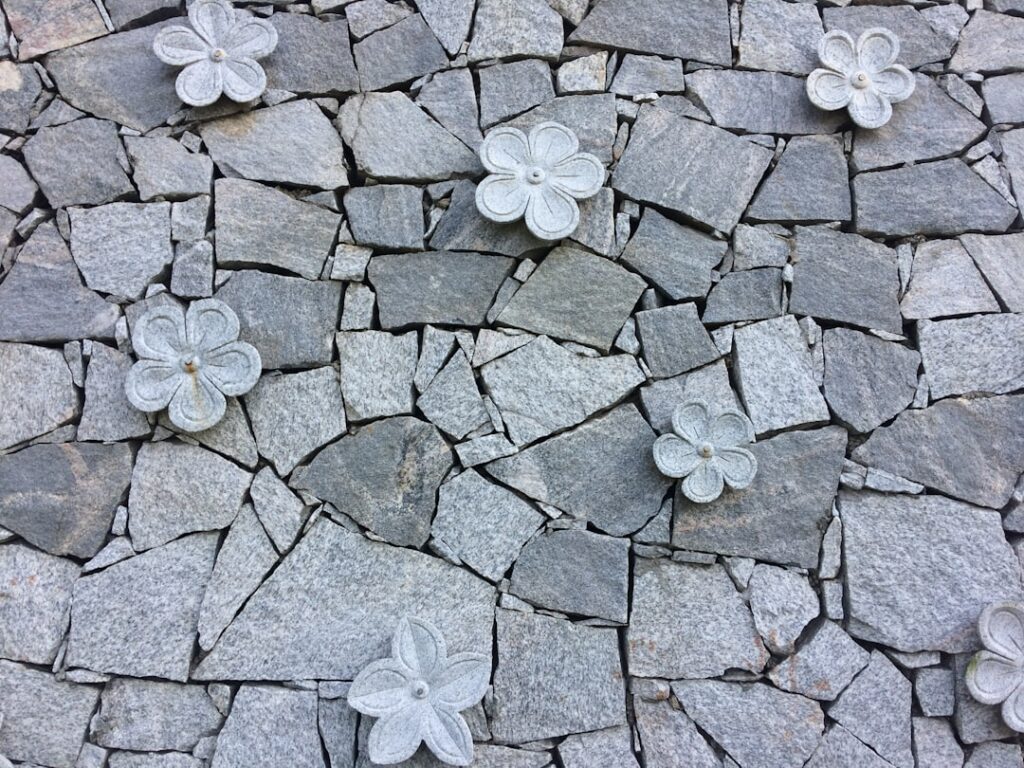
A well-designed stone path can add 5% to 12% to your home’s curb appeal value, according to the 2024 Remodeling Cost vs. Value Report. Browsing pictures of stone walkways helps clarify which style matches your home’s architecture before you commit $4,200 to $11,000 on materials and labor. The right combination of stone type, layout pattern, and edging transforms a muddy shortcut into a feature that lasts 30+ years with minimal maintenance.
- Flagstone Walkways: Irregular Charm at $15-$25 per Square Foot
- Bluestone in Cut Rectangles for Formal Homes
- Concrete Pavers That Mimic Stone
- Pea Gravel Paths with Stepping Stones
- Mosaic and Pebble Inlay Designs
- Stone Walkway Edging Options
- Layout Patterns That Photograph Well
- Installation Tips From a Mason's Perspective
- Total Project Cost Tiers
- Maintenance That Extends Walkway Life
Flagstone Walkways: Irregular Charm at $15-$25 per Square Foot
Pennsylvania bluestone flagstone remains the most photographed walkway material in New England and Mid-Atlantic homes. Irregular shapes ranging from 12 to 24 inches across create organic patterns that feel handmade. Expect to pay $4.50 to $7 per square foot for raw stone at a yard like Wicki Stone or Stone Plus, plus $8 to $15 per square foot in installation labor.
For a classic look, set flagstones in stone dust with 1-inch joints filled with creeping thyme or Irish moss. The plants soften edges and tolerate light foot traffic. Avoid setting flagstone directly on soil in northern climates, since freeze-thaw cycles will heave the stones within two winters.
Bluestone in Cut Rectangles for Formal Homes
Thermal-finished bluestone cut into 12×24 or 24×36 rectangles produces clean lines that pair well with Colonial, Federal, and modern architecture. The thermal finish gives a slip-resistant texture rated above 0.60 DCOF, which exceeds the ANSI A137.1 wet-walkway standard.
Material runs $8 to $12 per square foot, and installation pushes total cost to $22 to $30 per square foot when set on a 4-inch compacted gravel base with mortar joints. A 60-foot walkway 4 feet wide totals roughly $6,500 to $8,500 installed by a licensed mason.
Concrete Pavers That Mimic Stone
If natural stone exceeds your budget, manufacturers like Belgard, Techo-Bloc, and Cambridge Pavingstones produce concrete pavers that closely replicate flagstone and bluestone at $12 to $18 per square foot installed. The Belgard Mega-Arbel collection uses tumbled edges and color-blended pigments that hold up against UV fading for 15+ years.
Concrete pavers carry an ASTM C936 freeze-thaw rating, meaning they perform reliably in climate zones 4 through 7. Each unit measures 2.4 inches thick, which exceeds the 2-inch minimum for vehicular pavers, so the same product handles light driveway traffic.
Pea Gravel Paths with Stepping Stones
For cottage gardens and informal yards, large 18 to 24-inch stepping stones set 24 inches on center inside a pea gravel field create a casual, walkable path. Pea gravel costs about $40 to $50 per cubic yard at landscape suppliers, covering 80 square feet at a 3-inch depth.
Install steel or aluminum edging (Permaloc brand runs $18 per 8-foot section) to keep gravel from migrating into lawn areas. Plan to top up gravel every 3 to 4 years as the surface compacts and individual stones sink slightly.
Mosaic and Pebble Inlay Designs
The most striking pictures of stone walkways often feature pebble mosaic inlays at focal points like entry steps or garden intersections. Mexican beach pebbles run $0.75 to $1.50 per pound at Home Depot and require a 3-inch-deep mortar bed to set securely.
Mosaic walkways cost $40 to $80 per square foot due to the slow hand-set installation. Limit mosaic sections to 3×4-foot accents within a larger stone field to keep budgets reasonable. Geometric patterns like Roman fan or basketweave layouts photograph especially well in natural afternoon light.
Stone Walkway Edging Options
Edging defines the walkway and prevents grass from creeping into joints. Granite cobbles ($6 to $10 each at Stone Farm) create a classic look that lasts indefinitely. Steel edging like Coyote Steel’s 3/16-inch plate ($45 per 8 feet) gives a minimalist, modern profile that works with contemporary homes.
For the lowest cost, use brick soldier courses (about $0.85 per brick at Home Depot) laid vertically along walkway edges. A 30-foot path uses roughly 120 bricks at a total of $102 plus mortar.
Layout Patterns That Photograph Well
- Curved paths with 18 to 24-inch radius turns feel natural and lengthen the apparent depth of a yard.
- Straight-line walks from sidewalk to porch work best on traditional homes with symmetric facades.
- Stepping-stone gaps of 20 to 24 inches match adult walking stride and reduce material costs by 30 to 40 percent.
- Y-shaped or T-shaped junctions create natural focal points for benches, planters, or birdbaths.
Installation Tips From a Mason’s Perspective
Excavate 6 inches below the finished walkway height for cold climates, 4 inches in zones 8 and warmer. Compact a 4-inch base of 3/4-inch crushed stone using a plate compactor rented from Home Depot for $74 per day. Top with 1 inch of stone dust or polymeric sand depending on your jointing strategy.
For dry-laid walkways, polymeric sand like Techniseal HP NextGel ($35 per 50-pound bag, covers 80 sq ft at 1/4-inch joints) resists weed growth and washouts. Activate with a light mist of water from a fan spray nozzle, never a jet stream that displaces the sand.
Total Project Cost Tiers
Budget DIY paths using pea gravel and 12 stepping stones run $400 to $900 for a 30-foot walk. Mid-range pro-installed concrete paver walks land between $4,200 and $7,500. Premium natural bluestone or flagstone with mortar joints, masonry edging, and integrated lighting climbs to $9,000 to $14,000 for the same 30-foot path.
Whichever stone walkway design you choose, request three written quotes from masons or hardscape contractors, verify they carry liability insurance, and ask to see local references with completed work at least 3 years old.
Maintenance That Extends Walkway Life
Sweep walkways monthly to remove organic debris that traps moisture against stone surfaces. Pressure-wash flagstone and bluestone annually using a fan tip at 1,500 to 2,000 psi – never use a turbo or zero-degree nozzle, since these can erode mortar joints and chip stone faces. Reapply polymeric sand every 3 to 5 years as joints settle.
Seal natural stone walkways with a penetrating sealer like DuPont Bullet Proof ($72 per gallon at Home Depot) every 2 to 3 years to repel salt damage in northern climates. Concrete pavers come pre-sealed but benefit from a fresh coat of Techniseal Paver Sealer every 4 to 5 years to maintain color saturation. The most beautiful pictures of stone walkways come from installations that hold up to a decade of weather, not just the day they finished.


