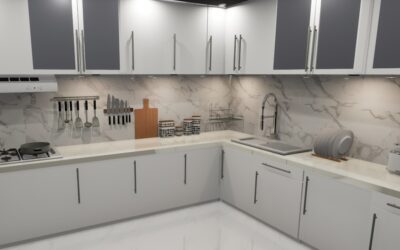
Open any home design magazine from 1995 or 2026 and traditional kitchens still anchor at least half the spreads. The reason is simple — when you scroll through pictures of traditional kitchens, you see designs that look intentional rather than trendy, rooms that aged into character instead of out of fashion. The recipe holds steady across decades: raised-panel cabinets, natural stone counters, warm wood floors, and lighting that flatters food and faces. This guide breaks down what to actually look for in those photos so your own kitchen captures the same staying power.
Part of our Kitchen Remodeling guide — explore the full guide →
The Defining Elements
Traditional kitchens are built on six recurring elements. A photograph that hits five of six reads as traditional. A photo with only two reads as transitional or contemporary instead.
- Raised panel or beaded inset cabinet doors in painted or stained wood
- Crown molding at the top of upper cabinets, often stepped or multi-piece
- Furniture-style island with turned legs, decorative corbels, or a distinct finish from perimeter cabinets
- Natural stone counters — typically granite, marble, or soapstone
- Subway, mosaic, or natural stone tile backsplash, usually muted tones
- Warm flooring — wide-plank oak, hand-scraped hickory, or large-format limestone tile
Cabinet Styles in Traditional Pictures
Look at the door style first. A flat slab door is contemporary regardless of color. A door with a raised center panel inside a beveled frame is traditional. A flat panel with shaker rails is transitional.
Painted finishes dominate current traditional kitchens — soft whites, off-whites, warm grays, deep navy, and forest green are the colors that show up most often. Sherwin Williams Alabaster (SW 7008), Benjamin Moore White Dove (OC-17), and Farrow and Ball Hague Blue all appear repeatedly in published kitchens.
Stained wood, especially cherry and walnut, anchored traditional kitchens through the 2000s but reads dated today unless used sparingly — on the island, on a hutch, or as a stained ceiling beam against painted cabinets. A mix of stained and painted finishes in the same kitchen is back in style after a decade out of favor.
Countertop Choices and Why They Matter
Granite was the dominant counter material in traditional kitchens from 1995 through 2015. Marble and soapstone took over the high end after that, while quartz appeared in lower-priced traditional builds. Each material has a visual signature.
- Honed Carrara marble: Soft gray veining, matte surface, etches easily but patinas beautifully. $80 to $120 per square foot installed.
- Soapstone: Charcoal gray, deepens with mineral oil, immune to staining. $90 to $150 per square foot installed.
- Granite (Uba Tuba, Ubatuba, Bianco Antico): Speckled patterns, polished or honed. $50 to $90 per square foot installed.
- Quartz with marble look (Cambria Brittanicca, Caesarstone Calacatta Nuvo): Maintenance-free alternative to marble. $70 to $120 per square foot installed.
The published kitchens that look most traditional pair honed (matte) stone with detailed cabinet work. Polished stone reflects light differently and pushes a kitchen toward contemporary.
Color Palettes That Recur
Three palette families show up across nearly every traditional kitchen photo collection.
The first is creamy white on white — painted cabinets in an off-white, light counters, white backsplash, with warmth coming from wood floors and brass or oil-rubbed bronze hardware. The look reads timeless and bright, and it photographs well, which is part of why magazines keep using it.
The second is two-tone with a contrasting island. Perimeter cabinets in white or cream, island in navy, sage green, or stained walnut. This is the dominant palette in new builds from 2022 to 2026.
The third is darker and more traditional — cherry or maple cabinets, granite counters, warm beige backsplash, and travertine or hardwood floors. Less common now in published designs but still very much present in real American kitchens.
Hardware, Lighting, and the Small Details
Hardware finish anchors the whole room. Unlacquered brass leads current traditional kitchens, with oil-rubbed bronze second and polished nickel third. Top Knobs Bridges and Restoration Hardware Lugarno appear repeatedly in editorial photos. Knobs go on doors, cup pulls on drawers — mixing the two is standard practice in traditional design.
Lighting in traditional kitchens follows a layered approach. Recessed cans for general light. Pendants over the island, usually two or three, with seeded glass or fabric shades. A central chandelier or semi-flush over the dinette area. Under-cabinet LED strips for task lighting at the counter. Visual Comfort and Hudson Valley are the lighting brands most often credited in published photos.
Recreating the Look on a Budget
You do not need a $100,000 renovation to capture the traditional look. Three changes get you 80 percent of the way there.
- Paint existing cabinets in Benjamin Moore Advance enamel — sand, prime with INSL-X Cabinet Coat, then two coats finished with a Wagner Flexio sprayer for a factory-quality finish. Total cost: $200 in materials.
- Replace hardware. New knobs and pulls in unlacquered brass or oil-rubbed bronze cost $5 to $15 each. A typical kitchen needs 25 to 35 pieces, so budget $200 to $400.
- Add a tile backsplash. Daltile subway tile runs $0.30 per piece. A 30-square-foot backsplash costs about $100 in tile plus $60 in thinset, grout, and tools. A DIYer can complete one in a weekend.
For under $1,000 in materials, a tired kitchen photographs and lives like a traditional remodel that cost ten times that.
What to Avoid If You Want Timeless
Certain choices that look great in current photos will date a kitchen within five years. Heavily veined book-matched marble slabs were everywhere in 2020 and now look of a specific moment. Open shelving instead of upper cabinets reads contemporary, not traditional. Matte black hardware works in a transitional kitchen but feels wrong against painted raised panels.
Stick to elements that have appeared in published kitchens for at least 30 years. Crown molding, raised panel doors, natural stone, and brass hardware have been timeless for a reason. Anything that feels especially trendy right now probably will not feel timeless a decade from now.