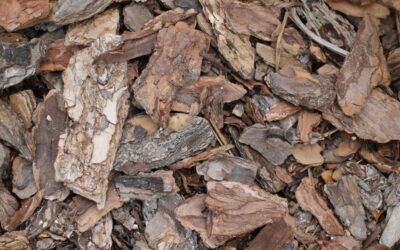
Most people pick a bag of pine bark nuggets by color and price, then wonder why half of it ends up in the lawn after the first thunderstorm. Size matters more than anything else on the label. Mini nuggets (roughly 1/2 to 1 1/2 inches) knit together, look tidy in small beds and break down in about two to three years. Large nuggets (roughly 2 to 3 1/2 inches) last four years or more, let water through easily and hold their rich reddish brown color, but they float, roll and look chunky in tight spaces.
The short answer: use mini nuggets for flower beds, foundation plantings, containers and anywhere with a gentle slope; use large nuggets for flat, open areas around trees and shrubs, wide borders and spots you want to mulch once and forget. Neither size belongs on a steep slope or in a channel where runoff concentrates, because bark of any size is lighter than water.
- What Pine Bark Nuggets Are and How They Differ From Other Bark Mulch
- Mini vs Large: A Side-by-Side Look
- How Long Pine Bark Nuggets Last
- Floating, Washout and Slopes
- How Much to Buy and How Deep to Spread
- Installing Pine Nugget Mulch Step by Step
- Landscape Fabric: Yes or No?
- Troubleshooting Common Problems
- Cost and When to Call a Pro
- Frequently Asked Questions
What Pine Bark Nuggets Are and How They Differ From Other Bark Mulch
Pine bark nuggets are chunks of outer bark stripped from pine logs at sawmills, then screened into size grades. Unlike shredded hardwood mulch, which is a fibrous mat of wood and bark strands, nuggets are discrete pieces with a waxy, resin-rich surface. That resin slows decomposition and sheds water off the top of each piece, which is why nugget beds stay dry on the surface and discourage weed seeds from sprouting.
Pine bark nugget mulch is also different from pine bark fines, the finely ground material used as a soil conditioner or potting mix component. Fines are meant to blend into soil. Nuggets are meant to sit on top of it as a protective layer, so you get weed suppression and moisture retention without much change to soil structure in the short term.
Because the pieces are irregular and fairly light, pine nugget mulch is easy to spread by hand and easy to rake back into place. It weighs noticeably less than an equal volume of shredded hardwood, which helps on rooftop planters and raised beds where weight is a concern.
Mini vs Large: A Side-by-Side Look
| Trait | Mini nuggets | Large nuggets |
|---|---|---|
| Typical piece size | 1/2 to 1 1/2 in | 2 to 3 1/2 in |
| Lifespan before top-up | 2 to 3 years | 4 to 6 years |
| Washout risk | Moderate | Higher (pieces float and roll) |
| Best look | Small beds, close plantings | Open areas, large trees |
| Recommended depth | 2 to 3 in | 3 to 4 in |
Where pine bark mini nuggets shine
Pine bark mini nuggets fit between perennials, annual color, groundcovers and small shrubs without burying crowns. They settle into a fairly continuous layer, so they block light from weed seeds better than large pieces at the same depth. They also scale well visually: a 3-foot-wide bed along a walkway looks finished with minis, while large chunks there can look like a pile of firewood scraps. Minis are the better choice for containers and window boxes too, since they slow evaporation without crowding stems.
Where large nuggets earn their keep
Large pine bark nuggets are the low-maintenance pick for tree rings, wide island beds, shrub masses and play-adjacent areas that see little foot traffic. The big pieces leave air gaps, which lets rain soak straight through and keeps the soil surface well aerated. They break down slowly, so you can go four years or longer before a refresh. The tradeoff is that the gaps also let some weeds poke through and let wind-blown seeds lodge between pieces, so a slightly deeper layer helps.
How Long Pine Bark Nuggets Last
Expect nugget mulch to last longer than almost any shredded organic mulch. Several factors decide the exact number:
- Piece size. Smaller pieces have more surface area per cubic foot, so microbes break them down faster.
- Climate. Hot, humid regions with long growing seasons speed decay; dry or cool climates slow it.
- Sun exposure. Full sun bleaches the surface from reddish brown to a gray tan within one to two seasons, though the pieces underneath stay intact.
- Contact with soil. The bottom layer touching moist soil decomposes first. That is normal and slowly feeds the soil with organic matter.
A quick test tells you when to add more: push your fingers into the layer. If you hit soil in less than 2 inches for minis or 3 inches for large pieces, top up. Rather than stripping old material, rake it loose to break any crust and add a fresh 1-inch layer.
Floating, Washout and Slopes
Pine bark is buoyant. Heavy rain that pools or flows across a bed lifts the pieces and carries them to the lowest point, which is often your lawn, driveway or storm drain. Large nuggets float more readily than minis because each piece traps air and has less contact with its neighbors.
Simple ways to keep nuggets in place
- Edge the bed. A trench edge about 3 inches deep, or a raised edging strip of steel, stone or composite, creates a lip that catches drifting pieces.
- Keep the top of the mulch below the edge. Leave the finished surface about 1 inch lower than the lawn or hardscape so water does not sheet over it.
- Fix the drainage first. Downspouts that dump into a bed will move any mulch. Extend the downspout or install a splash block or a short rock channel through the bed.
- Use minis on gentle slopes. On slopes up to about 3:1 (3 feet horizontal per 1 foot of rise), minis interlock well enough to stay put in most storms.
- Switch materials on steep slopes. On anything steeper, use shredded hardwood, which mats together, or a rock mulch, often with erosion-control netting under it.
Avoid spreading nuggets in swales, rain gardens or any area designed to carry water. Pea gravel or river rock handles those spots far better.
How Much to Buy and How Deep to Spread
Bagged nuggets usually come in 2 or 3 cubic foot bags, while landscape suppliers sell bulk by the cubic yard (27 cubic feet). To estimate, multiply the bed area in square feet by the depth in inches, then divide by 12 to get cubic feet.
- A 100 sq ft bed at 3 inches needs 25 cubic feet: about nine 3-cubic-foot bags or just under 1 cubic yard.
- A 10-foot-diameter tree ring (about 79 sq ft) at 4 inches needs roughly 26 cubic feet.
Buy about 10 percent extra because nuggets settle into soil gaps during the first few weeks. For large projects, bulk is usually cheaper per cubic foot, though delivery fees add up on small orders.
Installing Pine Nugget Mulch Step by Step
Tools and materials
- Bark nuggets in your chosen size
- Garden rake and leaf rake
- Wheelbarrow or tarp
- Half-moon edger or flat spade
- Gloves and a hand cultivator
- Optional: edging strip, pre-emergent weed preventer labeled for ornamental beds
Steps
- Weed thoroughly. Pull perennial weeds by the root. Nuggets suppress new seeds, not established roots.
- Cut a clean edge. Slice a 3-inch-deep trench along lawn borders and toss the turf aside.
- Water the bed. Mulching moist soil locks in that moisture.
- Apply a pre-emergent if you want. Follow the label rate and keep it away from areas where you plan to sow seed.
- Spread in piles, then rake level. Dump small piles across the bed and pull them out evenly with the back of a rake.
- Pull mulch back from trunks and stems. Keep a 3 to 6 inch gap around tree trunks and an inch or two around perennials. Mulch piled against bark invites rot and rodents.
- Water lightly. A gentle sprinkle settles the pieces and reveals low spots to top off.
Landscape Fabric: Yes or No?
Many gardeners put woven fabric under large nuggets in shrub beds they rarely replant. It keeps nuggets from mixing into the soil and reduces weeds from below. The downside is that as the bottom layer breaks down, weeds root into the thin layer of compost that forms on top of the fabric, and the fabric becomes hard to remove later. In perennial beds where you divide and replant often, skip fabric and rely on depth instead. If you do use it, choose a woven, water-permeable type and avoid solid plastic sheeting, which starves soil of air and water.
Troubleshooting Common Problems
- White or yellow fungus growth. Slime molds and mushrooms appear after wet spells. They are harmless decomposers. Rake to dry the surface and they fade.
- Color fading. Sun bleaches the tops. Flip the layer with a rake to expose darker pieces, or add a thin fresh layer.
- Yellowing plants. Bark can tie up a little surface nitrogen as it decays. Feed shallow-rooted annuals with a balanced fertilizer and keep mulch from mixing into the root zone.
- Termite worries. No wood mulch attracts termites from nowhere, but keep a mulch-free strip of 6 to 12 inches next to the foundation as a general precaution.
- Nuggets in the lawn. Lower the mulch level, deepen the edge and correct drainage.
Cost and When to Call a Pro
Bagged pine bark nuggets typically fall in the budget-to-midrange range for bagged mulch, with large nuggets often costing a bit more than minis. Bulk cubic yards from a landscape yard usually work out cheaper per cubic foot, and many suppliers will blow mulch in for an added fee per yard. Professional installation, including edging and weeding, generally runs a modest per-square-foot labor rate on top of material costs.
Hiring a landscaper makes sense when beds need regrading, when downspouts or slopes require drainage work, or when you are covering several thousand square feet. For most yards, though, a weekend and a wheelbarrow are enough.
Frequently Asked Questions
Are bark nuggets good for vegetable gardens?
They work in pathways between beds, but they are less practical inside annual vegetable rows because you have to move them each time you plant. Straw or shredded leaves suit vegetables better.
Does pine bark mulch make soil acidic?
Only slightly and slowly. Surface mulch has a minor effect on soil pH, so you can use it around most ornamentals without worry.
Which size lasts longer, mini or large?
Large nuggets last longer, often four to six years, because they have less surface area for microbes to break down. Minis usually need a top-up every two to three years.
Can I mix mini and large nuggets?
Yes. Some gardeners use large nuggets as a base and a thin layer of minis on top, which hides gaps and improves weed control while keeping long life.
Is bark mulch safe around pets?
Bark itself is not considered toxic, but large pieces can be a choking hazard for dogs that chew. Use minis or a different mulch in dog runs.