Ounce for ounce, polycarbonate is about 200 times more impact-resistant than glass — you can hit a quality panel with a hammer and watch it bounce. That toughness, combined with light transmission up to 90 percent and a weight of roughly one-quarter pound per square foot, is why polycarbonate roof panels have taken over the market for patio covers, pergola roofs, greenhouses, carports, and shed skylights. But the category covers three very different products at three very different price points, and the installation rules — pre-drilled oversized holes, gasketed screws, taped channel ends — exist because thermoplastic moves. Here’s how to pick the right panel type and put it on so it lasts its full 10 to 20 years.
Part of our Roofing guide — explore the full guide →
The Three Panel Types
Corrugated polycarbonate
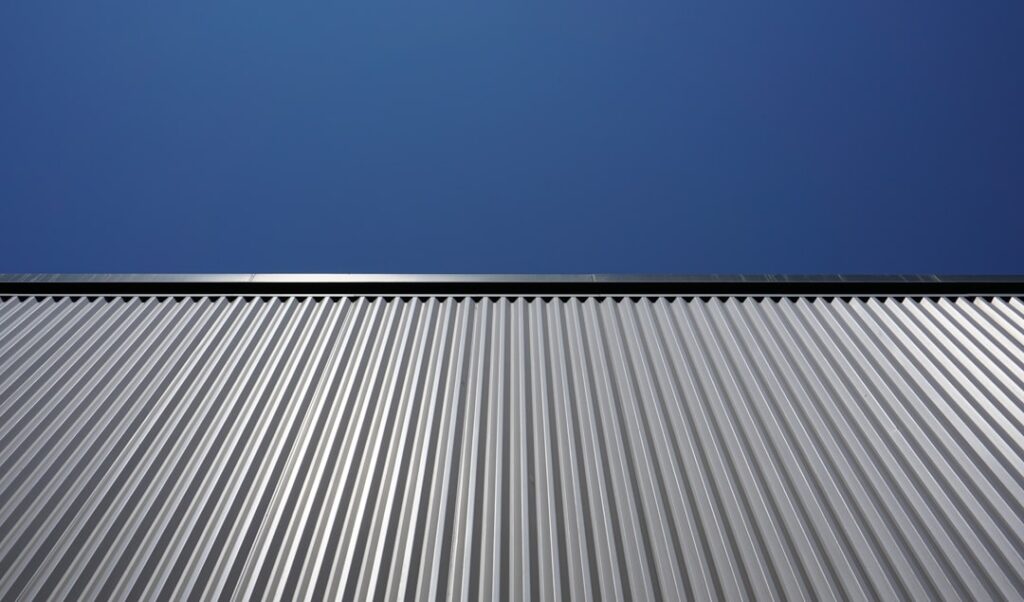
Wavy or greca-profile single-wall sheets, 0.8 to 1.0 mm thick, sold in 26-inch widths and 8 to 12 foot lengths at $25 to $45 per sheet (Suntuf by Palram is the big-box standard, about $1.30 to $1.80 per sq ft). Corrugated is the budget pick for patio covers and sheds: highest light transmission (up to 90 percent clear), easy overlap installation like metal roofing, and hail resistance most warranties back for life. Downsides: it drums loudly in rain, provides zero insulation, and flexes enough that purlin spacing matters.
Multiwall (twinwall and triplewall)
Flat extruded panels with internal ribs creating air channels — 4 to 6 mm twinwall for greenhouses and small covers, 8 to 25 mm twin/triple/five-wall for structures where heat retention counts. The air cells insulate (8 mm twinwall achieves about R-1.5; 16 mm triplewall around R-2.5), diffuse light to a soft, shadow-free glow plants love, and quiet the rain drum considerably. Cost runs $2 to $5 per sq ft. This is the greenhouse and sunroom material; the tradeoff is light transmission dropping to 60 to 80 percent and channels that must be sealed against dust and algae.
Solid flat sheet
Monolithic polycarbonate 2 to 12 mm thick — essentially unbreakable “glass” at $4 to $10 per sq ft. It’s what you spec for railing-height canopies, awnings with a clean architectural look, and anywhere impact is the design driver. Solid sheet needs engineered support because it lacks the corrugation or ribs that make the other types self-stiffening.
Light, Heat, and Tint Choices
Tint selection matters more than most buyers realize, because a clear panel over a patio builds a greenhouse over your dinner table. Clear transmits up to 90 percent of light and most solar heat — right for greenhouses and northern light wells, wrong for a Texas patio. Opal/white diffuses light to 45 to 70 percent and cuts glare; bronze and gray drop transmission to 20 to 50 percent and noticeably reduce heat gain; and premium coolers like Suntuf Solar Gray or SolarSmart claim to block a meaningful share of infrared while keeping visible light. Every reputable panel carries a co-extruded UV-blocking layer on the sun-facing side — the reason modern polycarbonate no longer yellows in five years like 1990s fiberglass panels did. That layer is also why panels are marked “this side up”: install one upside down and the unprotected face degrades in the sun.
Structure and Slope Requirements
Polycarbonate spans between purlins, not open air. For corrugated panels, run purlins (2x4s flat, or steel battens) at 24 inches on center — tighten to 18 inches in snow country. Multiwall panels follow the manufacturer’s span chart by thickness; 8 mm typically wants support at 24 to 32 inches. Minimum slope is 5 degrees (about 1/12) for corrugated with proper laps, though 2/12 to 3/12 sheds far better and keeps dirt from accumulating; multiwall systems specify their own minimums, usually similar. Panels must always run their length down the slope — channels in multiwall sheet have to drain — and cross-slope installation is an automatic failure.
Installation: The Rules That Prevent Cracking and Leaks
Thermoplastic expands about 1/8 inch per 3 feet of panel across a 100°F temperature swing. Nearly every polycarbonate failure traces to an installer who fought that movement instead of allowing it.
- Pre-drill oversized holes: 1/16 to 1/8 inch larger than the screw shank, so panels can slide under the fastener head as they expand. Never let the screw thread bite the panel edge of the hole tightly.
- Use the system screws: gasketed (EPDM-washered) wood screws, driven at crown/rib per the profile — on corrugated, fasten on the crown of every other corrugation at purlins, every corrugation at eaves and ridge. Snug, not crushed; a dimpled washer is overdriven.
- Overlap correctly: one corrugation side lap (with the lap facing away from prevailing wind), 6 to 8 inch end laps over a purlin. Below 3/12 slope, add clear butyl lap tape.
- Support accessories: use the profile-matched foam or plastic closure strips at eaves and ridge — they seal the wavy gaps and stop wasps and wind-driven rain.
- Multiwall channel sealing: tape top channel ends with solid aluminum tape and bottom ends with breathable vent tape, then cap with U-profile. Skip this and the channels grow algae and condensation streaks you can never clean out.
- Never walk the panels. Work from a crawl board spanning the purlins — panels are impact-tough but not foot-traffic-rated.
Cutting is friendlier than most sheet goods: fine-tooth circular blade (reversed carbide works) or shears for thin corrugated, and leave protective film on until the panel is fastened.
How Long They Last, and Against What
Quality UV-protected panels carry 10-year warranties against yellowing and loss of light transmission, with real-world service commonly 15 to 20 years; hail warranties are frequently lifetime, because polycarbonate genuinely shrugs off stones that destroy fiberglass and crack glass. What ends a panel’s life is slow UV embrittlement, scratching from aggressive cleaning (never use ammonia, solvents, or abrasive pads — mild soap and a soft cloth only), and fastener-hole cracking from thermal stress where holes weren’t oversized. Compared head-to-head: fiberglass panels cost slightly less but yellow and fiber-bloom within a decade; PVC panels are cheaper still but brittle in cold and soft in heat; glass wins on scratch resistance and permanence but at many times the weight, cost, and hazard.
Condensation: The Overlooked Design Issue
Any transparent roof over a humid space will condense on its underside when the panel radiates heat to a clear night sky — greenhouses drip on seedlings, patio covers drip on furniture, and owners blame leaks that aren’t there. Three mitigations work. Slope helps most: at 2/12 and above, condensate runs down the underside to the eave instead of dripping mid-span. Multiwall panels condense far less than single-wall corrugated because the inner face stays warmer. And for greenhouses specifically, several manufacturers sell panels with an anti-condensate (anti-drip) co-extruded inner coating that sheets water sideways rather than letting it bead — worth the small premium over bare twinwall. If you’re seeing streaks inside multiwall channels rather than on the surface, that’s the vent-tape detail from the installation list gone wrong, and the fix is re-capping the ends, not more caulk.
Budget Numbers for Common Projects
A 10 x 12 foot pergola roof in corrugated Suntuf: six 12-foot panels ($270 to $360), closure strips, screws, and lap tape (about $80) — roughly $350 to $450 DIY. An 8 x 10 hobby greenhouse skinned in 8 mm twinwall runs $600 to $1,000 in panels and profiles. Contractor-installed patio cover systems in multiwall with aluminum framing price out at $15 to $40 per sq ft complete. Against a comparable metal-roofed cover, you’re paying a modest premium for the one thing metal can’t do: let the light through while keeping the weather out.
Order smart and the projects get cheaper: panels come in 2-foot width modules and 8, 10, and 12 foot stock lengths, so dimension your structure to consume whole panels — a 10-foot-1-inch rafter run wastes a quarter of every 12-foot sheet. Buy closure strips, screws, and lap tape from the same profile family as the panels; a “greca” closure will not seal a round-wave panel, and mismatched accessories are the most common special-order return at the lumberyard.
Frequently Asked Questions
What is the difference between polycarbonate and acrylic roof panels?
Polycarbonate is far tougher, while acrylic is slightly clearer and more scratch resistant. Acrylic sheet can crack or shatter under hail or a dropped branch, and it is more brittle when drilled or flexed, so it is a poor fit for most roofs. Polycarbonate bends instead of breaking, which is why it dominates patio covers, carports and greenhouse roofing. Acrylic suits indoor glazing, displays and vertical panels with little impact risk.
What sizes do polycarbonate sheets come in?
Flat solid and multiwall polycarbonate sheets are commonly sold in 4 by 8 foot panels, with longer and wider sizes available for greenhouses and patio covers. Corrugated roofing panels are typically about 26 inches wide and 8, 10 or 12 feet long. Thickness ranges from under 1 mm for corrugated sheet to 2 to 12 mm for solid sheet and 4 to 25 mm for multiwall, so match thickness to the span and use.
Can polycarbonate roof panels hold snow?
Yes, when the framing and panel are chosen for the snow load. Tighten corrugated purlin spacing to about 18 inches, follow the maker’s span chart for multiwall panels, and use a steeper slope so snow slides off sooner. Thicker multiwall panels carry more load over the same span. In areas with heavy snow, have the structure checked against local code loads, and clear deep snow with a soft broom, never a metal shovel.