A cracked tile floor or a door that suddenly sticks is often the first sign that the slab underneath has dropped. Polyurethane foam foundation repair is one of the fastest ways to address settling concrete, using expanding structural foam injected through holes the size of a dime to fill voids, stabilize soil, and lift the slab back toward level. Crews can often finish in a day, and you can walk on the slab within about 15 minutes. It is not the right fix for every foundation problem, though. Here is how it works, what it costs, and when another method is the smarter call.
How Polyurethane Foam Foundation Repair Works
The process, often called poly lifting or polyjacking, uses a two-part polyurethane resin. The two components meet in the injection gun, react chemically, and expand as they cure, typically 10 to 25 times their liquid volume depending on the formulation. Here is the typical sequence:
- Assessment: the technician maps the slab with a laser level or digital manometer to find low areas and determine lift targets.
- Drilling: 5/8-inch holes are drilled through the concrete in a grid, usually 4 to 6 feet apart.
- Injection: ports are set in the holes and foam is injected in controlled shots. The foam first fills voids, then compacts weak soil, and finally pushes the slab upward.
- Monitoring: lasers track movement in real time so the slab lifts gradually, often in increments of 1/8 inch, to avoid cracking.
- Patching: holes are filled with color-matched cementitious grout.
The foam reaches about 90 percent of its full strength within 15 minutes. High-density structural formulas range from 2 to 6 pounds per cubic foot and deliver compressive strengths around 50 to 100+ psi, which easily supports residential floor loads.
Problems It Can Fix
Poly foam works best on slab-related settlement caused by soil erosion, poor compaction, or washout beneath concrete. Good candidates include:
- Interior slab-on-grade floors that have dropped in one area, causing cracked tile or separated flooring
- Garage slabs that have sunk away from the foundation wall
- Voids under slabs caused by plumbing leaks, once the leak has been repaired
- Basement floor slabs with hollow-sounding areas
- Porches, patios, driveways, sidewalks, and pool decks
- Stabilizing soil beneath slab foundations to prevent further settlement
Foam is also used to fill voids and stabilize soil under footings as a supplemental step, though structural footing issues often call for deeper solutions.
What It Cannot Fix
Understanding the limits is critical. Polyurethane foam supports concrete on the soil that is already there. If that soil keeps moving because of deep expansive clay, ongoing drainage problems, or poor load-bearing strata, the foam cannot stop it. Situations where foam alone is usually not the answer:
- Bowing or leaning basement walls: these need wall anchors, carbon fiber straps, or steel braces.
- Deep structural settlement of footings: steel push piers or helical piers transfer the load to stable soil or bedrock 10 to 30+ feet down.
- Active plumbing leaks: foam poured over a leak will simply wash out again. Fix the leak first.
- Heaving slabs: slabs pushed upward by swelling clay or frost need moisture management, not lifting.
- Severely broken concrete: slabs fractured into many pieces may need replacement.
Cost of Polyurethane Foam Lifting
Pricing usually depends on the pounds of foam used, which depends on the size of the void and how much lift is needed. Typical US ranges:
| Project | Typical Cost |
|---|---|
| Sidewalk or small patio section | $500 – $1,500 |
| Driveway or garage slab | $1,200 – $3,500 |
| Interior slab area, 200 – 400 sq ft | $2,000 – $6,000 |
| Large interior void fill or soil stabilization | $5,000 – $15,000+ |
| Price per pound of foam installed | $5 – $25 |
Most contractors set a minimum charge of $750 to $1,500. Interior work costs more than exterior because of access, flooring protection, and removing and reinstalling finished floors. Compare that to replacing a slab section at $8 to $20 per sq ft plus demolition, or steel piers at $1,000 to $3,000 per pier, and foam is often the most economical option when it fits the problem.
Foam vs Mudjacking vs Piers
Mudjacking, also called slabjacking, pumps a cement-and-soil slurry under the slab through 1-1/2 to 2 inch holes. It costs roughly 30 to 50 percent less than foam but weighs about 100 pounds per cubic foot, which can add stress to already weak soil and lead to resettling. The larger holes are more visible, and the slurry takes 24 to 72 hours to cure.
Polyurethane foam weighs 2 to 6 pounds per cubic foot, uses much smaller holes, cures in minutes, and resists water, so it does not erode. The main drawbacks are higher cost and the fact that it is a petroleum-based product that cannot easily be removed if something goes wrong.
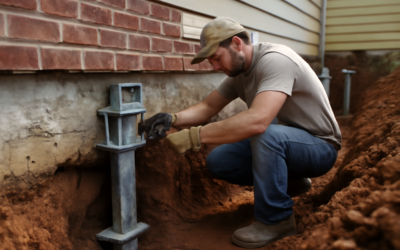
Piers are a different category. Push piers and helical piers support the foundation on deep, stable soil and are the standard for structural footing settlement. Many repair plans combine methods: piers to support the perimeter footing and foam to fill voids and relevel the interior slab.
Protecting Your Flooring During Repair
Interior slab lifting affects everything on top of it. Before the crew arrives, plan for your floor covering:
- Tile and stone: lifting often cracks grout lines or already-damaged tiles. Keep spare tiles from the original installation, and expect some repair work.
- Floating floors: laminate and click-lock vinyl may need to be pulled up in the work area. Most can be reinstalled if removed carefully.
- Glue-down flooring: the technician may drill directly through the flooring, then patch the holes with filler or replace affected planks.
- Carpet: can usually be pulled back from the tack strips and reinstalled.
Wait until the lift is complete and monitored for a few weeks before installing new flooring. Check flatness with a straightedge afterward; most floating floors need the slab within 3/16 inch over 10 feet, and any remaining high or low spots should be ground or leveled before the new floor goes down.
What to Expect on Repair Day
Most residential polyurethane lifting jobs take one crew of two or three technicians between 2 and 8 hours. The rig, a truck or trailer with heated hoses and proportioning pumps, parks in the driveway, and hoses run through a door or window to the work area. Expect some noise from the drill and a mild chemical odor during injection that usually clears within an hour with good ventilation. Keep kids and pets out of the area until the crew wraps up.
Clear furniture from the affected zone the day before and remove any floor coverings the crew asks you to lift. After injection, the technician patches the holes and rechecks elevations. Take your own before-and-after photos and ask for a copy of the elevation readings; that record is useful for warranty claims and for disclosure if you sell the home. Watch interior cracks over the next few months. Small hairline cracks that close or stabilize are normal, but any new or widening crack should be reported to the contractor promptly.
When to Call a Licensed Professional
Foundation repair is structural work, and it is not a DIY project. Rental foam kits sold for small patio slabs are not appropriate for interior slabs or anything supporting the home. Call a licensed foundation contractor or a structural engineer if you see any of the following:
- Stair-step cracks in brick or block walls, or horizontal cracks in basement walls
- Cracks wider than 1/4 inch or cracks that are growing
- Doors and windows that suddenly stick or will not latch
- Floors that slope more than about 1 inch over 20 feet
- Gaps between walls and ceilings or baseboards pulling away
An independent structural engineer’s inspection, typically $400 to $900, gives you an unbiased diagnosis before you commit to a contractor’s proposal. That is especially valuable because some repair companies sell only one method. Also have a licensed plumber pressure-test the drain and supply lines under the slab if a leak is suspected, since foam will not solve a problem that water keeps creating. Radon can also enter through new holes and cracks, so test the living space after repair work in areas with known radon risk.
Choosing a Contractor and Warranty
Ask every contractor the same questions so you can compare fairly:
- What foam density and brand will you use, and why that one for my soil?
- Do you monitor lift with a laser in real time?
- How far apart will injection holes be, and how will you patch them?
- Is the lift guaranteed, and for how long? Many offer 5 to 10 years; some offer transferable lifetime warranties on specific work.
- Are you licensed and insured for foundation work in my state, and can I see references from similar jobs?
Get at least three written quotes, and be wary of pressure to sign the same day. Polyurethane foam foundation repair is an excellent, minimally invasive fix when the problem is slab settlement over weak or eroded soil. Combined with good drainage, gutter downspouts extended at least 4 to 6 feet from the house, and grading that slopes away from the foundation, it can keep your floors level and your finishes intact for decades.