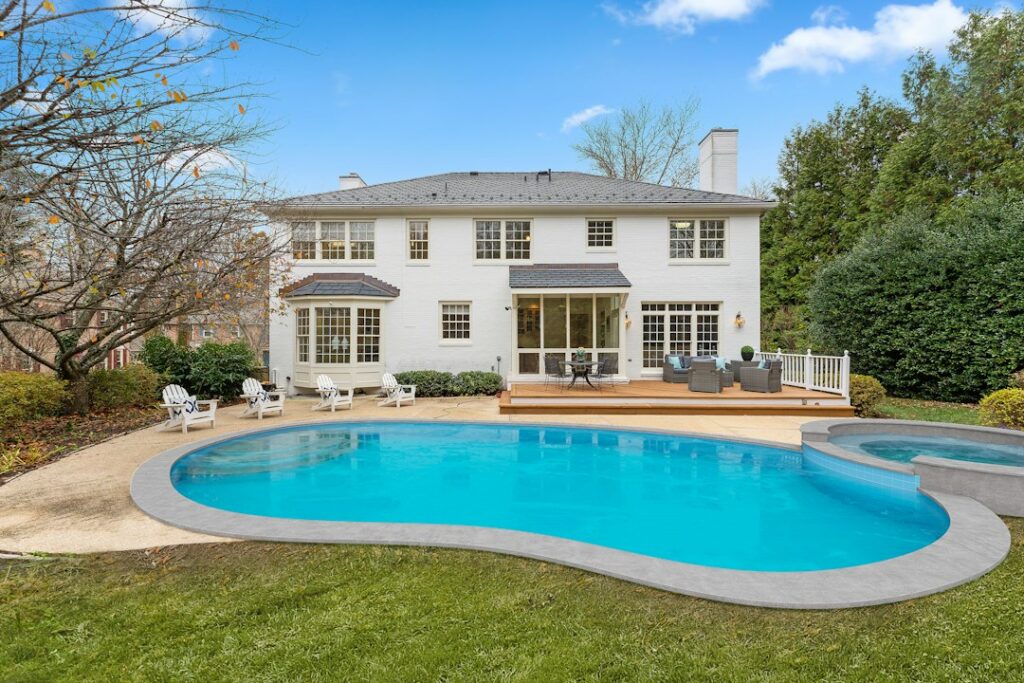
In warm, buggy parts of the country, a pool without a cage can feel like half a pool. Leaves, pine needles, mosquitoes and afternoon glare turn a relaxing swim into a chore. A pool screen enclosure, often called a pool cage or screened lanai, wraps the pool and deck in an aluminum frame covered with mesh, which keeps debris and insects out while letting breeze and light through. In Florida, the Gulf Coast and parts of Arizona and Texas, these structures are almost standard equipment.
The short version: most enclosures use extruded aluminum framing, a mansard, gable, dome or hip roof style, and fiberglass or polyester mesh. Typical installed costs for a new cage run from the low five figures for a small, simple layout to well above that for large, tall or custom designs. Rescreening an existing frame costs a fraction of a new build. Every new enclosure needs a permit, engineered drawings for wind load in many areas, and proper footings.
- What a Pool Screen Enclosure Includes
- Frame Styles and Roof Shapes
- Screen Mesh Types
- Pool Screen Enclosure Cost Factors
- Permits, Wind Loads and Footings
- Pool Safety: An Enclosure Is Not Automatically a Barrier
- When and How to Rescreen
- Retractable Screens and Other Options
- When to Call a Licensed Professional
- Frequently Asked Questions
Before you collect quotes, it helps to know what drives price, which frame and mesh choices hold up, and where pool safety rules fit in. That is what the rest of this article covers.
What a Pool Screen Enclosure Includes
A pool screen enclosure is a structure, not a tent. The frame is built from aluminum beams, posts and purlins bolted together and anchored to a footing or to a thickened edge of the pool deck. The roof may attach to the house fascia or stand on its own. Mesh panels are held in grooved channels with a rubber spline, the same basic method used on a window screen but on a much larger scale.
A complete package usually includes the frame, the screen, one or more doors, kick plates at the bottom of the walls, and sometimes a chair rail at seating height. Many homeowners also add a screen lanai enclosure over the patio area that connects to the house, so the pool and the outdoor living space sit under one continuous roof. Gutters, lighting and privacy panels are common upgrades.
Frame Styles and Roof Shapes
The roof shape sets both the look and a big part of the price.
- Mansard: a flat top with sloped sides. It is the most common and usually the most economical design.
- Gable: a peaked roof like a house. It sheds debris well and gives more headroom in the center.
- Hip: sloped on all four sides, which reads as more finished and ties into many rooflines.
- Dome: a rounded or arched roof with a lot of height. Dramatic, and priced accordingly.
- Flat or shed: simple single-slope roofs, often used on smaller patio-only enclosures.
Frame finish options include white, bronze and black powder coat. White is typical and hides dust well. Bronze and black look sharper against landscaping but can show chalking and pollen more readily. Heavier beams, taller walls and longer clear spans all add aluminum and engineering, and they add cost.
Screen Mesh Types
Mesh choice affects visibility, durability and how much sun reaches the pool.
- Standard 18 by 14 fiberglass: the default. Good visibility, reasonable life, inexpensive to replace.
- 20 by 20 no-see-um mesh: tighter weave that stops tiny biting insects, at the cost of a little airflow and view.
- Heavy-duty or pet-resistant polyester: thicker, vinyl-coated strands that resist claws, kids and impacts. Common on lower wall panels.
- Solar or privacy screen: denser weaves that cut heat and glare and block views from neighbors. A privacy screen lanai panel on the side facing a neighbor is a popular compromise.
Many installers mix meshes: heavy-duty on the bottom row, standard on the walls and roof, and privacy mesh on one or two sides.
Pool Screen Enclosure Cost Factors
Enclosure pricing depends on square footage and height more than anything else, but several other factors move the number. Treat the ranges here as general guidance rather than a quote, because labor, permit fees and material costs vary a lot by region and year.
- Size and height: a small cage over a compact pool and deck sits at the low end. Two-story-height cages that tie into a second-floor roof cost far more.
- Roof style: mansard is usually the baseline. Gable, hip and dome designs add framing and labor.
- Wind zone: coastal and high-wind areas require heavier framing and more anchors, which raises cost.
- Footings: if the existing deck edge is not thick enough to anchor the frame, new footings add excavation and concrete.
- Mesh upgrades: privacy, solar and pet screens cost more per square foot than standard fiberglass.
- Extras: gutters, lighting, doors, and a patio roof section all add up.
As a rough frame of reference, full new enclosures commonly fall somewhere between the low five figures and several times that for large, custom work. Screen lanai cost for a smaller patio-only enclosure is typically lower. Full rescreening of an existing cage usually runs a fraction of new construction, and single-panel repairs are modest. Always compare written, itemized quotes.
Permits, Wind Loads and Footings
Nearly every jurisdiction treats a pool enclosure as a structure that needs a building permit. In hurricane-prone areas, the frame usually must be designed to a specific wind speed rating, with stamped engineering drawings showing beam sizes, spans and anchor details. Your contractor should supply these and pull the permit. Be wary of anyone who suggests skipping it: an unpermitted cage can cause problems at resale and with insurance claims.
Footings matter as much as the frame. The posts need solid concrete to anchor to, sized for uplift during high winds. On older decks the edge may be too thin or cracked, and the installer will pour a new perimeter footing. Call 811 before any digging so buried utilities, pool plumbing and irrigation lines are marked. Leave footings and anchoring to a licensed contractor, because a cage that pulls loose in a storm can land on the house or the pool.
HOA rules often dictate frame color, height and whether privacy mesh is allowed. Check them before signing a contract.
Pool Safety: An Enclosure Is Not Automatically a Barrier
A common assumption is that a screened cage counts as a pool fence. It often does not. Many local pool barrier rules require specific heights, self-closing and self-latching gates, and latch heights out of reach of small children. Screen can be pushed out or cut, and a door that swings freely does not meet most barrier requirements on its own.
Before relying on your enclosure for child safety, check your local pool barrier code with the building department. Steps that commonly help include self-closing, self-latching doors with the latch mounted high, door alarms on any house door that opens into the cage, and a separate mesh or rigid pool fence around the water itself. Nothing replaces active supervision. Assign a water watcher whenever children are swimming, and keep rescue equipment within reach.
When and How to Rescreen
Fiberglass mesh usually lasts somewhere around 10 to 15 years in strong sun, sometimes less near the coast. Signs it is time to rescreen include brittle mesh that tears when pressed, sagging panels, spline popping out of the channels, and widespread small holes. If only a few panels are damaged, spot repair is fine. Once a third or more of the panels are failing, full rescreening usually makes more sense.
A rescreen is also a good time to inspect the frame. Look for loose or missing screws, corroded fasteners, cracked welds or brackets, and posts that have shifted. Replace fasteners with stainless steel where recommended. If beams are bent after a storm, or you see movement at the anchors, have a licensed contractor evaluate the structure before simply putting new mesh on it.
Replacing a single wall panel at ground level is a reasonable DIY task with a spline roller, fresh spline and mesh. Roof panels are another story. Working on top of a cage requires ladders or scaffolding and walking on narrow beams, and falls from roof height are serious. Leave roof panels to crews with proper equipment.
Retractable Screens and Other Options
Not every yard needs a full cage. A retractable screen for lanai openings can close off a covered patio without permanent mesh walls, and motorized versions roll up out of sight. Some homeowners enclose only the patio and leave the pool open, or install a lanai patio enclosure with a solid roof and screened walls. These options cost less but give less debris protection over the water. Weigh how much time you spend skimming against the up-front price.
When to Call a Licensed Professional
New enclosures, roof replacements, frame repairs after storm damage, and any work on footings belong to a licensed and insured enclosure or aluminum contractor. They handle permits, engineered drawings and inspections. If the enclosure ties into the house roof or fascia, make sure the contractor addresses flashing and structural attachment. Electrical work for lighting or fans inside the cage should be done by a licensed electrician, with outdoor-rated fixtures and GFCI protection. Ask for proof of license and insurance, a written scope, and the permit number before work begins.
Frequently Asked Questions
How long does a pool screen enclosure last?
A well-built aluminum frame can last decades with basic maintenance. The mesh is the wear item and typically needs replacing every 10 to 15 years, sooner in harsh sun or salt air.
Does a screen enclosure count as a pool fence?
Not by default. Many local codes have specific barrier requirements for height, gates and latches. Check with your building department and add self-latching doors, alarms or a separate pool fence as needed.
Do I need a permit for a pool cage?
Almost always. Most areas require a building permit, and high-wind regions often require engineered drawings rated for local wind speeds.
Can I rescreen my own enclosure?
Ground-level wall panels are a reasonable DIY job. Roof panels involve working at height on narrow beams and are best left to a professional crew.
What mesh is best for a pool enclosure?
Standard fiberglass works for most walls and roofs. Use heavy-duty mesh on lower panels if you have pets or kids, no-see-um mesh in areas with tiny biting insects, and privacy mesh where you want screening from neighbors.