
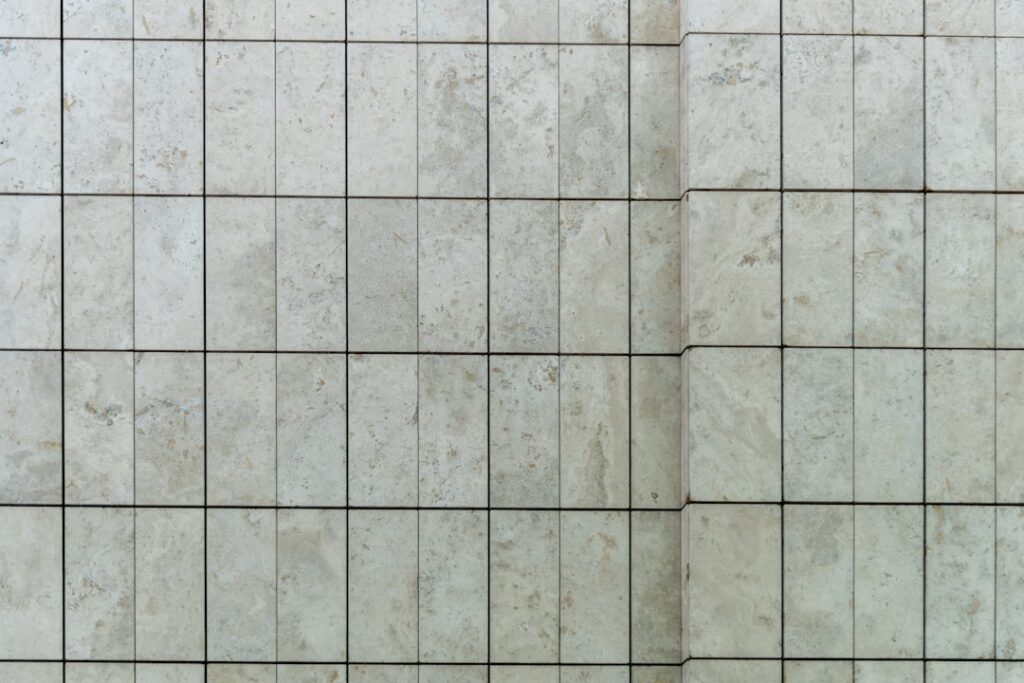
Big-format tile transformed residential design over the past decade, and the 24-inch square format has become the de facto standard for modern interiors. Porcelain tile 24×24 covers four square feet per piece, eliminates roughly two-thirds of the grout lines compared to 12×12 tile, and reads as a contemporary, clean surface that pairs well with both modern and transitional design. The product has gotten dramatically better, the price has gotten dramatically more accessible, and the installation challenges remain real but manageable. This guide covers what to look for, what to pay, and where the pitfalls hide.
Part of our Tile & Grout guide — explore the full guide →
Why 24×24 Took Over
The shift to large-format tile happened for both aesthetic and practical reasons. Aesthetically, fewer grout lines look cleaner and make rooms feel larger and more luxurious. Practically, modern porcelain manufacturing made it possible to produce dimensionally stable, perfectly rectified 24-inch squares affordably — something that wasn’t economical 15 years ago. Most premium tile lines today launch in 24×24 first, then add smaller and larger formats based on demand.
The format also pairs well with modern construction. Open-concept floor plans, large windows with abundant natural light, and contemporary cabinetry all complement big tile better than smaller traditional formats.
Finish Options Explained
Porcelain tile 24×24 comes in five main finish types, each with distinct visual and practical characteristics:
- Polished: High-gloss reflective surface, dramatic visual impact, slippery when wet
- Honed: Smooth matte finish, sophisticated look, moderate slip resistance
- Matte: Standard non-reflective finish, neutral appearance, good slip resistance
- Textured/Anti-slip: Slight surface texture, best for wet areas, harder to clean
- Lappato/Semi-polished: Selectively polished surface with matte areas, modern aesthetic
For floors with potential water exposure (kitchens, bathrooms, entryways), avoid full polish. Honed or matte finishes balance aesthetics and safety. The DCOF rating (Dynamic Coefficient of Friction) should be at least 0.42 for any flooring application — verified on the spec sheet, not assumed from the visual.
Pricing Breakdown
Tile-only pricing for porcelain tile 24×24 spans:
- Builder-grade ($1.39 to $2.49 per sq ft): Basic glaze, solid colors, limited design
- Mid-range ($2.50 to $4.99 per sq ft): Marble looks, wood looks, rectified edges
- Premium ($5 to $9 per sq ft): Italian/Spanish production, photorealistic prints
- Designer/specialty ($9 to $20 per sq ft): Book-matched marble, custom finishes
Most kitchens and baths land in the $3 to $6 range, which delivers genuinely beautiful tile without crossing into specialty pricing.
Rectified vs Pressed Edges
Edge type matters enormously for big-format installations. Rectified tile is mechanically ground after firing for perfectly straight, square edges that allow grout lines as narrow as 1/16 inch. Pressed tile has a slight bevel and irregular edges, requiring grout lines of 1/4 inch or more to look acceptable.
For 24×24 modern installations, always specify rectified. The minimal grout line is what makes the floor read as continuous, premium surface. Pressed-edge 24×24 tile in a tight grout joint will telegraph every micro-irregularity in the cut and ruin the visual.
Substrate Requirements
Big-format tile is unforgiving on substrate flatness. The Tile Council of North America (TCNA) requires substrate flatness within 1/8-inch over 10 feet for tile 15 inches or larger on any side. That’s twice as flat as the requirement for smaller tile. Achieving this typically means:
- Self-leveling underlayment on most concrete subfloors ($3 to $5 per sq ft)
- Plywood overlay on wood subfloors that don’t meet flatness specs
- Uncoupling membrane (Schluter Ditra or equivalent) for crack isolation
- Verification with a 10-foot straightedge before tile sets
Skip substrate prep at your peril. The single most common 24×24 tile failure is lippage — adjacent tiles sitting at slightly different heights — which makes the floor feel uneven underfoot and visually imperfect.
Installation Considerations
Beyond substrate, large-format installation requires:
- Back-buttering each tile with thinset for full coverage (mandatory, not optional)
- Lippage-control clips and wedges (Levelers, Tuscan, Raimondi) at every tile intersection
- A wet saw with a long bridge, capable of cutting 24-inch tile in one pass
- Two installers — one tile is heavy and large for one person to manage cleanly
- Slow, deliberate pace — typical install runs 100 to 150 sq ft per day for two installers
Installation labor for 24×24 porcelain typically runs $7 to $14 per square foot, sometimes more in expensive markets. Total installed cost for mid-range product usually lands $13 to $20 per square foot.
Design Pattern Options
Most homeowners install 24×24 tile in a straight grid pattern, which reads as the cleanest, most contemporary option. Other layouts to consider:
- Brick (running bond): Each row offset 50 percent — adds rhythm, hides minor lippage
- 1/3 offset (modern brick): Smaller offset — more contemporary than 50 percent
- Diagonal: 45-degree rotation — formal feel, increased waste (up to 15 percent)
- Modular with smaller tile: 24×24 paired with 12×12 in a Versailles pattern
For modern minimalist spaces, straight grid wins almost every time. Save the diagonal and modular patterns for rooms where you want explicit design statement.
Where 24×24 Tile Works Best
The format excels in:
- Open kitchens: Continuous surface reads as upscale and easy to maintain
- Master bathrooms: Spa-like aesthetic, easier cleaning around vanities and tubs
- Entryways and mudrooms: Durable, sweeps clean, handles wet boots
- Open living spaces: Continuous look across rooms feels expansive
The format works less well in narrow hallways under 4 feet wide, on stair treads (where formats over 12 inches are technically code-violating in many jurisdictions), and in small spaces under 50 square feet where the scale becomes oppressive.
Common Buyer Mistakes
The most frequent mistakes when buying porcelain tile 24×24:
- Selecting based on showroom display alone without taking samples home
- Underestimating installation cost — tile and labor split roughly 40/60 for big-format
- Skipping substrate prep to save money — almost always disastrous within 18 months
- Hiring a tile installer without large-format experience
- Under-ordering — always plan 10 to 15 percent waste, more for diagonal patterns
The Bottom Line
Porcelain tile 24×24 delivers genuine luxury aesthetic at mid-range pricing when specified correctly. Target rectified mid-range tile ($3 to $6 per square foot), insist on proper substrate prep, hire an experienced installer, and use lippage-control systems. Done right, the floor looks better than the photo on the box and outlives every other component in the room.
Prefer to explore on your own?
See how new flooring looks in your actual room in seconds — free, no signup.
Try the free Floor Studio →

