
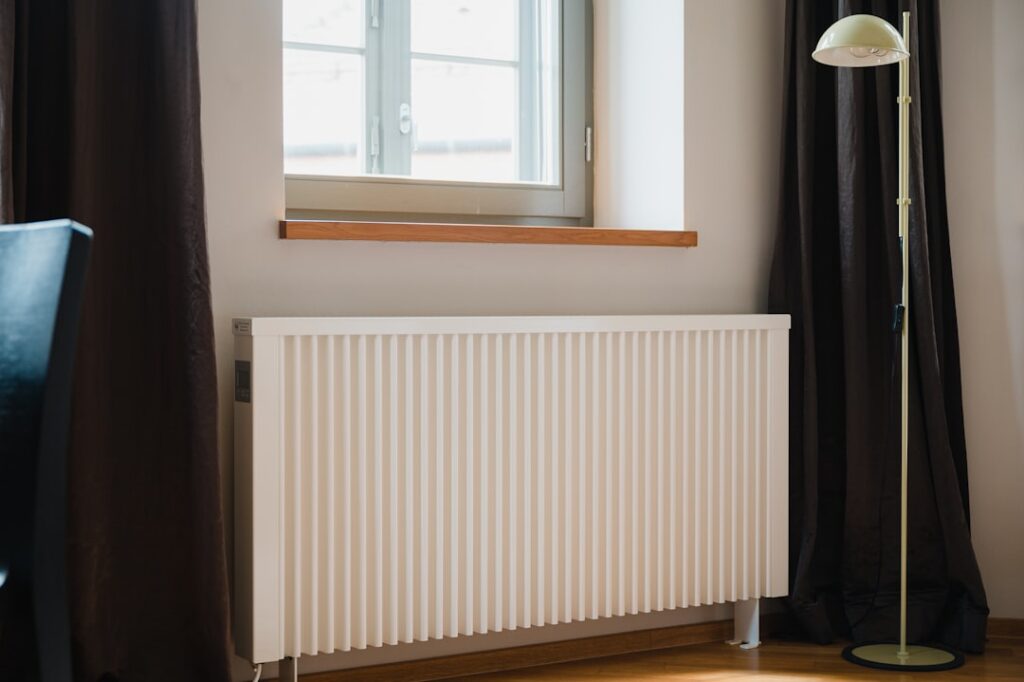
A portable baseboard heater delivers the gentle, even warmth of a built-in baseboard unit but plugs into a standard outlet and moves wherever you need it. These low-profile electric heaters are ideal for taking the chill off a bedroom, office, basement, or sunroom without the cost and hassle of hardwired installation. Understanding how they work, what they cost to run, and which safety features matter will help you pick a unit that keeps you comfortable and your electric bill reasonable.
- How Portable Baseboard Heaters Work
- Types of Portable Baseboard Heaters
- Sizing the Heater to Your Room
- What It Costs to Run
- Essential Safety Features
- Safe Operating Practices
- Features Worth Paying For
- What Portable Baseboard Heaters Cost to Buy
- Portable Baseboard vs. Other Space Heaters
- Improving Efficiency and Comfort
- Staying Warm Safely
How Portable Baseboard Heaters Work
Like their hardwired cousins, portable baseboard heaters warm a room through convection. Cool air enters at the bottom, passes over an electric heating element, and rises out the top as warm air, creating a gentle circulation that heats the whole room evenly rather than blasting hot air at one spot. Because they run on radiant convection rather than a fan, most are nearly silent—a major advantage in bedrooms and offices where fan noise is annoying. The long, low profile spreads the heat over a wide area, avoiding the concentrated hot spots of a small space heater.
Types of Portable Baseboard Heaters
- Convection baseboard heaters: The classic long, low unit with an exposed or finned element. Silent and simple, they warm a room steadily.
- Oil-filled baseboard-style heaters: A sealed element heats oil that radiates warmth gently and retains heat after cycling off, improving efficiency and comfort.
- Hydronic portable heaters: Similar to oil-filled but use a water-based fluid; they warm evenly and stay warm between cycles.
- Fan-assisted baseboard units: Add a quiet fan to speed heat distribution, useful in larger or drafty rooms, at the cost of some noise.
Oil-filled and hydronic models cost a bit more but often feel more comfortable because they hold heat and cycle less abruptly.
Sizing the Heater to Your Room
Electric heaters are rated in watts, and the general rule is about 10 watts per square foot for a room with average insulation and 8-foot ceilings. That means:
- 150 sq ft (small bedroom): roughly a 1,500-watt heater.
- 100 sq ft (office or nursery): about 1,000 watts.
- 200+ sq ft (large room): 2,000 watts, or a unit on a 240-volt outlet.
Most portable units max out at 1,500 watts because that is the safe limit for a standard 120-volt household outlet on a 15-amp circuit. For larger spaces, you will either need a bigger 240-volt unit (which requires a special outlet) or accept that a 1,500-watt heater is best for supplemental, spot heating rather than heating a whole large room. Poorly insulated rooms need more watts per square foot.
What It Costs to Run
Electric resistance heat is 100 percent efficient at the outlet but can be expensive depending on your electricity rate. A 1,500-watt heater uses 1.5 kilowatt-hours per hour of full-power operation. At the US average rate of roughly 16 to 17 cents per kWh, that is about 24 to 26 cents per hour, or a little under $2 for eight hours of continuous run time. In practice, a thermostat cycles the heater on and off, so real costs are lower. Still, using a portable heater to warm a single occupied room while turning down central heat for the rest of the house is where these units save money—running one to heat a large area continuously gets pricey.
Essential Safety Features
Space heaters are involved in a significant share of home heating fires, so safety features are not optional. Look for:
- Tip-over shutoff: Automatically cuts power if the unit is knocked over.
- Overheat protection: Shuts the heater off if internal temperature climbs too high.
- Cool-touch housing: Baseboard and oil-filled units run cooler on the surface than glowing element heaters, reducing burn risk—important around kids and pets.
- Certification mark: Choose units listed by a recognized testing lab such as UL or ETL.
A built-in thermostat and timer add both convenience and safety by preventing the heater from running longer or hotter than needed.
Safe Operating Practices
Even a well-designed heater must be used correctly. Plug it directly into a wall outlet, never into an extension cord or power strip, which can overheat under a heater’s high current draw. Keep at least three feet of clearance from curtains, bedding, furniture, and anything flammable. Place it on a hard, level surface, not on carpet that can block airflow or on furniture where it can fall. Never leave a portable heater running unattended overnight or when you leave home unless it has a thermostat and you trust its safety shutoffs, and even then many safety experts advise turning heaters off when sleeping or away.
Features Worth Paying For
Beyond the basics, a few features improve daily use. A programmable thermostat maintains a set temperature and cycles efficiently. A timer lets you warm a room before you wake or shut off automatically. Casters or a lightweight design make the unit truly portable between rooms. A remote control is handy for bedroom use. And a digital thermostat holds temperature more precisely than a simple mechanical dial. These conveniences typically add $20 to $60 to the price but noticeably improve comfort and efficiency.
What Portable Baseboard Heaters Cost to Buy
Basic convection baseboard-style heaters start around $40 to $70. Oil-filled and hydronic models with thermostats and timers run $60 to $120. Premium units with digital controls, remotes, and quiet fan assistance reach $120 to $200. Because these are supplemental heaters, most homeowners are well served by a mid-range oil-filled or convection unit in the $60 to $100 range, which balances comfort, safety features, and price.
Portable Baseboard vs. Other Space Heaters
It helps to know how a portable baseboard heater stacks up against other portable options. Ceramic fan heaters warm a room fastest and cost less, but they are noisy and blow concentrated hot air rather than heating evenly. Infrared and radiant heaters warm objects and people directly, which feels good for spot heating but does little to raise the whole room’s temperature. Oil-filled radiators are close cousins of baseboard-style units—quiet, even, and heat-retaining—just in a taller, more compact footprint. The portable baseboard’s advantage is its long, low profile that spreads gentle convection warmth across a wide area silently, making it ideal for bedrooms, offices, and nurseries where quiet, even heat matters more than instant warmth.
Choose based on your priority: speed and low cost favor a ceramic heater, targeted warmth favors infrared, and quiet, comfortable whole-room heat favors a baseboard or oil-filled unit.
Improving Efficiency and Comfort
You can stretch a portable heater’s value with a few smart habits. Close the door to the room you are heating so the warmth isn’t lost to the rest of the house—supplemental heating only saves money when you concentrate it where you actually are. Seal drafts around windows and doors, since a leaky room forces the heater to run constantly. Use the built-in thermostat to hold a steady comfortable temperature rather than running the unit at full blast, and set it a few degrees lower while adding a sweater or blanket. Position the heater away from walls and furniture so air circulates freely around it. Pairing the heater with a lowered central-heat setting for the rest of the house is where these units genuinely trim your winter energy bill rather than adding to it.
Staying Warm Safely
A portable baseboard heater is an excellent way to add quiet, even warmth to a specific room without hardwiring or major cost. Size it to your room at roughly 10 watts per square foot, prioritize tip-over and overheat protection, plug it straight into the wall, and keep flammables well clear. Use it to heat the room you are actually in rather than the whole house, and you will enjoy targeted comfort while keeping both your safety and your energy bill under control.


