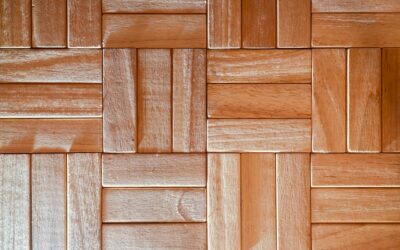
Walk into a flooring showroom today and 80% of the wood on display is finished before it ever reaches your house. Prefinished hardwood dominates new installations because it eliminates dust, cuts installation timelines from two weeks to two days, and arrives with factory finishes that are often more durable than anything an on-site crew could apply. The trade-off is a few visible bevels and slightly less customization.
This guide covers what prefinished hardwood actually is, how to compare grades and finishes, and where it makes more sense than traditional site-finished work.
How Prefinished Hardwood Is Made
Each plank is sanded, stained, and topcoated in a controlled factory environment before shipping. UV-cured aluminum oxide finishes pass through 7 to 10 layers of coating, then bake under high-intensity lamps that cure each layer in seconds. The result is a surface 30-50% more abrasion-resistant than typical site-applied polyurethane.
Most planks ship with micro-beveled edges (a slight V groove between boards) which hides minor height differences after install. Square-edge prefinished planks exist but require flatter subfloors and pricier installers.
Pros of Prefinished Hardwood
Practical reasons most contractors recommend prefinished over site-finished for residential work:
- Faster install: Walk on the floor the same day; no 7-day cure time
- Tougher finish: Aluminum oxide topcoats rated for 25-50 year wear warranties
- No sanding dust: Critical for renovations in occupied homes
- No fume off-gassing: Factory-cured finishes release minimal VOCs in your home
- Color predictability: What you see in samples is what arrives at your door
- Wide species selection: Oak, hickory, maple, walnut, cherry, exotic hardwoods all available
For families with kids, pets, or asthma, the dust-free install alone is worth the slight aesthetic compromise.
Cons Worth Honest Consideration
Site-finished hardwood still wins in a few areas:
- Visible micro-bevels collect dust and dirt over years
- Future refinishing exposes a different (raw) wood color than the factory finish
- Color customization limited to manufacturer’s catalog
- Higher per-plank cost: $4-$15/sq ft vs $3-$10 for unfinished
- Repairs require ordering matching planks from the same lot
- Some discount finishes scratch white where damage exposes the raw wood
For ultra-high-end whole-house installations where seamless plank transitions matter, site-finishing still has a niche.
Engineered vs Solid Prefinished Hardwood
Both categories ship prefinished. The differences shape where each works best:
Solid Prefinished
3/4 inch thick, single piece of hardwood, can be sanded and refinished 6-10 times. Best for above-grade installations in stable climates. Requires nail-down on plywood subfloors. Pricing $5-$15/sq ft material.
Engineered Prefinished
3/8 to 5/8 inch thick, hardwood veneer over plywood or HDF core. More dimensionally stable in humid climates and basements. Top wear layer of 3-6 mm allows 2-4 refinishings. Installs as nail-down, glue-down, or floating. Pricing $4-$12/sq ft.
For first-floor installs over concrete slabs or in coastal humidity, engineered is the safer pick. For multi-generational hardwood in a Midwestern colonial, solid is the long-game choice.
Wood Species and Grading
The species you choose determines hardness, color range, and long-term wear. Common options ranked by Janka hardness:
- Brazilian Cherry: 2,820 Janka, deep red, $7-$12/sq ft
- Hickory: 1,820 Janka, dramatic grain, $5-$9/sq ft
- Hard Maple: 1,450 Janka, light, smooth grain, $5-$8/sq ft
- White Oak: 1,360 Janka, neutral, on-trend, $5-$10/sq ft
- Red Oak: 1,290 Janka, classic warm tone, $4-$7/sq ft
- American Walnut: 1,010 Janka, rich brown, $7-$12/sq ft
Grading affects price as much as species. Select grade has the cleanest appearance with minimal knots; #1 Common shows more character marks; rustic grades celebrate knots and color variation. For modern homes, select and #1 Common dominate. For farmhouse and transitional styles, character grades are popular.
Best Prefinished Hardwood Brands for 2026
Brand reputation matters because warranty support varies dramatically:
- Mirage: Quebec-based, 50-year finish warranty, $8-$14/sq ft
- Mullican: Tennessee mills, broad species range, $5-$9/sq ft
- Bruce: Affordable national brand, $4-$7/sq ft
- Shaw Floors Epic Plus: Engineered specialist, $5-$10/sq ft
- Anderson Tuftex: Designer-grade, wide planks, $9-$15/sq ft
- Hallmark Floors: Hand-scraped specialist, $7-$12/sq ft
For an aluminum oxide finish that lasts, look for “10-coat” or “11-coat” UV-cured finish in the spec sheet. Less coating means faster wear-through.
Installation Methods That Work
Three approaches dominate prefinished hardwood installation:
- Nail-down: Standard for solid 3/4 inch planks over plywood subfloors. Pneumatic flooring nailers shoot cleats every 6-8 inches.
- Glue-down: Required over concrete or for wide planks. Use a moisture-blocking adhesive like Bostik MVP4 or Mapei Ultrabond ECO 980.
- Floating: Click-lock engineered planks over a 2 mm acoustic underlay. Fastest install, easiest DIY route.
Acclimate the planks 5 to 7 days in the installation room at 60-80°F and 35-55% relative humidity. Skipping this step causes 90% of cupping and gapping problems.
Long-Term Care and Refinishing
Daily care is straightforward: dust mop or vacuum (brush roll off), then damp mop weekly with a hardwood-specific cleaner like Bona Hardwood Floor Cleaner. Skip steam, bleach, ammonia, and oil soap.
Refinishing a prefinished floor requires 60-grit sanding to break through the aluminum oxide layer. This is harder than sanding site-finished floors and most flooring contractors charge an extra $1-$2 per sq ft as a result. Plan for one refinishing every 20-25 years on engineered, and every 10-15 years on solid.
Frequently Asked Questions
Can prefinished hardwood be sanded and refinished?
Yes. Solid planks handle 6-10 refinishes; engineered planks with thick wear layers handle 2-4. The aluminum oxide topcoat requires aggressive initial sanding.
Are micro-bevels obvious in prefinished floors?
The grooves are roughly 1/16 inch deep — visible on close inspection but not from standing height. Square-edge options exist for a flatter look at higher labor cost.
Is prefinished hardwood pet-friendly?
Yes, especially aluminum-oxide finished species above 1,500 Janka. Trim pet nails regularly to minimize scratches.
Does prefinished hardwood add resale value?
Yes. National Association of Realtors surveys consistently show 70-80% cost recovery on hardwood floor installs at resale.
Prefer to explore on your own?
See how new flooring looks in your actual room in seconds — free, no signup.
Try the free Floor Studio →