The small quick-connect tip on the end of your wand does more to change cleaning results than any other single part. A pressure washer nozzle controls the spray angle, which determines both how much force hits the surface and how wide an area you cover. Pick the wrong pressure washer nozzle and you can strip paint off a car or leave a driveway barely touched. This guide decodes the color system and helps you choose correctly every time.
- Why the Nozzle Matters So Much
- The Color Code Explained
- Nozzle Size Numbers
- Adjustable and Specialty Nozzles
- Matching Nozzles to Common Jobs
- How to Use and Change Nozzles Safely
- Cleaning and Maintaining Nozzles
- Safety Warnings
- How Nozzle Angle Affects Distance and Force
- Matching Nozzle Size to Your Machine
- When to Replace Worn Nozzles
- Quick Answers to Common Questions
- Final Takeaway
Why the Nozzle Matters So Much
Your pump produces a fixed pressure and flow, but the nozzle decides how that energy is delivered. A narrow spray concentrates all the force into a tiny point for maximum cutting power. A wide spray fans the same water out, reducing impact per square inch but covering more area. Change the tip and you effectively change the machine’s aggressiveness without touching the engine.
The Color Code Explained
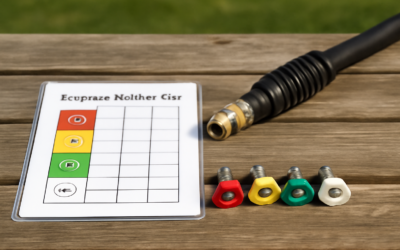
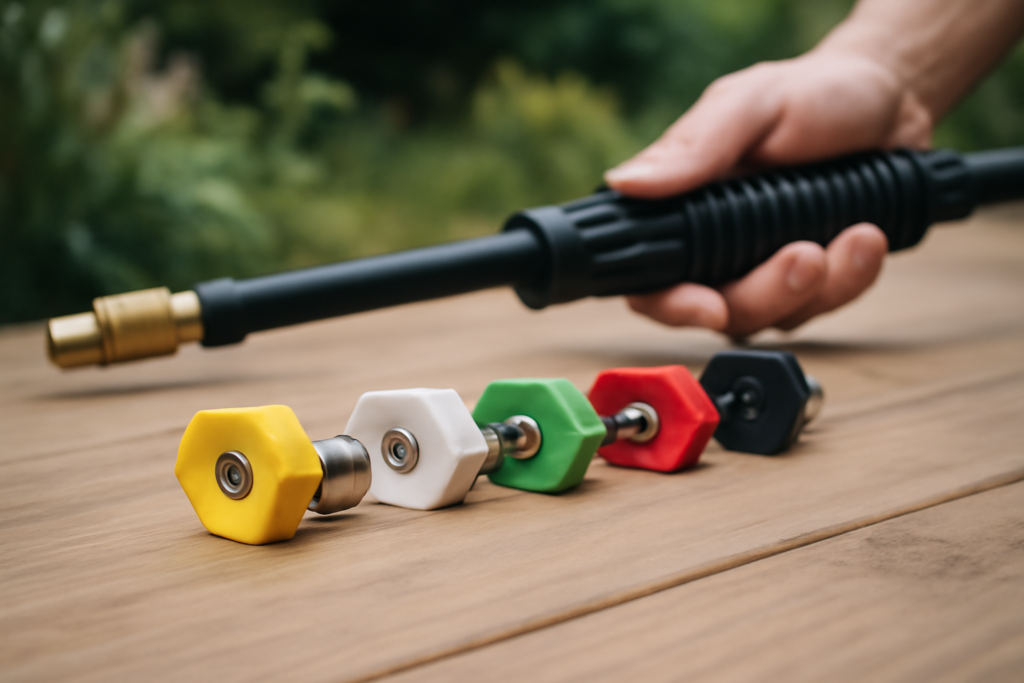
Standard quick-connect nozzles follow a universal color and angle system:
- Red (0 degrees): a pinpoint jet. Extremely aggressive and rarely needed. It can gouge wood, etch concrete, and cause injury. Reserve it for stubborn rust stains on durable surfaces from a distance.
- Yellow (15 degrees): heavy stripping. Good for removing paint, prepping surfaces, and cutting through caked mud on concrete.
- Green (25 degrees): the all-purpose workhorse. Handles decks, patios, driveways, and general dirt with a good balance of power and coverage.
- White (40 degrees): gentle cleaning. The right choice for cars, windows, vinyl siding, and outdoor furniture.
- Black (65 degrees, soap): a low-pressure tip with a large orifice that draws detergent from your soap tank or siphon.
A rule of thumb: start wide and step down. Begin with white or green, and only move to a narrower angle if the surface truly needs it.
Nozzle Size Numbers
Beyond color, nozzles carry a size number that matches the tip to your machine’s flow and pressure. This orifice size is critical, and using the wrong one hurts performance. A nozzle too large drops your pressure; one too small overloads the pump and can spike pressure dangerously. The correct size depends on your washer’s GPM and PSI, and it is stamped as a number like 2.5 or 3.0. When replacing individual tips, match your original size number, not just the color.
Adjustable and Specialty Nozzles
Beyond the five standard tips, several specialty options are worth knowing:
- Adjustable (variable) nozzles: twist to change the spray angle on the fly. Convenient, but they sacrifice some power compared with dedicated tips.
- Turbo/rotary nozzles: spin a 0-degree jet in a cone, combining the cutting power of red with wider coverage. Excellent for concrete and tough grime.
- Soap/foam cannon nozzles: thick foaming detergent application for cars and detailing.
- Gutter cleaners and extension nozzles: curved or long tips for reaching high or awkward spots.
A turbo nozzle is the single best upgrade for most homeowners tackling stained concrete; it cleans nearly as fast as a surface cleaner on smaller areas.
Matching Nozzles to Common Jobs
Here is a quick reference for everyday tasks:
- Washing a car or truck: white (40 degrees), from 2-3 feet away.
- Vinyl or fiber-cement siding: white, plus soap and a mildew cleaner.
- Wood deck: green (25 degrees), keeping the tip moving to avoid furring the grain.
- Concrete driveway: green or yellow, or a turbo nozzle for stains.
- Paint prep and stripping: yellow (15 degrees).
- Applying detergent: black (soap) tip.
How to Use and Change Nozzles Safely
Quick-connect tips make swapping fast, but do it safely:
- Release the trigger and turn off the machine.
- Squeeze the trigger to relieve any trapped pressure in the wand.
- Pull back the spring collar on the wand, remove the old tip, and insert the new one until it clicks.
- Tug the nozzle to confirm it is locked before restarting. A tip that pops loose under pressure becomes a projectile.
Always test on an inconspicuous area first, and hold the tip far enough away that you are not damaging the surface.
Cleaning and Maintaining Nozzles
Clogged nozzles are the number-one cause of pulsing pressure and streaky cleaning. Minerals and debris lodge in the tiny orifice. To clear one, remove it from the wand and push the included cleaning wire (or a paperclip) straight through the hole, then flush it with water. Never enlarge the orifice with a drill bit or oversized wire, because changing the size alters your pressure and flow. Store tips in the holder that came with your washer so you do not lose them, and keep a spare set on hand.
Safety Warnings
A pressure washer nozzle concentrates enough force to inject water and contaminants under your skin, which is a serious medical emergency. Never point the wand at people or animals, never use the 0-degree tip casually, and always wear eye protection and closed-toe shoes. Keep the red tip for genuinely tough, durable surfaces and use it from a safe distance.
How Nozzle Angle Affects Distance and Force
The spray angle is only half the story; distance is the other half. As you pull the wand away from a surface, the fan of water spreads wider and the force per square inch drops. This means you can effectively soften an aggressive tip by backing off, or intensify a gentle one by moving closer. A practical technique is to start every job far back with a wider tip, then gradually close the distance until you see the surface cleaning without damage. This graduated approach protects delicate materials like wood siding, painted surfaces, and older concrete that a close, narrow blast would gouge or etch.
Matching Nozzle Size to Your Machine
The orifice size number is easy to overlook but genuinely important. Nozzle sizing is based on your washer’s flow (GPM) at its rated pressure (PSI). Manufacturers provide charts that pair a size number with a GPM/PSI combination. If you buy a replacement tip with the wrong orifice, two things can go wrong: too large and your pressure drops noticeably; too small and pressure spikes, which stresses the pump, hoses, and unloader valve. When your washer’s tips wear out (and they do wear, gradually losing pressure over hundreds of hours), replace them with the same size number your machine came with. If you change to a machine with different output, recalculate the size.
When to Replace Worn Nozzles
Nozzles are consumables. The tiny orifice slowly erodes from the constant high-velocity water, especially with hard or gritty water. A worn nozzle produces a wider, weaker, less defined spray and lower pressure, symptoms people often blame on the pump. If your machine seems to have lost power and the pump checks out, try a fresh set of nozzles first; they are cheap insurance. Signs of a worn tip include a spray pattern that looks fuzzy or uneven, visibly reduced cleaning power, and pressure that reads low on a gauge despite good water supply. Keeping a spare set on hand means a worn or lost tip never sidelines a job.
Quick Answers to Common Questions
Which nozzle is best for washing a car? The white 40-degree tip from 2-3 feet away, paired with a soap tip for detergent.
What does the black nozzle do? It is the low-pressure soap tip. Its wide orifice drops the pressure enough to draw detergent from the tank or siphon.
Is the red 0-degree nozzle dangerous? It concentrates all the force into a point that can gouge surfaces and injure you. Use it rarely, only on tough durable surfaces, and never near people.
Are pressure washer nozzles universal? Standard quick-connect tips share the same 1/4-inch fitting and color code across brands, but the orifice size number must match your machine’s flow and pressure.
Why did my machine lose power? Worn nozzles are a common, overlooked cause. Try a fresh set before blaming the pump.
Final Takeaway
Learning the color code turns a pressure washer from a blunt instrument into a precise tool. Keep the full set of standard tips, add a turbo nozzle for concrete, always start with a wider angle, and keep the orifices clean. Master the humble pressure washer nozzle and you will clean faster, protect delicate surfaces, and get professional-looking results from any machine.