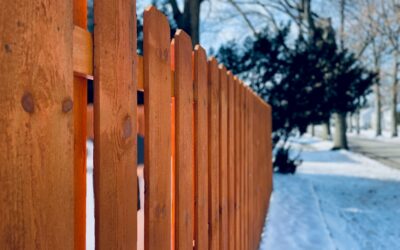
The gate is the part of your fence visitors actually see, and it’s also the part most likely to sag, stick, or rot first. A poorly designed gate undermines an otherwise great fence within a single season — drooping at the latch side, scraping the path with every open, or showing pry-friendly hardware on the public side. Privacy fence gate ideas worth considering go beyond a basic 4-by-6 panel with two hinges. The right gate combines structural design, hardware quality, and a few aesthetic moves that signal craftsmanship without breaking the budget.
Part of our Decks & Outdoor guide — explore the full guide →
- Why Gates Fail and How to Prevent It
- The Single Pedestrian Gate Done Right
- Double Gates for Driveways
- Sliding Gates for Tight Spaces
- Arched and Decorative Tops
- Hidden Hardware vs. Statement Hardware
- Latch Choices That Actually Work
- Material and Finish Choices
- Privacy Plus Light — Lattice and Spindle Tops
- Smart Locks and Keypad Access
- Common Mistakes to Avoid
- Final Word
Why Gates Fail and How to Prevent It
Gates fail for three predictable reasons. First, the latch side drops because gravity loads the diagonal opposite the hinges. A horizontal-only frame without an internal diagonal brace begins sagging within a year. Second, the hinge side pulls away from the post because a single 4-by-4 post can’t carry the cantilever load of a 6-foot wide gate full of cedar planks. Third, the bottom drags because the original install left no clearance for ground heave or seasonal swelling.
Solving all three at design time saves repair work for the next 15 years.
The Single Pedestrian Gate Done Right
A standard pedestrian gate measures 36 to 48 inches wide and 6 feet tall to match privacy fence height. Build the frame from pressure-treated 2-by-4 lumber assembled with corner brackets and a true diagonal brace running from the bottom hinge corner to the top latch corner — never the other direction. Some designs use a steel anti-sag tension cable instead of a wood brace, which works equally well and shows less on the back face.
Use 6-by-6 hinge posts (not 4-by-4) set in concrete at least 36 inches deep. The extra mass keeps the post vertical against years of opening force. Three full-strap hinges from D&D Technologies, Snug Cottage, or Nationwide Industries spread the load — far better than two undersized residential hinges.
Double Gates for Driveways
Double gates spanning 8 to 16 feet need different engineering. Each leaf must be braced independently, and a drop-rod stop in the center keeps the static leaf in place when only one side opens. Avoid trying to make double gates self-closing — the two leaves rarely line up perfectly, and forcing closure with springs accelerates wear.
Brick, stone, or wide-stone column posts with steel reinforcement deliver the cleanest result for double driveway gates. Hidden lag bolts and concealed hinge mounts elevate the look from “homemade” to “estate.”
Sliding Gates for Tight Spaces
If your yard slopes uphill from the gate, swing-out gates won’t work without major regrading. Sliding gates roll along a track parallel to the fence, taking up zero arc space. Cantilever sliding gates eliminate the floor track entirely — the gate hangs from rollers above and counterweighted behind the opening — perfect for snowy climates where ground tracks ice up.
Materials run $1,500 to $4,000 for a residential cantilever slider, plus motor and remote if automated. The track-mounted version starts around $700 in materials. Both work well with horizontal-board privacy fence styles.
Arched and Decorative Tops
A single design move that lifts a basic privacy fence gate is a curved top. A simple arch cut into the top rail of the gate planks — rising 3 to 6 inches at the center — adds visual character with one extra cut. For a more formal look, a half-round or full-Roman arch with a pointed peak reads custom even in a budget yard.
The arch direction signals different aesthetics. A convex (rising-center) arch reads traditional and welcoming. A concave (lower-center) arch reads modern and architectural. Either works, but stay consistent with the home’s exterior style.
Hidden Hardware vs. Statement Hardware
Two design philosophies dominate gate hardware choice. Hidden hinges and concealed latches keep the gate face clean — ideal for modern minimalist designs. Strap hinges, pull rings, and decorative thumb latches add visual interest and signal traditional craftsmanship.
For statement hardware, lean into it — choose oversized 12-inch black powder-coated strap hinges from Acorn Manufacturing or Snug Cottage. For hidden hardware, choose a 3-D adjustable hinge from Anvil Marine or Pemko that lets you fine-tune sag without remounting.
Latch Choices That Actually Work
The cheapest gate latches — single-sided slide bolts and basic gravity latches — are the source of most homeowner frustration. They jam, ice up, and offer zero security. Spend $40 to $120 on a quality latch from Lokk-Latch, MagnaLatch, or Snug Cottage. These offer self-closing, two-sided keyed access, and weather resistance.
For pool fence gates, MagnaLatch is the standard. The magnetic mechanism resists corrosion and meets most pool barrier codes for self-latching at 54 inches above the ground.
Material and Finish Choices
Western red cedar remains the most popular gate material in the US for good reasons — natural rot resistance, dimensional stability, and good appearance with minimal finishing. Pressure-treated southern yellow pine is half the price but heavier, prone to twisting, and demands sealing within the first year. Composite boards from Trex Seclusions or AZEK Pergola Components offer zero-maintenance permanence at premium prices.
For finish, transparent or semi-transparent stain like Cabot Australian Timber Oil or Sikkens ProLuxe lets the wood grain show. Solid stain hides aging better but eventually peels and requires sanding for recoats. Skip clear sealers entirely on cedar — they fail within a year.
Privacy Plus Light — Lattice and Spindle Tops
For homeowners who want full privacy at eye level but more light reaching the yard, a top section of horizontal lattice, vertical spindles, or curved iron pickets adds visual breathing room. The lower 4 to 5 feet of the gate stays solid; the upper 1 to 2 feet uses a more open detail.
This design move pairs especially well with arched gate tops. Iron spindles inside an arched cedar frame instantly elevates a basic privacy fence to a much higher design tier — and adds maybe $80 to $150 in additional materials.
Smart Locks and Keypad Access
Outdoor smart locks have improved dramatically in the past five years. The Yale Assure Lock 2 outdoor-rated, the Schlage Encode WiFi, and the Lockey USA mechanical keypad all hold up in real weather. Pair with a strike-plate-mounted MagnaLatch or Lokk-Latch for true smart-gate functionality.
Plan for power. Some smart latches run on long-life batteries (typically 1 to 3 years). Hardwired options need conduit run from the house through the gate post — schedule this during initial install to avoid trenching later.
Common Mistakes to Avoid
Don’t undersize the hinge posts. The first failure point is almost always a 4-by-4 post that should have been a 6-by-6. Don’t skip the diagonal brace — even cable braces are non-negotiable. And don’t install the gate flush with the ground; leave at least 2 inches of clearance for snow, frost heave, and seasonal swelling.
Final Word
A well-built gate is the difference between a fence that looks finished and one that looks unfinished. Invest in proper post sizing, real bracing, quality hardware, and one or two design details, and the gate becomes the best-looking part of your privacy fence — not the weakest link.