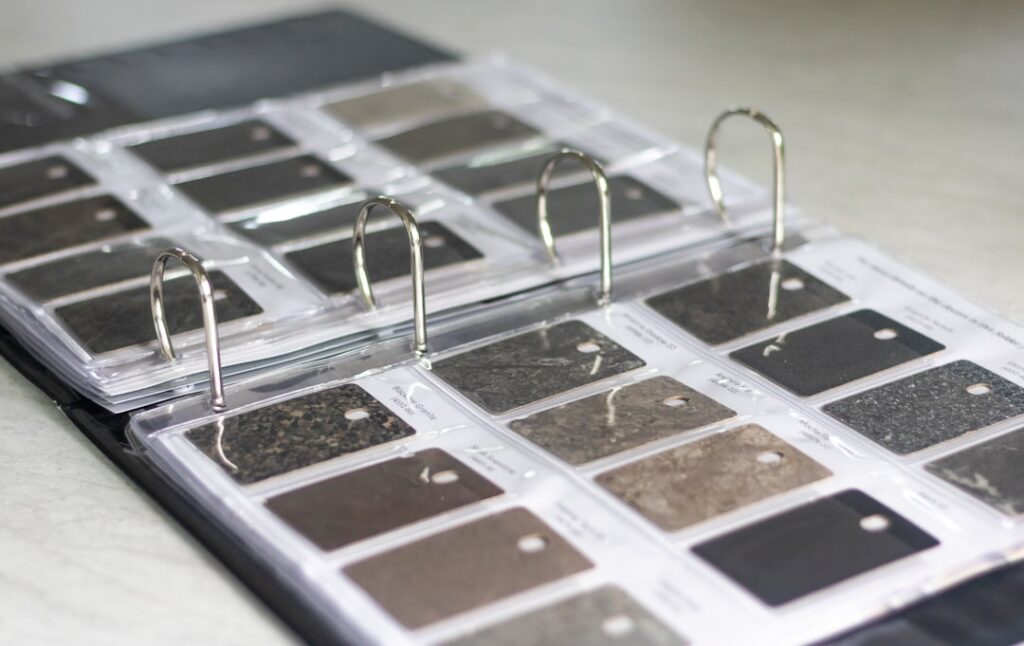
The biggest countertop regret I hear from homeowners isn’t about price or durability. It’s that the slab looked nothing like the tiny chip they fell in love with at the showroom. Ordering quartz countertops samples and living with them in your own kitchen for a few days is the single cheapest insurance you can buy against a $4,000 mistake. Lighting, cabinet color, and wall paint all shift how a quartz pattern reads, and a 4-inch swatch under fluorescent showroom light tells you almost nothing about how a full slab will feel at home. This guide walks you through getting, testing, and judging samples the right way.
Part of our Countertops guide — explore the full guide →
- Why Samples Matter More Than the Showroom
- Where to Get Quartz Samples
- How to Test Samples at Home
- What to Look For in a Quality Sample
- From Sample to Slab: Bridging the Gap
- Budgeting Around Your Sample Choice
- Common Mistakes People Make With Samples
- Matching Edge Profiles and Thickness
- Final Thoughts
Why Samples Matter More Than the Showroom
Quartz is an engineered stone, roughly 90 to 94 percent ground quartz bound with resin and pigment. Manufacturers print or layer in veining to mimic marble and granite, which means the pattern repeats and varies across a slab in ways a small chip can’t show. A sample lets you check the base tone, the scale of the veining, and how glossy or matte the finish actually is.
More importantly, color is contextual. A warm white that looks crisp in a daylight showroom can turn yellow under your kitchen’s 2700K bulbs. Bringing samples home is the only way to see your actual quartz against your actual cabinets, backsplash, and floor.
Where to Get Quartz Samples
You have several options, and most cost little or nothing:
- Manufacturer programs: Major quartz brands ship small chip samples directly, often free or for a few dollars in shipping. These are typically 3 to 5 inches.
- Home improvement stores: Big-box retailers stock loose chips you can take home for free and order larger samples through their countertop desk.
- Local fabricators and slab yards: The best option for serious shoppers. They often loan out larger 12-inch tiles and let you view full slabs in person.
- Online sample shops: Several sites sell larger samples for $5 to $15 each, useful when you want a bigger piece to judge veining.
Whenever possible, get the largest sample you can. A 12-inch tile shows pattern scale far better than a 3-inch chip, and that scale is exactly what fools people.
How to Test Samples at Home
Don’t just glance at a chip on the counter and call it done. Run it through real conditions:
- View it in three lights. Look at the sample in morning daylight, midday sun, and at night under your kitchen bulbs. Note how the undertone shifts.
- Place it against your fixed elements. Set it next to cabinets, backsplash tile, and flooring. Quartz that clashes with your floor undertone will nag at you forever.
- Test the finish. Polished quartz shows fingerprints and water spots more than a honed or matte finish. Wipe the sample with a damp cloth and watch how it dries.
- Try a stain test. Most quartz is non-porous, but lay a drop of coffee, red wine, or turmeric on the sample for an hour, wipe it off, and confirm nothing stains.
What to Look For in a Quality Sample
Beyond color, samples reveal quality clues. Run your hand across the surface and check for an even, consistent finish with no cloudy spots or pinholes. Hold it to the light at an angle to spot scratches or dull patches in the polish. Premium quartz has crisp, layered veining with depth, while budget lines often look flat or obviously printed.
Pay attention to thickness too. Most kitchen countertops use 3 centimeter (about 1.25 inch) slabs, while 2 centimeter is common for vanities and backsplashes. Ask which thickness your sample represents, because edge profiles and overhang strength depend on it.
From Sample to Slab: Bridging the Gap
Here’s the catch that trips people up: quartz varies batch to batch, even within the same product name. A sample shows you the design intent, but the slab you actually buy can run lighter, darker, or have different veining concentration. Always view your specific slabs before fabrication if the pattern has dramatic movement.
Reputable fabricators let you visit the slab yard and tag the exact slabs going into your kitchen. For heavily veined, marble-look quartz this step is essential. For uniform, low-movement colors, a sample is usually a reliable predictor and a yard visit is optional.
Budgeting Around Your Sample Choice
Samples are nearly free, but they help you avoid costly surprises. Installed quartz typically runs $60 to $120 per square foot depending on the brand tier, edge profile, and your region. Premium designer lines push past $150. By narrowing your choice with samples first, you avoid paying restocking or re-fabrication fees that can run hundreds of dollars if you reject a slab after templating.
A practical approach: order three to five samples in your target color range, live with them for a week, eliminate the ones that fight your lighting or cabinets, then visit the slab yard for your final two contenders. That sequence keeps decision fatigue low and prevents the expensive regret of a counter that looked perfect in the store.
Common Mistakes People Make With Samples
Even careful shoppers fall into a few predictable traps. The first is judging color only at the store, where bright, neutral lighting flatters everything. A swatch that looks perfect under showroom LEDs can read completely different at home, so the store should be your shortlist, not your final decision.
The second mistake is relying on a sample too small to show the pattern. A 3-inch chip of a heavily veined marble-look quartz tells you almost nothing about how the veining will flow across a 9-foot island. The third is forgetting to compare the sample against fixed elements you can’t change, your floor, your backsplash, your wall color. People obsess over the counter in isolation, then discover it clashes with the tile they already committed to. Lay everything side by side before you decide.
Matching Edge Profiles and Thickness
Samples help with color, but don’t overlook the physical details they hint at. Ask your fabricator which edge profiles are available for your chosen product, since a thick eased edge reads modern while an ogee or beveled edge feels traditional. A heavier-veined quartz can look busy with an elaborate edge, so simpler profiles often photograph and wear better.
Thickness changes both the look and the price. A 2 centimeter slab can be built up at the edge to mimic a thicker profile, while a true 3 centimeter slab gives a substantial, solid feel without a glued seam. When you handle a sample, note its thickness and ask how it will translate to the finished edge so there are no surprises at templating.
Final Thoughts
Treat quartz countertops samples as a required step, not an optional one. Get the biggest pieces you can, judge them under your own lighting against your own finishes, and confirm the actual slabs before fabrication on anything with bold movement. A few free chips and one week of patience will protect a major investment and leave you genuinely happy with the counters you look at every single day.