
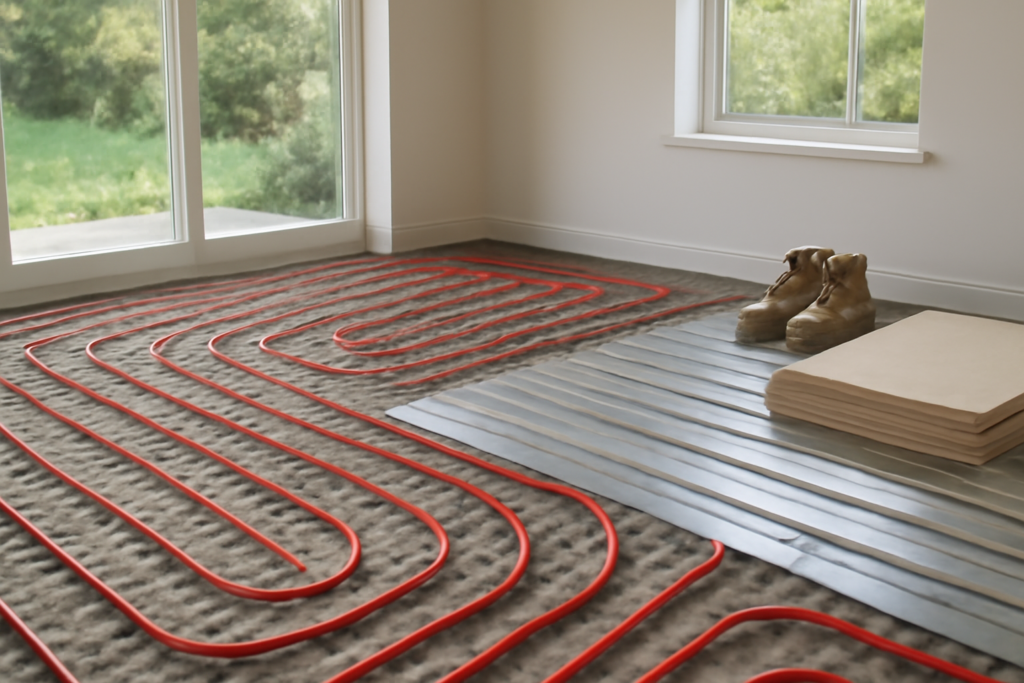
Step onto a warm tile floor on a freezing morning and you understand instantly why people fall in love with this technology. Radiant flooring systems heat a room from the floor up, delivering even, comfortable warmth without the drafts, noise, and dust circulation of forced-air furnaces. Instead of blowing hot air around, they warm the surfaces and people in a space directly, which often feels more comfortable at a lower thermostat setting. This guide explains the two main system types, which floor coverings work best over them, what they cost, and how to decide whether radiant heat belongs in your project.
How Radiant Floor Heating Works
Radiant systems install a heat source beneath your finished floor. That heat rises gently and evenly across the entire surface, eliminating the hot and cold spots typical of vents and registers. Because the warmth radiates from a large area at a moderate temperature rather than from a few hot blasts, rooms feel comfortable without the temperature swings of conventional heating. The two technologies that do this work very differently, and choosing between them is the first big decision.
Hydronic vs. Electric Systems
The two main categories of radiant heat suit different needs and budgets:
- Hydronic (water-based) systems circulate heated water through a network of flexible tubing embedded in or under the floor. A boiler or water heater warms the water. Hydronic systems cost more to install but are far cheaper to operate, making them the go-to for whole-house heating and new construction.
- Electric systems use thin heating cables or pre-built mats that warm up when energized. They are cheaper and simpler to install, especially in a single room, but electricity costs more than gas, so they are best for smaller areas like bathrooms or as a comfort upgrade rather than a primary heat source.
As a rule of thumb, choose hydronic for large areas and whole-home heating, and electric for individual rooms or retrofits where running tubing and a boiler is impractical.
Which Floors Work Best Over Radiant Heat
The flooring you put over a radiant system matters because some materials conduct and tolerate heat better than others:
- Tile and natural stone: The best partners. They conduct heat efficiently, store it well, and are unaffected by temperature changes.
- Polished concrete: Excellent thermal mass, ideal for slab-embedded hydronic systems.
- Luxury vinyl and laminate: Work well if rated for radiant heat; check the manufacturer’s maximum temperature, usually around 80 to 85 degrees Fahrenheit at the surface.
- Engineered hardwood: More stable than solid wood over heat; choose products approved for radiant use.
- Solid hardwood: Possible but riskier, since heat can cause gapping; thinner, quarter-sawn boards and careful temperature control help.
Thick carpet and dense pads are the weakest choice because they insulate against the heat you are trying to release. If you want carpet over radiant heat, keep the pad and pile thin.
What Radiant Systems Cost
Costs vary widely by system type, area, and labor. As general ranges:
- Electric mat systems: roughly $8 to $15 per square foot installed, plus a thermostat
- Hydronic systems: roughly $10 to $20 per square foot installed, with higher equipment costs for the boiler and manifold
These are estimates; whole-house hydronic projects in new construction often land at a better per-square-foot rate than small retrofits. Operating costs favor hydronic over the long run, while electric is cheapest to install upfront.
Pros of Radiant Flooring
The benefits are why radiant heat keeps gaining fans. It delivers even, draft-free warmth and warm floors underfoot. It runs silently with no blowers, and because it does not circulate air, it stirs up less dust and allergens, a plus for sensitive households. Hydronic systems are energy-efficient and can lower heating bills, and all radiant heat is invisible, freeing up wall and floor space otherwise taken by registers and radiators.
Cons and Considerations
Radiant heat is not perfect. Installation costs more than baseboard heat or extending forced air, and retrofitting under existing floors can be disruptive and expensive. The systems heat up slowly, so they respond best when run steadily rather than turned on and off. Repairs to embedded tubing or cables can be involved. And flooring choice is constrained, since thick carpet and some woods are poor matches. For most people, the comfort payoff justifies these trade-offs, especially in new builds and remodels where access is easy.
Installation Basics
How radiant heat goes in depends on the system and the project. In new construction, hydronic tubing is often embedded directly in a concrete slab during the pour, creating a large thermal mass that holds heat efficiently. In remodels, tubing or electric mats can be installed in a thin layer of self-leveling compound, in grooved subfloor panels, or beneath the floor between joists from below. Electric mats are the simplest retrofit, rolling out over the subfloor before tile or approved plank goes down. Every system needs a properly sized thermostat with a floor sensor to protect both the floor covering and your comfort, and hydronic systems require a manifold to balance flow across loops.
Energy Efficiency and Operating Costs
Radiant heat can be remarkably efficient because it warms people and surfaces directly, letting you stay comfortable at a lower thermostat setting than forced air requires. Hydronic systems, especially when paired with a high-efficiency boiler or heat pump, deliver the lowest operating costs and make the most sense for whole-house heating. Electric systems cost more to run because electricity is pricier than gas per unit of heat, so they are best reserved for smaller spaces or as a comfort add-on rather than a primary heat source. Good insulation beneath the system, which reflects heat upward instead of letting it escape downward, makes a big difference in efficiency regardless of type.
Choosing the Right System
Start by defining your goal. For a single chilly bathroom or kitchen, an electric mat under tile is affordable and effective. For a new home or a major remodel where you want comfortable, efficient heat throughout, hydronic is the stronger long-term investment. Always confirm that your chosen floor covering is rated for radiant heat, install a quality thermostat to protect the floor and your comfort, and hire an installer experienced with both the heating system and the flooring above it. Done right, a radiant flooring system turns cold mornings into one of the best small luxuries in your home.
Prefer to explore on your own?
See how new flooring looks in your actual room in seconds — free, no signup.
Try the free Floor Studio →

