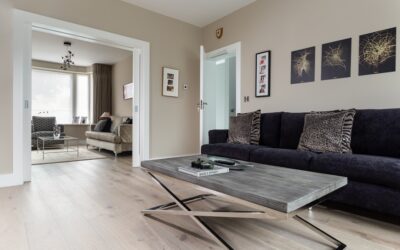
Despite the LVP boom and laminate’s quality climb, no other flooring material adds resale value like the real thing. Buyers in 2026 still pay a measurable premium for homes with real wooden flooring, especially wide-plank oak, hickory, and walnut on the main level. The category is bigger than it looks – solid hardwood, premium engineered with sawn faces, reclaimed antique boards, and pre-finished vs site-finished all live under “real wood.” Choosing the right one is a function of subfloor, climate, lifestyle, and how many decades you want the floor to last.
Solid vs Engineered: The Honest Comparison
Solid hardwood is a single piece of wood, typically 3/4 inch thick, milled tongue-and-groove, and nailed to a wood subfloor. Engineered hardwood is real wood veneer (1-6 mm thick) bonded to a multi-ply plywood or HDF core. Both are “real wood” – the surface you see, walk on, and refinish is genuine hardwood. The differences:
- Solid: 3/4 inch thick, sand 6-10 times, 80-100 year lifespan, sensitive to humidity
- Engineered: 3/8-3/4 inch thick, sand 1-5 times depending on wear-layer, 30-60 year lifespan, far more dimensionally stable
- Solid requires a wood subfloor; engineered installs over wood, concrete, or radiant heat
- Solid acclimates 5-10 days; engineered 48-72 hours
- Solid is rarely below-grade approved; engineered is
For above-grade rooms in a stable climate, solid still wins on longevity. For everywhere else – basements, slab homes, condos, kitchens – engineered is the smarter spec.
Species Selection: Looks, Hardness, Reality
The Janka hardness test measures dent resistance. Useful benchmarks:
- Hickory – 1820, the toughest common domestic hardwood
- Hard maple – 1450, light, modern, dents show easily
- White oak – 1360, the all-around standard, takes any stain
- Red oak – 1290, traditional pink-toned warmth
- American walnut – 1010, dark and softer, scratches faster
- American cherry – 950, ages to deep auburn over years
- Brazilian cherry (Jatoba) – 2350, exotic and very hard
White oak is the dominant choice in 2026 design. It accepts stain evenly, hides scratches better than maple, and reads modern in white-washed and natural finishes alike. Walnut and cherry are beautiful but soften under heavy traffic and pets.
Real 2026 Costs Installed
Pricing varies by species, grade, plank width, and finish:
- Pre-finished engineered oak, 5 inch plank: $8-$14 per sq ft installed
- Pre-finished solid oak, 3.25 inch plank: $9-$15 per sq ft installed
- Wide-plank engineered (7-9 inch) European oak: $14-$22 per sq ft installed
- Site-finished solid oak with stain and three-coat finish: $12-$20 per sq ft installed
- Reclaimed wide-plank antique heart pine or oak: $18-$35 per sq ft installed
For a 1,500 sq ft main level, plan on $13,500-$33,000 total. The premium for real wood over engineered is about 60-80 percent above LVP and laminate of similar visual quality, and the resale return justifies it in most US markets.
Plank Width and Length: The Aesthetic Lever
Plank width has shifted dramatically in the past decade. Strip flooring (2.25 inch) reads dated. The current sweet spot is 5-7 inch boards, with 8-9 inch wide plank common in higher-end homes. Length matters too – longer averages (4-6 ft averages with some boards 8 ft+) read luxurious. Cheap “wide plank” with a lot of short boards looks busy and undermines the whole effect.
European white oak in wide and long planks dominates current design publications. The cost premium over American oak (5 inch standard) is real but not crazy – typically $3-$6 more per sq ft.
Finish: Site vs Pre-Finished
Pre-finished real wooden flooring arrives sealed at the factory with a UV-cured aluminum oxide finish that is harder and more durable than any site finish. Install is faster (no sanding dust, no finish off-gassing) and the floor is walkable the same day. The downside is small bevels at every plank edge.
Site-finished hardwood is sanded flat after install and finished in place. The result is a perfectly flat floor with no bevels and the option of any custom stain color. The trade-offs are 5-7 days of dust and fume disruption, and a slightly less abrasion-resistant surface. For custom looks (white-wash, gray-wash, ebonized), site finishing is often the only option.
Subfloor and Moisture: The Whole Game
Every hardwood failure traces back to subfloor or moisture. Required steps before install:
- Concrete slab moisture test per ASTM F2170 – results below 75 percent RH
- Wood subfloor moisture meter reading within 4 percent of the hardwood
- Subfloor flatness within 3/16 inch over 10 ft
- Climate control engaged – HVAC running and humidity 30-50 percent
- Acclimation in opened boxes, distributed around the room, for full duration
Skipping any of these causes cupping, gapping, or crowning within the first year. Reputable installers document every step in writing because failures are expensive and traceable.
Maintenance and Refinishing
Real wood floors need real care. The basics: damp microfiber mop weekly, manufacturer-approved cleaner like Bona Hardwood Cleaner monthly, felt pads on all furniture, and walk-off mats at every exterior door. Recoat (a maintenance buff and one new finish coat) every 5-7 years extends the time between full sand-and-refinish cycles. A full refinish runs $4-$7 per sq ft and resets the floor to new condition.
The math on real wooden flooring is simple over a 30-year window: an engineered or solid hardwood with one full refinish costs less per year than premium LVP replaced once. Pick the right species, demand a flat dry subfloor, and treat the floor like the asset it is – and it outlives the homeowner who installs it.
Resale Value and Buyer Expectations
Real estate data consistently shows hardwood flooring as one of the highest-ROI home improvements in the US market. The 2024-2025 National Association of Realtors data put hardwood install ROI at 70-90 percent, with refinishing existing hardwood returning over 100 percent in many metros. Buyers in mid-to-upper price tiers expect hardwood on the main living level; comparable homes with carpet or LVP frequently sell 3-5 percent below similar listings with real wood. Solid hardwood resale outpaces engineered slightly in traditional markets, but wide-plank engineered in white oak now leads in modern, urban, and luxury markets. Document the species, manufacturer, finish, and install date for the disclosure packet. Buyers and their agents ask, and a proud answer (with the receipt) closes faster than a vague “I think it’s oak” deflection.
Prefer to explore on your own?
See how new flooring looks in your actual room in seconds — free, no signup.
Try the free Floor Studio →