
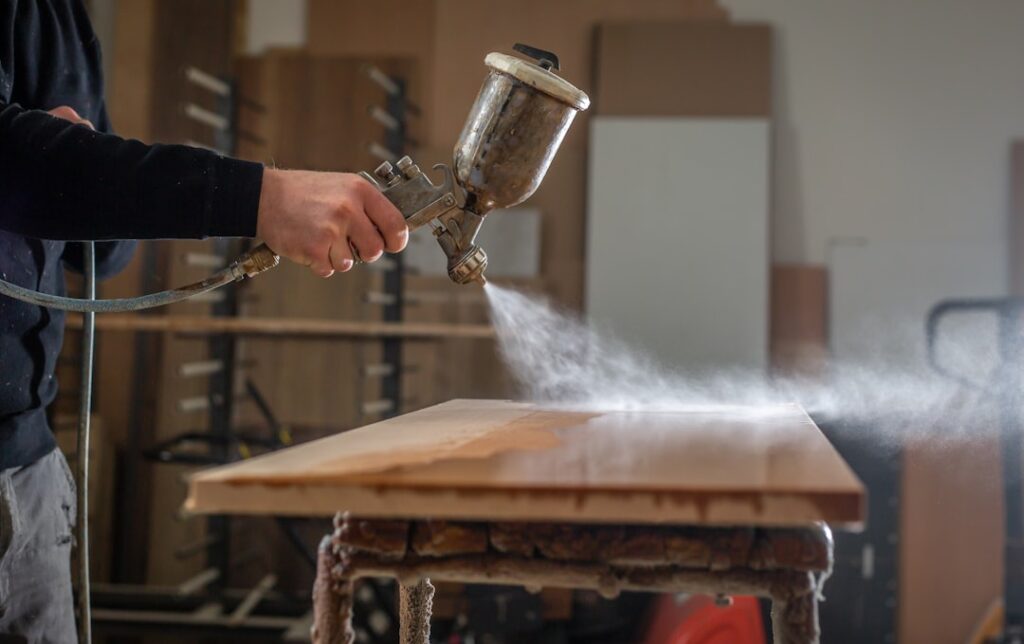
When you’ve got a whole exterior, a fence run, or a stack of interior doors to coat, the smart move is often to rent paint sprayer equipment for a day or two rather than buy a machine you’ll use once. A rental airless rig sprays paint faster than any brush and roller, and it costs a fraction of the $400-plus you’d spend to own one. Here’s what it costs, where to get one, and how to run it without making a mess.
Part of our Paint & Walls guide — explore the full guide →
What It Costs to Rent
Rental pricing depends on the sprayer size and the shop. As a working range for a professional airless sprayer:
- 4 hours: $40 to $70
- Full day (24 hours): $65 to $110
- Weekend: $100 to $180
- Week: $250 to $450
Big-box stores like Home Depot rent Graco airless units by the 4-hour block and the day, and the daily rate is usually the best value since a whole-house exterior rarely finishes in four hours. Expect a refundable deposit of $150 to $500 held on a card, and plan to return the machine clean — some shops charge a cleaning fee of $25 to $75 if you hand it back with dried paint in the pump.
What’s Included and What’s Extra
A standard airless rental includes the pump, a hose (usually 25 to 50 feet), a spray gun, and one tip. Watch for extras that add up: additional hose length, specialty tips for fine finishes, and consumables like tip filters. You supply the paint, masking materials, and cleanup solvent. Bring your own drop cloths, painter’s tape, and a bucket for flushing the system.
Ask the counter staff which tip size matches your coating. A 0.015 to 0.017 tip suits most exterior latex; a finer 0.010 to 0.012 tip is for cabinets, trim, and thin finishes. The wrong tip either clogs on thick paint or lays down too much on fine work.
Where to Rent
You have more options than you might think, and each has trade-offs. Big-box home centers like Home Depot and Lowe’s rent Graco airless units by the 4-hour block, day, and week, with the convenience of a nearby location and standardized equipment. Local tool-rental yards and dedicated paint-supply stores like Sherwin-Williams often carry pro-grade sprayers, sometimes at better rates, with staff who actually know how to run them.
- Home centers: convenient, predictable pricing, good for a straightforward airless.
- Tool-rental yards: wider selection of pump sizes and pro gear.
- Paint stores: knowledgeable staff who can match the tip and paint to your job.
- Equipment-rental chains: heavy-duty options for large or commercial jobs.
Call ahead and reserve. Sprayers are popular on nice-weather weekends, and showing up without a reservation in spring often means an empty rack.
Rent vs. Buy: The Math
The decision is mostly about how often you’ll spray. A quality airless sprayer costs $350 to $900 to own. If you have a single big project — repainting the house exterior or staining a large fence — renting for $65 to $110 a day is the obvious win, plus you skip storage and long-term maintenance.
Buying makes sense if you paint regularly: a landlord with several units, a flipper, or a homeowner tackling interior doors, cabinets, fences, and exteriors across a couple of seasons. Roughly, if you’d rent more than four or five times, ownership pencils out.
Sizing the Sprayer to the Job
Rental shops carry a range of pump sizes. Match the machine to your scope:
- Small handheld / compact airless — furniture, doors, a single room of trim.
- Mid-size airless (0.31 to 0.38 GPM) — a house interior, a deck, an average fence.
- Large airless (0.47+ GPM) — full exterior, long fence lines, high-volume work.
Oversizing wastes paint through overspray on small jobs; undersizing means slow going and constant refills on big ones. For a typical 2,000-square-foot house exterior, a mid-to-large airless is the right call.
How to Spray Like a Pro
The machine does the atomizing; technique does the rest. Follow this sequence:
- Mask everything you don’t want painted — windows, fixtures, plants, the driveway. Overspray travels, so mask generously.
- Strain the paint through a mesh filter to prevent tip clogs.
- Prime the pump per the instructions until paint flows steady and air is purged.
- Set the pressure just high enough to atomize fully without heavy overspray — start low and raise it until the fan edges are crisp.
- Hold the gun 10 to 12 inches from the surface, perpendicular, and move at a steady walking pace.
- Overlap each pass 50 percent and trigger the gun just before and just after each stroke so the ends aren’t heavy.
Keep your wrist locked and the gun parallel to the wall. Arcing your arm leaves thick middles and thin edges. Do a test pass on cardboard to confirm the fan and pressure before you hit the house.
Cleanup Before You Return It
This is where deposits get lost. Airless pumps must be flushed clean or the shop charges you. For water-based paint, run clean water through the pump and gun until it comes out clear, remove and clean the tip and filters, then run a pump-conservation fluid or a little water through to protect the seals. For oil-based coatings, flush with the appropriate solvent. Budget 20 to 30 minutes for cleanup — it’s part of the job, not an afterthought.
Document the machine’s condition when you pick it up. Snap a quick photo of any existing scratches or dents so you aren’t charged for damage that was already there. Confirm the tip and hose are included and undamaged, and ask the counter staff to demo the priming procedure if you’ve never run that model — a two-minute walkthrough prevents an hour of frustration in the driveway.
Estimating Paint and Time
Renting only pays off if you plan the job to fit the rental window. Estimate paint first: a gallon covers roughly 350 to 400 square feet per coat by brush, but spraying uses more — plan for 15 to 25 percent extra because of overspray and the heavier film a sprayer lays down. For a 2,000-square-foot house exterior, budget 12 to 20 gallons across two coats.
On time, a competent sprayer can coat a house exterior in a day once prep is done, but prep — washing, scraping, and masking — is what eats the clock. Do all of it the day before you pick up the machine so every rental hour goes to actual spraying, not taping windows. That single habit is the difference between a relaxed one-day rental and a stressful, overtime scramble.
Tips to Save Money and Hassle
- Rent for the full day, not four hours — the daily rate is usually only marginally more and removes time pressure.
- Prep the day before so every masking-hour isn’t on the clock.
- Buy your own tips and filters if you’ll rent repeatedly — they’re cheap and always fit.
- Return it spotless to protect your deposit and avoid cleaning fees.
- Check the weather — wind wrecks exterior spraying, so book for a calm forecast.
- Ask about a package deal — some shops discount the weekend or week rate versus paying for two separate days.
One more money-saver: if you have several projects lined up — a fence, a shed, and the house trim — batch them into a single rental period. Since prep is the slow part and the machine is already primed and running, knocking out multiple jobs on one day’s rental spreads the cost and makes the sprayer pay for itself several times over in a single afternoon.
Bottom Line
For a one-off big project, choosing to rent paint sprayer equipment is almost always cheaper and smarter than buying. Budget $65 to $110 for a productive day, size the pump to your scope, mask heavily, master a steady overlapping stroke, and flush the machine before you return it. Do that and you’ll finish a job in a day that would have taken a weekend with a brush and roller.


