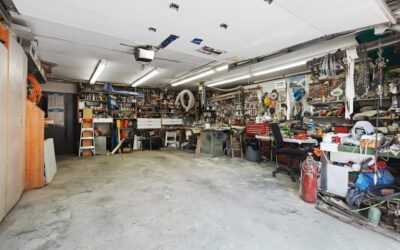
Liverpool’s housing and commercial stock leans heavily on Victorian and post-war construction with concrete slabs that were never intended for modern resin systems. Resin flooring Liverpool contractors who deliver good work understand the prep realities of damp cellars in Toxteth terraces, cold storage in Bootle warehouses, and the salt-air exposure on the Liverpool waterfront. This guide explains what resin flooring actually is, the system types available locally, realistic pricing, and the surface preparation that separates a 20-year floor from a peeling 18-month disappointment.
What Resin Flooring Means in Liverpool Projects
Resin flooring is a generic term for any seamless, poured-and-cured polymer floor system. The two dominant chemistries are epoxy and polyurethane, with methyl methacrylate (MMA) appearing in fast-cure commercial work and decorative quartz or flake systems used in show garages and residential basements. All four chemistries cure to a hard, jointless surface that resists chemicals, moisture, and abrasion better than tile or concrete sealers.
Local Liverpool demand splits across three sectors. Residential garages and basements form the smallest share but pay the highest rate per square meter. Commercial kitchens, breweries, and restaurants in the city centre and Baltic Triangle drive mid-volume work. Industrial warehouse and food-processing flooring around Speke, Aintree, and Bootle docks make up the bulk of contractor revenue.
Pros of Resin Flooring
The case for resin in Liverpool projects is mostly about the local conditions. Salt and damp punish concrete, paint, and tile sealers; properly specified resin shrugs both off for decades.
- Seamless — no grout lines or joints to harbor bacteria or trap moisture
- Chemical resistant — handles brewery acids, automotive fluids, food-grade cleaners, and commercial detergents
- Long service life — 15 to 30 years residential, 8 to 15 years industrial under heavy traffic
- Customizable — solid colors, metallic effects, decorative quartz broadcasts, anti-slip aggregates all available
- Hygienic — required by EHO inspectors for most food production and preparation areas
- Damp tolerant — moisture-vapor-suppressant primers handle damp-prone Liverpool cellar slabs
System Types Available Locally
Liverpool resin contractors typically install four system categories.
- Epoxy coatings (3 to 5 mil) — entry-level garage and warehouse floors, GBP 22 to GBP 38 per square meter installed
- Self-leveling epoxy (2 to 4mm thick) — premium residential and commercial, GBP 65 to GBP 110 per square meter installed
- Polyurethane (PU) screeds (4 to 9mm) — commercial kitchens and food production, GBP 95 to GBP 165 per square meter installed
- Decorative quartz or flake epoxy — show garages, basements, retail, GBP 75 to GBP 130 per square meter installed
- MMA fast-cure systems — overnight commercial reinstallations, GBP 110 to GBP 175 per square meter installed
Cons and Liverpool-Specific Risks
Damp cellars are the biggest risk factor. Many pre-1960 Liverpool terraces have unsealed concrete cellar floors with persistent rising damp. Resin applied directly over a slab reading above 75% relative humidity will lift, blister, or peel within 12 months. Always require a moisture test result in writing before signing the quote, and budget for a liquid DPM at GBP 18 to GBP 28 per square meter on top of the resin price for any cellar or ground-floor application in older property.
The second issue is temperature. Resin systems cure poorly below 10°C, which rules out exterior or unheated installations between November and March. A Liverpool warehouse without heating needs either a propane heater rental during install (GBP 200 to GBP 400 per day) or a delayed pour during warmer months.
Liverpool Contractor Market
The market splits between specialist resin contractors and generalist commercial flooring firms. Specialist resin firms — including Sherwin-Williams Resin Flooring (Liverpool dealers), Flowcrete approved installers, and independent specialists like Liverpool Resin Flooring Ltd — focus on industrial, food production, and high-spec commercial. They charge premium rates but deliver better warranties and longer documented track records.
Generalist commercial flooring firms handle smaller residential garage and basement work alongside vinyl, tile, and carpet jobs. Pricing is more competitive but the chemistry expertise can be variable. Always ask any contractor for three reference projects completed in the past 18 months and call those owners directly.
Surface Preparation — The Hidden Cost
Surface prep is non-negotiable on any quality resin install. The substrate must be diamond-ground or shot-blasted to a CSP 2 or 3 profile, vacuumed three times, primed where the manufacturer specifies, and tested for moisture and contamination. Skipping any step is the single biggest cause of resin failure.
Diamond grinding runs GBP 8 to GBP 14 per square meter as a separate line item. Shot blasting (faster for larger areas above 150 square meters) runs GBP 6 to GBP 10 per square meter. Crack and joint repair using polyaspartic crack fillers like Roadware 10-Minute Concrete Mender or Sika Sikadur 32 Normal adds GBP 14 to GBP 24 per linear meter. A liquid moisture vapor suppressant primer like Stopgap F76, F. Ball Stopgap F77, or Sika MB adds GBP 18 to GBP 28 per square meter where moisture readings demand it.
Cost Snapshot for Liverpool Projects
A typical 600 square foot (around 56 square meter) residential garage with decorative quartz finish, including diamond grinding and full prep, lands around GBP 4,200 to GBP 7,500 turnkey. A commercial kitchen pour with PU screed for a 100 square meter restaurant kitchen runs GBP 9,500 to GBP 16,500. A 1,200 square meter Bootle warehouse epoxy coating with shot blasting and one full repaint coat runs GBP 26,000 to GBP 45,000 depending on system specification.
Maintenance and Recoating
Daily care is straightforward — neutral pH cleaner with a soft mop, no abrasive scrub pads. Avoid bleach and ammonia on epoxy systems; both etch the topcoat over time. Industrial PU screeds tolerate harsher cleaners and steam cleaning, which is part of why they dominate food production specs.
Plan a topcoat refresh every 5 to 8 years for residential and 3 to 5 years for industrial. A recoat at GBP 12 to GBP 22 per square meter restores gloss and adds another decade of service. Failing to recoat eventually exposes the colored or decorative layer to direct wear, and at that point full replacement becomes the only option.
Final Local Buying Advice
Get three written quotes that all itemize moisture testing, prep work, primer, base coat, decorative layer, and topcoat separately. Reject any quote that bundles everything into a single per-square-meter rate without prep specification. Confirm the contractor’s manufacturer approval — Resdev, Sherwin-Williams General Polymers, Sika, Flowcrete, and Stonhard all maintain approved installer lists and the manufacturer warranty depends on installation by an approved firm. Liverpool has plenty of skilled resin specialists; do the verification work and you will land a floor that outlasts your stay in the building.
Prefer to explore on your own?
See how new flooring looks in your actual room in seconds — free, no signup.
Try the free Floor Studio →