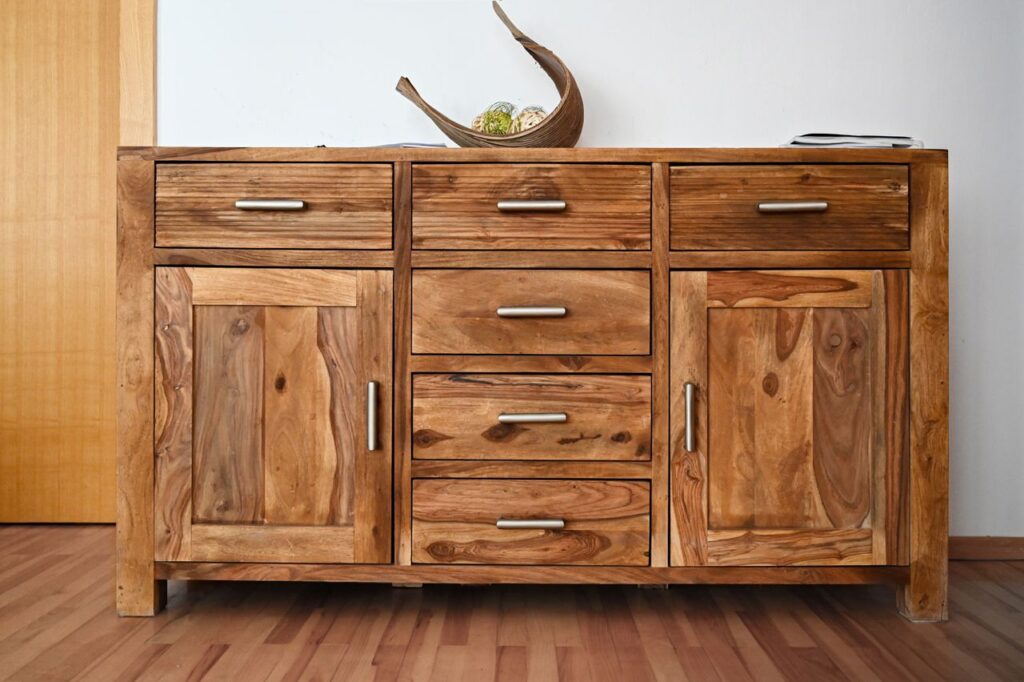
Few upgrades transform a kitchen as instantly as swapping builder-grade knobs for weighty, architectural pulls, and Restoration Hardware cabinet hardware sits at the top of that aspirational list. The brand’s substantial cast-metal pulls and knobs carry a heft and finish depth that cheaper hardware simply cannot fake. But Restoration Hardware cabinet hardware also carries a premium price, so it pays to understand the collections, the finishes, and how to size a piece before you commit hundreds of dollars to a full kitchen. This guide walks through what makes RH hardware distinctive, how to measure for it, real pricing, and where to find convincing lookalikes at a fraction of the cost.
Part of our Kitchen Remodeling guide — explore the full guide →
What Sets RH Hardware Apart
Pick up an RH pull and the difference is immediate: it is heavy. The brand casts most of its hardware from solid brass or zinc alloy rather than the hollow, lightweight metal common on budget pulls. That mass gives the pieces a reassuring, vault-like feel every time you open a drawer, and it lets the finishes wear gracefully instead of chipping.
Design is the other differentiator. RH leans into timeless, architectural forms, think clean bar pulls, knurled details, and vintage-inspired bin pulls, that read as intentional and expensive. The finishes are developed in-house and tend toward muted, sophisticated tones like burnished brass and aged bronze rather than the bright, shiny plating of mass-market hardware. For a designer kitchen, that restraint is exactly the point.
Signature Finishes to Know
Finish is where RH hardware earns its reputation, and matching it across a kitchen is essential for a cohesive look:
- Burnished Brass — warm, brushed gold with subtle depth; the most popular current choice for warm-toned kitchens.
- Aged Bronze / Oil-Rubbed Bronze — dark, near-black with brown undertones that highlight edges; classic and forgiving of fingerprints.
- Polished Nickel — bright, cool silver with a mirror shine; timeless in traditional and transitional spaces.
- Satin Nickel / Brushed Chrome — muted silver that hides smudges, ideal for high-traffic family kitchens.
- Matte Black — bold, modern contrast against white or wood cabinetry.
Order a single sample of any finish before buying a full set. Finishes photograph differently than they look in your kitchen’s actual lighting, and “brass” from one line can skew noticeably warmer or cooler than another. Mixing metals is fashionable, but keep your cabinet hardware consistent and let the faucet or lighting provide the contrast.
How to Size Cabinet Pulls and Knobs
Sizing is the step most people rush, and it is where kitchens go wrong. Pull size should scale to the drawer or door it serves. Use these field guidelines:
- Small drawers and doors (under 12 inches): a knob or a 3- to 4-inch pull.
- Standard drawers (12 to 24 inches): a 5- to 6-inch pull.
- Large drawers and pot drawers (24 to 36 inches): an 8- to 12-inch pull.
- Oversized pantry or appliance panels: 12 inches or longer, often an appliance pull.
The critical measurement is “center-to-center” (CTC), the distance between the two mounting screw holes, not the overall length. A pull’s overall length always exceeds its CTC by an inch or two. When replacing existing hardware, match the CTC exactly so you reuse the drilled holes; a mismatch means filling and re-drilling every cabinet.
What You Will Actually Pay
RH hardware is a genuine investment. Individual pulls typically run $20 to $60 each, with larger appliance pulls and knurled specialty pieces climbing to $80 or more. Knobs generally land between $12 and $30 apiece. That adds up fast: a mid-size kitchen with 30 cabinet doors and drawers can easily need 40-plus pieces of hardware.
Do the math before you fall in love. Forty pulls at an average of $40 each is $1,600 in hardware alone, before installation. For that reason, many homeowners reserve RH pieces for a statement island or a butler’s pantry and use more affordable hardware elsewhere, keeping the same finish family so the eye reads it as consistent. Watch for RH’s periodic member sales, which can trim 20 to 25 percent off, and remember the brand’s membership program bundles savings across a whole project.
Convincing Alternatives at Lower Prices
If the RH budget is out of reach, the good news is that the look, heavy cast metal in muted designer finishes, is now widely available:
- Rejuvenation and Schoolhouse — similar heirloom quality and finish depth, often $15 to $40 per pull.
- CB2 and West Elm — modern bar and knurled pulls in brass and black at $8 to $25.
- Amerock and Top Knobs — solid mid-tier hardware, $6 to $20, with excellent finish consistency across large sets.
- Amazon and Etsy makers — solid-brass knurled pulls in burnished finishes for $5 to $15, though quality varies, so order one to inspect first.
The key to a successful dupe is weight and finish. Order a single sample, hold it against a true RH piece if you can, and check that the finish is a real plating or living finish rather than a sprayed coating that will rub off at the fingertips within a year.
Installing Your New Hardware
Swapping hardware is one of the most satisfying weekend projects in home improvement. For a clean, consistent result, use a hardware jig, a $15 to $30 template that positions holes identically on every door and drawer. Mark, drill with a sharp bit sized to the screw, and use the screws included with the hardware, cutting them if your drawer fronts are thinner than the pull expects. Work slowly on the first cabinet to dial in placement, then let the jig make the rest foolproof.
Standard placement puts door knobs 2.5 to 3 inches from the corner of the door and drawer pulls centered horizontally. Whether you go all-in on Restoration Hardware cabinet hardware or blend a few statement pieces with well-chosen alternatives, upgrading your pulls and knobs delivers an outsized return on both look and daily feel, and it is a change you notice every single time you reach for a drawer.
Popular RH Hardware Collections
Restoration Hardware organizes its cabinet hardware into distinct design families, and knowing them helps you shop with intent. The brand’s cleanest, most versatile lines feature simple bar and tab pulls in solid, weighty metal, ideal for transitional and modern kitchens where the hardware should feel substantial without shouting. Knurled collections, with their finely textured, cross-hatched grip surface, have been a signature RH look and lend a tactile, jewelry-like quality that reads as distinctly high-end.
For traditional and vintage-inspired kitchens, RH offers bin pulls, cup pulls, and turned knobs that echo old-world cabinetry. Whatever collection you choose, plan to stay within one family for a cohesive kitchen, mixing knobs on doors with matching pulls on drawers from the same line and finish. Buy a single piece first to confirm the finish and weight meet your expectations in your own lighting before committing to a full set, since a whole kitchen’s worth of hardware is a significant order to return.
Planning Your Hardware Count and Budget
Before you fall in love with a specific pull, take an accurate inventory of your kitchen so the budget does not surprise you. Walk the room and count every door and drawer that will receive hardware. A typical mid-size kitchen has 25 to 40 pieces of cabinetry, and larger kitchens with a big island and a pantry wall can exceed 50. Decide your knob-versus-pull strategy as you count: a common approach uses knobs on upper doors and pulls on lower doors and all drawers, which affects both the look and the total spend.
With RH pulls averaging $30 to $50 and knobs $12 to $30, a full kitchen can run anywhere from $600 to well over $1,800 in hardware alone. If that stretches the budget, a proven strategy is to splurge on RH pieces for the highest-impact zone, the island or a run of glass-front display cabinets, and use a coordinating, similarly-finished but more affordable line elsewhere. Because the eye reads finish consistency more than exact design, this hybrid approach preserves the luxury feel at a fraction of the cost. Watch for RH’s periodic member sales, which can trim 20 to 25 percent, and time a large order to coincide with one.
Making It Look Professionally Installed
Even the finest RH hardware looks amateur if it is drilled inconsistently, so invest in a hardware jig and follow standard placement: door knobs 2.5 to 3 inches from the corner, and drawer pulls centered on the face or, on wide drawers, split into two pulls a quarter of the way in from each side. Match the center-to-center spacing of any pull to your drilled holes, and use the assorted 8-32 screws that fit your specific door thickness rather than assuming the boxed screws will work.
Take your time dialing in the placement on the first cabinet, then let the jig replicate it flawlessly across the rest. Snug each screw firmly but avoid overtightening, which can crack a painted finish. Whether you go all-in on Restoration Hardware cabinet hardware or blend statement pieces with well-chosen alternatives in the same finish, the payoff is real: substantial, beautifully finished pulls and knobs elevate the entire kitchen and reward you with a satisfying, weighty feel every single time you open a door or drawer.