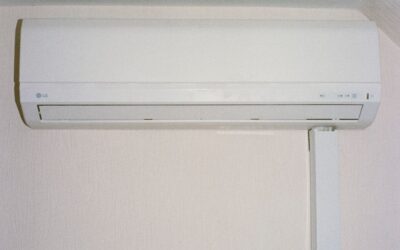
Adding central air to a room that was never ducted, a converted garage, a sunroom, a finished attic, usually means tearing open ceilings and running trunk lines, and that expense kills a lot of good projects. A Rheem mini split sidesteps all of it, delivering both heating and cooling through a small wall unit and a thin refrigerant line that needs only a 3-inch hole through the wall. If you are comparing ductless options and keep seeing the Rheem mini split in the mix, here is what the lineup offers, what it costs, and how to size it correctly.
How a Mini Split System Works
A ductless mini split has two main parts: an outdoor condenser and one or more indoor air handlers connected by a refrigerant line set, a condensate drain, and a control wire. There are no ducts, so you avoid the 20 to 30 percent energy loss that leaky ductwork causes in a typical forced-air home. The system moves heat rather than generating it, which is why a heat pump mini split both cools in summer and heats in winter efficiently.
Rheem builds these as inverter-driven heat pumps, meaning the compressor ramps up and down to match demand instead of cycling fully on and off. That variable-speed operation holds temperatures steadier and runs quieter than a single-stage system.
The Rheem Mini Split Lineup
Rheem’s ductless offerings center on single-zone and multi-zone heat pump systems, generally rated in the 9,000 to 36,000 BTU range for the common wall-mounted handlers. Key specs to weigh:
- Capacity: Common sizes are 9,000, 12,000, 18,000, and 24,000 BTU, matching room sizes from a small bedroom to a large open living area.
- Efficiency: Higher-tier models reach SEER2 ratings in the low-to-mid 20s for cooling and strong HSPF2 heating numbers, well above older duct systems.
- Configuration: Single-zone for one room, or multi-zone condensers that drive two to five indoor heads on one outdoor unit.
Beyond the standard wall-mount head, ductless systems also come in ceiling cassette and floor-mount styles, useful when wall space is limited. Confirm current model availability and exact SEER2 figures with a Rheem dealer, since the lineup is refreshed periodically.
Real Installed Costs
Pricing depends on capacity, zone count, and labor. A single-zone Rheem mini split, one indoor head and one outdoor unit, typically costs $2,000 to $4,500 installed for a common 9,000 to 18,000 BTU unit. Larger single zones and premium high-efficiency models push toward $5,000.
Multi-zone systems scale with the number of heads. A two-zone setup commonly runs $4,500 to $8,000 installed, and a three-to-four-zone whole-home system can reach $9,000 to $15,000. Equipment alone is roughly half the total; the rest is labor, the line set, electrical, mounting, and the condensate handling. A straightforward install on an exterior wall costs far less than one requiring a long line set run or a difficult condenser location.
Sizing: The Step Most People Get Wrong
Oversizing is the classic mini split mistake, and it backfires. A unit that is too large short-cycles, cooling the room fast then shutting off before it dehumidifies, leaving the space cold and clammy. As a rough starting point, plan on about 20 BTU per square foot, so a 500-square-foot room suggests roughly a 10,000 to 12,000 BTU head.
That rule is only a starting point. Ceiling height, insulation quality, window area and orientation, and climate all shift the number. A sun-drenched sunroom with single-pane glass needs far more capacity than a well-insulated bedroom of the same footprint. Have your installer run a Manual J load calculation for anything beyond a simple single room; it prevents both the clammy oversize problem and an undersized unit that runs flat-out and never keeps up.
Installation Requirements
A proper install involves several trades’ worth of detail even though it looks simple. The indoor head mounts high on an exterior wall, a 3-inch core hole passes the line set and drain through, and the outdoor condenser sits on a pad or wall bracket. The refrigerant lines must be flared correctly and the system pulled into a deep vacuum before charging; a sloppy vacuum leaves moisture in the lines that destroys the compressor over time.
The unit also needs a dedicated electrical circuit, typically 208/230 volt for larger sizes, and a properly sloped condensate drain or a small condensate pump if gravity drainage is not available. This is generally not a DIY job unless you buy a pre-charged quick-connect kit and understand refrigerant handling; most homeowners hire an EPA-certified HVAC tech, and doing so preserves the warranty.
Efficiency, Rebates, and Operating Cost
Because these are inverter heat pumps, running costs are low. Switching a space from electric baseboard or window units to a high-SEER2 mini split commonly cuts that space’s energy use substantially. The heating side is where the savings really show against propane or electric resistance heat, since a heat pump delivers multiple units of heat per unit of electricity.
Qualifying high-efficiency heat pumps, including many ductless models, are eligible for the federal Energy Efficient Home Improvement Credit worth 30 percent of cost up to $2,000, plus many utility rebates. Confirm your specific model’s efficiency tier qualifies before assuming the credit, and keep the AHRI certificate and receipts for filing.
Single-Zone Versus Multi-Zone: Which to Choose
One of the biggest decisions is whether to run a separate outdoor unit for each room or one larger condenser feeding several indoor heads. Both are valid; the right answer depends on how many spaces you are conditioning and how you use them.
Single-zone systems pair one outdoor unit with one indoor head. They are simpler, cheaper per zone, and highly efficient because the compressor is sized precisely for that one space. The downside is that each room needs its own outdoor unit, so conditioning three rooms means three condensers on the wall or ground, which gets crowded and costly.
Multi-zone systems drive two to five indoor heads from a single outdoor condenser. You get individual temperature control in each room, only one outdoor unit to site, and a tidier installation. The trade-offs are a higher upfront cost, slightly lower peak efficiency than a matched single zone, and the fact that if the one condenser fails, every zone goes down at once.
- Choose single-zone when you are conditioning just one or two spaces, like a garage conversion or a primary bedroom.
- Choose multi-zone when you want ductless comfort throughout a whole house or several adjacent rooms and prefer a single outdoor unit.
A common mistake with multi-zone systems is mismatching head sizes to rooms. Do not put an oversized head in a small bedroom just because it is part of a package; each indoor unit should be sized to its own room’s load, or that zone will short-cycle and feel clammy. Have the installer size each head individually rather than splitting the condenser’s capacity evenly across rooms of different sizes and sun exposure.
Maintenance and Longevity
Ductless systems are low-maintenance but not maintenance-free. Rinse or vacuum the washable indoor filters every two to four weeks during heavy use; a clogged filter chokes airflow and drops efficiency fast. Once a year, clean the indoor coil and blower wheel and flush the condensate drain to prevent mold and clogs, and keep the outdoor condenser clear of leaves and snow.
Have an HVAC tech check the refrigerant charge and electrical connections every year or two. Treated well, a Rheem mini split should deliver quiet, efficient heating and cooling for 15 to 20 years, and because each zone runs independently, you only condition the rooms you are actually using.
Two accessories are worth planning for in cold and snowy climates. A wall or ground mount that raises the outdoor condenser 12 to 18 inches above the expected snow line keeps drifts from burying the coil and blocking airflow, and a base-pan heater prevents defrost meltwater from refreezing into a block of ice under the unit during hard freezes. On the indoor side, a small condensate pump earns its keep whenever the head is mounted on an interior wall or below the drain line, since gravity drainage is not always possible and a clogged or frozen drain is a common cause of leaks. It is also worth understanding how the heat pump behaves in a deep freeze: as outdoor temperatures fall, capacity and efficiency taper, and the unit periodically runs a defrost cycle that briefly blows cooler air indoors. A properly sized cold-climate model still heats effectively well below freezing, but in the coldest regions many homeowners keep a modest backup heat source for the handful of subzero nights each winter. Match the model, the mounting, and the accessories to your actual climate and the system rewards you with quiet, room-by-room comfort for years.