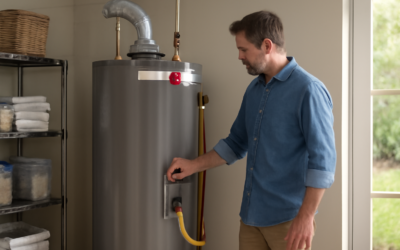
Knowing how old your water heater is helps you plan for replacement before it fails and floods your utility room. Rheem is one of the largest water heater manufacturers, and figuring out your Rheem water heater age is simple once you know how to read the serial number. This guide explains how to decode the serial number, why the age matters, and how to decide when it is time to replace an aging unit.
A water heater rarely gives much warning before it goes, so understanding its age puts you in control instead of scrambling after a leak.
- Why the Age of Your Water Heater Matters
- Where to Find the Serial Number
- How to Decode the Rheem Serial Number
- How Long Rheem Water Heaters Last
- Signs an Aging Water Heater Needs Replacing
- Checking Warranty Status
- Repair or Replace an Older Unit?
- Using the Age When Buying or Selling a Home
- Why Manufacture Date Differs from Install Date
- Extending the Life of Your Water Heater
- What to Do as the Heater Approaches End of Life
- Reading the Model Number for More Information
- The Bottom Line
Why the Age of Your Water Heater Matters
Water heaters have a predictable lifespan, and age is the single best predictor of remaining life. Knowing your Rheem water heater age tells you whether you are running on borrowed time, still under warranty, or safely in the middle of the unit’s service life. That knowledge helps you:
- Budget for a replacement before an emergency
- Confirm whether the tank is still under warranty
- Decide whether a repair is worth it on an old unit
- Assess a water heater when buying or selling a home
Where to Find the Serial Number
Rheem prints the serial number on a rating plate or sticker attached to the side of the tank, usually near the top or middle. The label lists the model number, serial number, and technical specs. If the label is faded, look for the serial stamped into the metal or check any paperwork from the original installation. Water heaters sold under Rheem’s related brands, such as Ruud, use the same serial-number logic.
How to Decode the Rheem Serial Number
Rheem encodes the manufacture date directly into the serial number. On most modern Rheem units, the first four digits of the serial number represent the month and year the unit was built.
- The first two digits are the month of manufacture.
- The next two digits are the year of manufacture.
For example, a serial number beginning with 0619 indicates the unit was made in June 2019. A serial starting with 1122 means November 2022. Once you have the manufacture date, subtract it from the current year to get the age of the unit. A heater built in June 2019 is roughly seven years old in 2026.
Older Serial Formats
Rheem has used slightly different formats over the decades, so a very old unit may not follow the month-year-first pattern. If the first four digits do not translate into a sensible month and year, note the full serial and model number and check Rheem’s current lookup guidance or contact the manufacturer to confirm the build date.
How Long Rheem Water Heaters Last
Lifespan depends on the type of heater and how well it has been maintained:
- Tank-style gas or electric: typically 8 to 12 years
- Tankless: often 15 to 20 years with maintenance
- Heat-pump (hybrid) electric: commonly 10 to 15 years
Water quality has a big effect. Hard water accelerates sediment buildup and corrosion, shortening life, while regular flushing and anode-rod replacement can extend it. If your Rheem water heater age is approaching the top of these ranges, start planning a replacement.
Signs an Aging Water Heater Needs Replacing
Age is the biggest factor, but watch for these warning signs, especially on a unit over eight years old:
- Rusty or discolored hot water, indicating tank corrosion
- Rumbling or popping noises from sediment hardening at the bottom
- Water pooling around the base, a sign of a failing tank
- Inconsistent or declining hot water supply
- Frequent repairs that add up in cost
A leaking tank is not repairable; once the steel tank corrodes through, replacement is the only fix, and acting before a full rupture prevents water damage.
Checking Warranty Status
Rheem tanks come with warranties that commonly run 6, 8, 10, or 12 years depending on the model. Once you know the manufacture date, you can determine whether the unit is still covered. If a component fails within the warranty period, you may be entitled to a replacement tank or parts at reduced or no cost, though labor is usually not covered. Keep your model and serial numbers handy when contacting the manufacturer or a dealer.
Repair or Replace an Older Unit?
Use age to guide the decision. A general rule: if the heater is more than about 75 percent through its expected lifespan and needs a significant repair, replacement is usually the smarter investment. A new, more efficient unit can also lower energy bills. For a unit only a few years old with a minor part failure, a repair makes sense. Weigh the repair cost against the age, efficiency, and the risk of a failure that damages your home.
Using the Age When Buying or Selling a Home
Water heater age is a practical data point during a home sale. If you are buying, checking the serial number tells you whether you are inheriting a nearly new unit or one on the verge of failure that you will soon need to replace. That knowledge can factor into your offer or your inspection negotiations. If you are selling, a recently installed heater is a selling point worth noting, while an aging one may prompt buyers to ask for a credit. Home inspectors routinely decode the manufacture date, so knowing it yourself keeps you a step ahead in the conversation.
Why Manufacture Date Differs from Install Date
It is worth understanding that the serial number reveals when the unit was built, not necessarily when it was installed. A heater might sit in a warehouse or on a store shelf for months before being sold and installed, so the actual in-service age can be slightly less than the manufacture date suggests. For most planning purposes the difference is minor, but if you have installation paperwork, use it alongside the serial number for the most accurate picture. When judging remaining life, the manufacture date is the conservative and safer figure to rely on, since it assumes the unit is at least as old as its build date.
Extending the Life of Your Water Heater
Whatever the current age, a few maintenance habits add years:
- Flush the tank annually to remove sediment
- Inspect and replace the anode rod every few years
- Test the temperature and pressure relief valve periodically
- Set the thermostat to a reasonable temperature to reduce wear
- Address hard water with a softener if buildup is severe
What to Do as the Heater Approaches End of Life
Once you have decoded the age and the unit is nearing the top of its expected lifespan, a little preparation prevents an emergency. Start researching replacement options before the heater fails, so you are choosing calmly rather than accepting whatever a plumber can install same-day during a leak. Consider these steps as the unit ages:
- Monitor for warning signs like rusty water, noise, or moisture at the base
- Research replacement types, weighing a standard tank against a hybrid heat-pump or tankless unit
- Check current efficiency ratings, since a new unit can lower energy bills
- Get quotes in advance so you know the budget and can act quickly
- Install a drain pan and leak alarm to catch a failure before it damages the floor
Planning ahead turns a stressful failure into a scheduled upgrade on your terms.
Reading the Model Number for More Information
While the serial number gives you the age, the model number, also on the rating plate, tells you the capacity, fuel type, and configuration of the heater. Knowing the model number is useful when ordering parts, checking warranty coverage, or sizing a replacement, since you can match or upgrade the tank capacity to your household’s needs. Keep both the model and serial numbers recorded somewhere safe, such as a phone photo of the rating plate, so you have them ready whether you are calling for warranty service, ordering a part, or shopping for a new unit. Together, the two numbers give you a complete picture of what you have and how much service life remains.
The Bottom Line
Determining your Rheem water heater age is as simple as reading the first four digits of the serial number, which give the month and year of manufacture. With the age in hand, you can check warranty coverage, judge whether a repair is worthwhile, and plan a replacement before an old tank fails. Combine that knowledge with regular flushing and anode maintenance, and you will get the most life from your water heater while avoiding the mess and expense of a surprise leak.