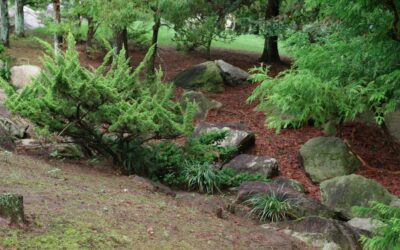
The usual mistake with rocks for flower beds is treating stone like mulch: dumping 4 inches of gravel around every plant and calling it done. Rock behaves differently. It does not break down, it holds heat, and it is hard to remove once weeds or soil work their way in. Picking the right type, size and depth up front saves you from a bed that bakes your perennials or turns into a gravel-and-weed mess in two seasons.
For most planted beds, smooth river rock in the 1 to 3 inch range, laid 2 to 3 inches deep, is the safest all-round choice. Lava rock suits dry, low-water beds; pea gravel works for paths and small gaps; polished beach pebbles are best used as accents. Landscape fabric helps under pure rock areas but often hurts beds full of spreading perennials.
We cover how each rock type performs around plants, sizing and depth, fabric choices, layout ideas, installation steps, costs and the problems people run into later.
Choosing Rocks for Flower Beds
Before you look at colors, decide what job the stone needs to do. Rock in a planting area can suppress weeds, reduce splash erosion, define edges, keep soil cooler in some climates and hotter in others, and add texture where mulch would look flat. When comparing rocks for flower beds, the right stone depends on your plants, sun exposure and how often you work in the bed.
- Drought-tolerant plants such as sedum, lavender, yucca and ornamental grasses handle the extra heat stone reflects.
- Moisture-loving plants such as hostas, ferns and astilbe usually prefer organic mulch, or rock only in shade.
- Annual beds you replant every year are awkward with stone, because you will keep moving it to dig.
- Foundation beds benefit from stone near the house, since it does not hold moisture against siding the way wood mulch can.
Common Rock Types and How They Perform
River rock
Rounded, tumbled river rock is the default for good reason. It comes in tans, grays and mixed earth tones, drains well and looks natural around shrubs and perennials. The 1 to 3 inch size suits most beds; larger 3 to 5 inch cobbles work along borders and in dry creek beds. Flower bed ideas with river rock often pair it with boulders and grasses for a low-maintenance look. Its weight keeps it from washing away in heavy rain.
Lava rock
Lava rock is porous, lightweight and usually red or black. It holds a little moisture in its pores, drains fast and stays put on gentle slopes because of its rough texture. On the downside, it absorbs and radiates heat, its sharp edges are hard on hands, and red lava can look dated if overused. It is a good match for desert-style beds with succulents and cacti.
Pea gravel
Pea gravel is small, rounded stone around 3/8 inch. It is inexpensive and easy to spread, but it migrates: it rolls onto lawns, gets kicked into paths and sinks into soil without a barrier. It works well between stepping stones, in small gravel gardens and under shrubs where you rarely walk. Pair it with a solid edging so it stays inside the bed.
Polished or beach pebbles
Smooth, dark gray to black pebbles, sometimes called Mexican beach pebbles, give a clean, modern look. They are usually more expensive per ton, so most people use them as accents: a ring around a specimen plant, a narrow strip along a walkway, or a pebble border in a contemporary bed. Their dark color absorbs heat in full sun.
Crushed stone and decomposed granite
Angular crushed stone locks together and stays in place, which makes it great for paths beside beds. Decomposed granite packs firm and looks natural in dry gardens but can track into the house. Neither is ideal piled thickly around delicate plant crowns.
Sizes and Depth Guidelines
The right depth keeps weeds down without smothering roots. Too thin and soil shows through; too thick and you waste money and stress shallow-rooted plants.
| Rock size | Typical use | Suggested depth |
|---|---|---|
| 3/8 inch pea gravel | Small gaps, paths | 2 inches |
| 1 to 3 inch river rock | General planted beds | 2 to 3 inches |
| 3 to 5 inch cobbles | Borders, drainage areas | One layer, 3 to 4 inches |
| Lava rock, 1 to 2 inch | Dry, succulent beds | 2 to 3 inches |
Keep stone 2 to 3 inches back from the base of stems and trunks. Rock piled against bark or crowns traps heat and moisture and can cause rot or bark damage. A small ring of bare soil or organic mulch right around each plant is a smart compromise.
To estimate quantity, multiply length by width in feet, then by depth in feet, and divide by 27 to get cubic yards. One cubic yard of river rock typically covers about 100 to 160 square feet at 2 to 3 inches deep. Suppliers often sell by the ton, so ask for their conversion.
Landscape Fabric: Use It or Skip It?
Fabric is one of the most debated parts of any rock bed. Under pure stone areas with a few shrubs, a quality woven landscape fabric roll keeps rock from sinking into mud and slows weeds coming up from below. It also makes the stone easier to lift and clean later.
In beds full of perennials, bulbs and plants that spread, fabric gets in the way. Plants cannot send out runners, you end up cutting holes every time you divide or add something, and over a few years windblown soil collects on top of the fabric and weeds root there anyway. For those beds, many gardeners skip fabric, lay stone directly on well-weeded soil and pull the occasional weed by hand.
- Use fabric: foundation strips, dry creek beds, gravel gardens, areas around permanent shrubs.
- Skip fabric: mixed perennial borders, bulb beds, cottage-style plantings, beds you replant often.
- Avoid plastic sheeting: it blocks water and air and suffocates roots.
Layout Ideas That Look Intentional
Rock looks best when it has structure. Large flat expanses of a single gravel can feel like a parking lot, so mix scales and shapes.
- Rock borders for flower beds: a single row of 4 to 6 inch cobbles or a stacked low edge defines the bed while mulch or soil fills the middle.
- Dry creek bed: a winding channel of river rock with larger stones along the banks handles downspout runoff and adds movement.
- Boulder groupings: set one large and two smaller boulders in odd-numbered groups, burying a third of each so they look natural.
- Contrast bands: a strip of dark pebbles against tan river rock frames a walkway or patio.
- Stone and mulch mix: stone along the front edge and path side, mulch in the back where plants grow densely.
Step-by-Step Installation
- Plan and measure. Sketch the bed, mark plant positions and calculate rock volume. Call 811 before digging if you are installing edging or setting boulders deep.
- Remove weeds and grass. Dig out roots, especially perennial weeds such as bindweed and quackgrass, which will push through any covering.
- Grade the soil. Slope the bed slightly away from the house foundation so water drains outward.
- Install edging. Steel, aluminum, stone or concrete edging keeps rock out of the lawn. Set it so the top sits about 1 inch above the rock layer.
- Lay fabric if using it. Overlap seams 6 inches, pin every few feet, and cut generous X-shaped openings around plants.
- Plant first. Install plants before spreading stone so you are not shoveling around them later.
- Spread the rock. Dump small piles with a wheelbarrow, then rake to an even depth. Hand-place stone near plants.
- Rinse. Hose the rock to wash off dust and settle it.
Rock is heavy. Lift with your legs, use a wheelbarrow rated for the load, and wear gloves and sturdy footwear. Have bulk deliveries dumped on a tarp close to the bed rather than on the driveway if possible.
Maintenance and Troubleshooting
- Weeds in the rock: they usually root in debris that collects on top. Blow or rake out leaves each fall and pull weeds while small.
- Rock sinking into soil: common without fabric in clay soil. Top up with a thin layer every few years, or add fabric under paths.
- Plants struggling in heat: swap to lighter-colored stone, add shade plants or replace rock with mulch around sensitive species.
- Rock in the lawn: raise or upgrade the edging, and keep stone a little below its top.
- Dirty or stained stone: rinse with a hose or lift, screen and wash small areas.
Cost Ranges
Bulk landscape rock is far cheaper than bagged stone. Pea gravel and crushed stone sit at the low end per ton, river rock in the middle, and lava and polished pebbles at the higher end. Bagged decorative stone from a home center can cost several times more per cubic foot, so it makes sense only for small accents. Delivery fees vary by distance and load size. Professional installation adds labor for bed prep, edging and spreading, and costs climb with boulders that require equipment.
When to Call a Pro
Most homeowners can handle a small bed in a weekend. Bring in a landscaper for large areas, boulders over a couple hundred pounds, slopes where stone could wash out, or drainage problems near the foundation. A pro can also regrade soil and design a dry creek that actually carries water away. Whatever the size, choosing rocks for flower beds with the plants in mind gives you a bed that looks finished and stays easy to care for.
Frequently Asked Questions
What size rock is best for a flower bed?
Rounded river rock between 1 and 3 inches suits most beds. It stays in place, drains well and is easy to move around plants.
How deep should rock be in a flower bed?
About 2 to 3 inches for most stone. Keep it a few inches away from stems and trunks to avoid heat and rot problems.
Do I need landscape fabric under rocks?
It helps under pure stone areas and around permanent shrubs, but it often causes trouble in perennial beds where plants spread or get divided.
Are rocks better than mulch for flowers?
Rock lasts longer and suits dry, sunny beds. Mulch feeds the soil and keeps roots cooler, which most flowering perennials prefer.
Does lava rock hurt plants?
Not chemically, but it holds heat. Use it with drought-tolerant plants and keep it back from tender stems.