
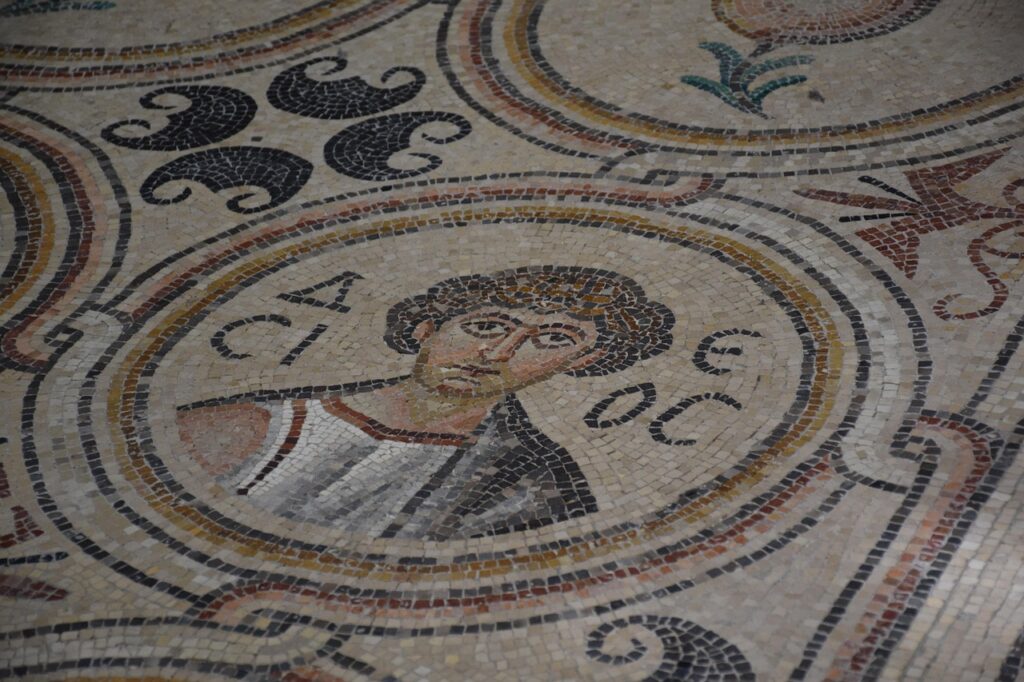
Walk into the ruins of Pompeii and you will find floors that have survived nearly 2,000 years, a volcanic eruption, and millions of tourists. That durability is no accident. Roman flooring was engineered in layers, decorated with hand-cut stone, and built to outlast the buildings above it. Today that same aesthetic is having a revival in luxury homes, hotels, and renovated period properties. This guide covers the historic techniques, how they map to modern materials, and what it costs to bring a Roman-inspired floor into a contemporary space.
The Layered Roman Construction Method
Roman flooring techniques spread across the entire empire, from Britain to North Africa, which is why archaeologists uncover the same construction methods and decorative styles in wildly different climates. That consistency reflects a mature building tradition with skilled mosaicists, standardized materials, and pattern books that craftsmen carried from province to province.
The Romans never laid a decorative floor directly on soil. They built a stacked system that modern engineers still respect. At the bottom went the statumen, a base of fist-sized stones. Above it sat the rudus, a rough concrete of lime and crushed rock, then the nucleus, a finer mortar bed. Only on top of all that did the decorative surface go down.
This is essentially a substrate, leveling layer, and finish system, the same logic behind a modern thinset-over-backerboard tile install. The difference is that Roman lime mortar cured slowly and gained strength for decades, which is one reason these floors are still intact.
Mosaic Floors and Tesserae
The most recognizable Roman floors are mosaics built from tesserae, tiny cubes of marble, glass, terracotta, or smalti roughly 1/4 to 1/2 inch across. Black-and-white geometric patterns dominated public baths and entryways, while wealthy villas commissioned full figurative scenes of gods, hunts, and sea creatures.
A single detailed mosaic could contain over a million tesserae set by hand. Modern mosaic artisans use the same technique, though many now work in reverse on mesh sheets in a studio, then transfer the finished panel to the floor. Expect $40 to $150 per sq ft for a hand-set custom marble mosaic today.
Opus Sectile: Cut Stone Pictures
Where mosaics used uniform cubes, opus sectile used larger pieces of stone cut to the exact shape of the design, like a stone jigsaw. Colored marbles, porphyry, and serpentine were shaped into floral medallions, geometric stars, and even portraits. The effect is bolder and more architectural than a fine mosaic.
This technique survives in modern waterjet-cut stone medallions. A CNC waterjet can now cut intricate inlays in hours that once took a craftsman weeks, bringing opus sectile-style centerpieces within reach of high-end residential budgets.
From Roman Floors to Modern Terrazzo
The terrazzo you see in airports and lofts descends directly from a Roman cost-saving trick. Workers swept up marble offcuts, embedded the chips in mortar, and ground the surface smooth, a technique later refined in 15th-century Venice. The DNA is Roman: bind stone aggregate in a matrix, then polish to a seamless finish.
Modern epoxy and cement terrazzo runs $30 to $90 per sq ft installed and offers a seamless, low-maintenance surface that nods to its ancient origins while meeting current slip and durability standards.
Recreating Roman Flooring at Home
You do not need a villa to capture the look. There are three realistic routes depending on budget:
- Authentic hand-set: Commission a marble mosaic or opus sectile medallion from a specialist studio. Highest cost, highest authenticity, $50 to $150 per sq ft.
- Porcelain reproduction: Several manufacturers print Roman mosaic and marble patterns onto large-format porcelain tile for $5 to $15 per sq ft. Durable, waterproof, and far easier to install.
- Terrazzo finish: A poured terrazzo floor gives the seamless aggregate look across an entire room for a clean, modern interpretation.
Pros and Cons of the Roman Look
On the plus side, these floors are timeless. A geometric black-and-white mosaic entry reads as elegant in a 1920s townhouse and a new build alike, and natural stone ages gracefully. Hand-set mosaics also add genuine artistic value that mass-produced flooring cannot match.
The drawbacks are cost and maintenance. Authentic stone mosaics are labor-intensive and expensive, natural marble needs periodic sealing to resist staining, and intricate grout lines collect dirt. Porcelain reproductions solve the maintenance problem but lose some of the depth and irregularity that make true Roman work special.
Care and Longevity
Real marble and stone floors should be sealed every 12 to 18 months with a penetrating sealer and cleaned only with pH-neutral products, since acidic cleaners like vinegar etch the surface. Treated well, a quality stone mosaic will outlast every other finish in your home, just as the Romans intended.
Common Roman Patterns to Know
If you are working with a designer or sourcing reproduction tile, knowing the classic patterns helps you communicate the look you want. A few recur across Roman sites and modern revivals:
- Greek key (meander): An interlocking border pattern that frames rooms and medallions.
- Guilloche: A braided rope-like band, common as a decorative edge.
- Scale and shield patterns: Overlapping curved shapes that fill large fields.
- Central emblema: A detailed figurative panel set into a simpler surrounding field, the focal point of a villa floor.
Where the Look Works Best in a Home
Roman-inspired floors shine in transitional and high-impact spaces. An entry foyer with a black-and-white geometric mosaic makes a strong first impression and ties into both traditional and contemporary interiors. Powder rooms and shower floors are natural fits for smaller mosaic work, where the scale suits the space and the slip resistance of small tiles with abundant grout lines is a bonus.
Larger opus sectile or terrazzo treatments suit open living areas and grand hallways where there is room for the pattern to breathe. Restaurants, boutique hotels, and historic-home renovations frequently lean on these techniques to signal craftsmanship and timelessness that mass-produced flooring cannot convey. Whether you go fully authentic or choose a porcelain interpretation, Roman flooring delivers a sense of permanence and craftsmanship that few modern materials can replicate.
Prefer to explore on your own?
See how new flooring looks in your actual room in seconds — free, no signup.
Try the free Floor Studio →

