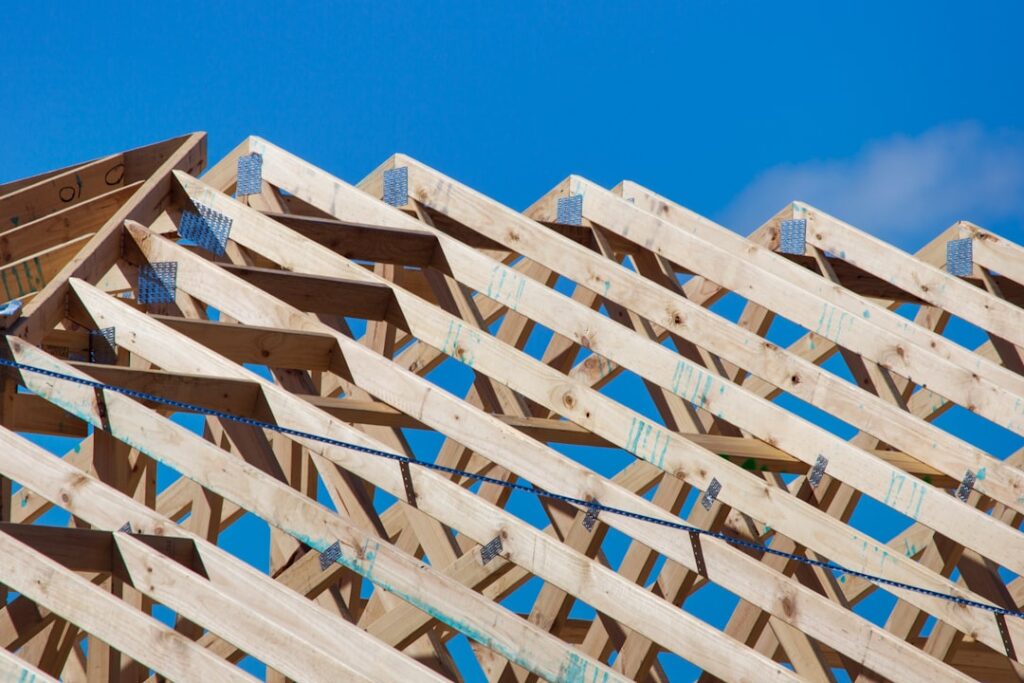
The most common surprise on a reroof invoice is not the shingles — it is the wood underneath them. Roof decking is the layer of structural panels nailed across your rafters that everything else attaches to, and its condition is unknowable until the tear-off crew strips the old shingles at 8 a.m. and calls you with a change order by 9. Most homes need a few sheets swapped; neglected leaks can push the count to dozens at $70 to $150 apiece. This guide shows you how to spot decking trouble before the crew does, what legitimately triggers replacement, and how to keep the per-sheet allowance honest.
- What Roof Decking Is
- Signs of Rotten Decking You Can Spot Yourself
- Why Decking Gets Replaced During a Reroof
- What Decking Replacement Costs
- Protecting Yourself from Change-Order Games
- Decking and the Rest of the Reroof
- Can Decking Be Repaired Without a Reroof?
- Mold on the Deck: What Actually Matters
- The Takeaway
What Roof Decking Is
Decking (your contractor may say sheathing — same layer, and our roof sheathing guide covers the OSB-versus-plywood and building-code side in detail) is the 4×8-foot field of OSB or plywood panels spanning your rafters or trusses. It carries the snow and wind loads, gives the shingle nails something to bite, and braces the whole roof structure against racking. Homes built since the 1980s typically have 7/16-inch OSB or 1/2-inch plywood; houses from the 1960s and earlier often have 1×6 or 1×8 plank (“skip”) decking with gaps between boards. Decking is not waterproof and was never meant to be — the shingles and underlayment above keep it dry, and its job is to stay rigid and hold nails.
Signs of Rotten Decking You Can Spot Yourself
You do not need a tear-off to get a preview. From the yard, sight along each roof plane in raking light: sagging or wavy areas between rafters — dips that make shingle lines look like gentle ocean swells — are the classic sign of delaminating panels. From inside the attic with a flashlight, look up at the underside of the deck for dark water staining, fuzzy white or black mold blooms, and daylight at damaged spots. Press suspect areas with a screwdriver; sound wood resists, rot crushes. Check the usual suspects hardest: under valleys, around the chimney and plumbing stacks, at the eaves where ice dams back water in, and below any spot with a history of leaks. A spongy, trampoline feel underfoot when someone walks the roof is the same finding from above. Catching this early matters — a $400 repair to the leak that is feeding the rot beats replacing plywood later, which is the whole argument of our roof leak repair guide.
Why Decking Gets Replaced During a Reroof
Nearly all decking replacement happens mid-reroof, for a simple reason: it is the only time the wood is exposed and the marginal cost is lowest. Once shingles and underlayment are off, the crew walks every panel and replaces sheets that fail on any of four grounds. Rot and delamination — OSB that has swollen, flaked, or gone soft — is the big one. Broken or cracked panels from age or foot traffic come second. Inadequate nail-holding is third: if nails pull out of punky wood by hand, new shingles cannot be warranted over it. Finally, code triggers: plank decking with gaps over 1/4 inch may need overlay or replacement for some roofing types, and a few jurisdictions require re-nailing the entire deck to current fastener schedules (Florida notably does). Expect the crew to also re-nail loose but sound panels — that is normal and should not be billed as replacement.
What Decking Replacement Costs
The industry bills by the 4×8 sheet, installed:
- 7/16-inch OSB: $70 – $110 per sheet installed (the sheet itself is $15 – $25 at the yard)
- 1/2-inch CDX plywood: $90 – $150 per sheet installed ($25 – $45 material)
- Plank/board repairs on older homes: $8 – $15 per linear foot
A typical reroof on a maintained house replaces zero to four sheets — call it a $0 to $500 line item. A house with a long-ignored valley leak can need 10 to 20 sheets, adding $1,000 to $3,000. Full redecking of a 2,000-square-foot roof (about 63 sheets) runs $4,500 to $9,000 on top of the roofing itself, and usually only happens on old plank decks or severe neglect.
Protecting Yourself from Change-Order Games
Decking is where a minority of contractors pad invoices, because the evidence is covered by underlayment within hours. Four habits keep everyone honest. Get the per-sheet price in the contract before tear-off — a number agreed in advance is a price; a number invented mid-job is leverage. Require photo documentation of every replaced sheet, showing the damage and the new panel; reputable crews do this unprompted. Ask for the count before covering — a two-minute phone call at the decking stage, not a line on the final invoice. And be suspicious of both extremes: a bid that includes “unlimited decking” has priced the worst case into everyone’s job, while a crew that finds 30 bad sheets on a 15-year-old leak-free roof should be asked for the pile of removed wood. On the flip side, do not fight legitimate replacement — new shingles over punky decking is how you buy a roof that leaks from day one and a manufacturer warranty that will not pay.
Decking and the Rest of the Reroof
Replacement sheets should match the existing deck thickness, carry the same span rating, and be gapped 1/8 inch at edges for expansion. After the deck passes inspection, the assembly proceeds — ice-and-water shield, synthetic underlayment, drip edge, and shingles — in the sequence covered in our shingle roof replacement guide. If your home still has plank decking and you are switching roofing materials, ask whether an overlay of new OSB is required; metal and some tile systems want continuous panels. One last preventive note: attic ventilation quietly determines how long your new decking lasts. A humid, unvented attic condenses moisture on the panel undersides all winter and rots a deck from the inside without a single roof leak — balanced intake and exhaust, per our roof vents guide, is decking life insurance.
Can Decking Be Repaired Without a Reroof?
Sometimes, and it is worth knowing when. A localized rot patch under a repaired leak can be fixed from above as a “cut-and-patch”: the crew removes shingles over the bad area, cuts the damaged panel section back to the centerlines of the nearest rafters, screws 2×4 blocking along the cut edges, drops in a matching-thickness patch, and reshingles. Expect $500 to $1,200 for a one-sheet repair including roofing — steep per sheet, because you are paying mobilization and shingle-matching for a small area. Repairs from below (sistering plates across a cracked panel from inside the attic) can stabilize a broken sheet but do nothing for rot, since the compromised wood stays in place. The honest rule: fix decking from above when the roof covering has years left, and fold it into the reroof when replacement is within three or four years — paying twice for the same square of shingles is the outcome to avoid.
Mold on the Deck: What Actually Matters
Black staining across the attic-side face of decking alarms buyers and home inspectors, but the response should follow the moisture, not the color. Active leaks or condensation with fuzzy growth need the source fixed first — ventilation and bath-fan ducting are the usual culprits — after which remediation (media blasting or antimicrobial treatment, $1,000 to $3,500 for a typical attic) addresses the biology. Old dry staining on sound, hard wood is cosmetic history: it documents a past problem, not a present one, and does not require panel replacement if a screwdriver test shows firm wood. During a reroof, staining alone should not drive sheet counts — replacement is justified by softness, delamination, and nail-holding, and a contractor swapping sheets “because of mold” on hard wood is solving a cosmetic problem with your structural budget.
The Takeaway
Roof decking is a when-not-if maintenance item: most homes replace a few sheets per reroof, and that is normal. Your job as the homeowner is done before the dumpster arrives — inspect the attic annually, fix leaks the season they appear, and sign a contract with a fixed per-sheet price and photo documentation. Do that, and the 9 a.m. phone call from the crew is a $300 footnote instead of a four-figure ambush.