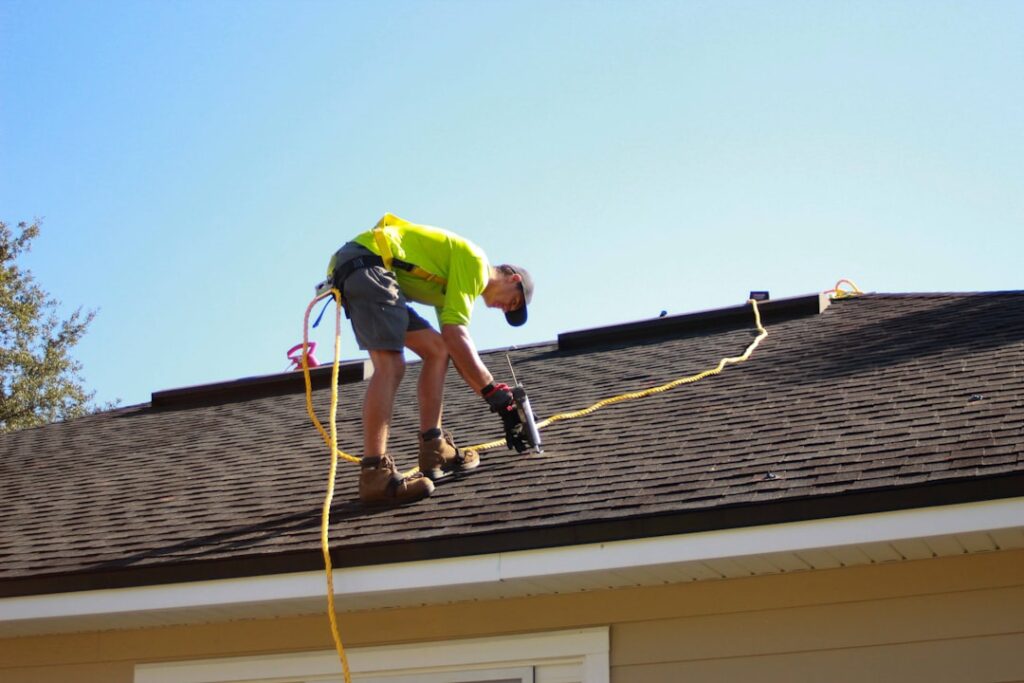
A crew of six can strip and reshingle an average house in a single day — yet homeowners routinely block out two weeks of anxiety for the job. Shingle roof replacement is loud, fast, and far more choreographed than it looks from the driveway: tear-off, deck inspection, underlayment, flashing, shingles, and cleanup follow a strict sequence, and the quality of your roof for the next 25 years is decided in about eight working hours. This guide walks through the process step by step, the realistic timeline, and what the invoice should look like in 2026.
Part of our Roofing guide — explore the full guide →
Replace or Repair? Making the Call
Replacement is the right move when shingles are past 80 percent of their expected life, when granule loss exposes black asphalt across large areas, or when leaks show up in multiple locations rather than at one flashing. Widespread curling, cracking, and brittle shingles that break when lifted all point the same direction. If damage is confined to one slope or a few square feet, spot fixes are far cheaper — our shingle roof repair guide covers when a $500 repair beats a $14,000 reroof. Age is the tiebreaker: repairing a 22-year-old architectural roof is usually paying twice.
Tear-Off vs. Overlay
Code in most jurisdictions allows a second shingle layer over the first, and an overlay saves $1,000 to $2,000 in labor and dump fees. Take the tear-off anyway. Overlays trap heat between layers and shorten the new shingles’ life by roughly 20 percent, hide rotted decking that needed replacement, telegraph every hump in the old roof through the new one, and void or reduce many manufacturer warranties. Worse, when the overlay eventually fails, you pay for a double tear-off. The only scenario where overlays pencil out is a short-horizon sale of a house with a dead-flat, single-layer, structurally sound roof — and even then most inspectors will flag it.
The Replacement Process, Step by Step
A professional crew follows the same sequence on nearly every house:
- Protection and setup. Tarps over landscaping and siding, plywood over AC units, dumpster or equipment trailer positioned by the eave.
- Tear-off. Shingles, underlayment, and old flashing come off down to bare decking — two to four hours for most homes.
- Deck inspection. The crew walks the sheathing, renailing loose panels and marking rot. Soft or delaminated sections get cut out and replaced, typically at $70 to $150 per 4×8 sheet. Our roof decking guide explains what counts as replaceable damage.
- Dry-in. Ice and water shield goes on eaves and valleys (code in cold climates requires coverage 24 inches past the interior wall line), then synthetic underlayment over the field, plus new drip edge.
- Flashing. New step flashing at walls, new pipe boots, and chimney flashing reworked or replaced — never reused if it is aged. Flashing shortcuts cause most callbacks; see our roof flashing guide for what correct work looks like.
- Shingles and ventilation. Starter strips at eaves and rakes, field shingles nailed to the manufacturer’s pattern, ridge vent cut in, and cap shingles to finish.
- Cleanup. Magnetic sweep of the yard and driveway for nails, gutters cleared, debris hauled.
How Long It Takes
An average 2,000-square-foot roof of moderate pitch takes one to two days with a full crew. Larger homes, steep pitches above 8:12, multiple layers to tear off, and cut-up rooflines with dormers and valleys stretch the job to three or four days. Weather adds the real variance — crews will not tear off with rain in the forecast, so a wet week can slide your start date repeatedly. Scheduling lead time matters more than install time: quality contractors book two to eight weeks out, and post-hailstorm backlogs in storm markets can run months. Spring and fall fill fastest; a winter install is fine down to about 40°F as long as the sealant strips get warm days to bond. There is also a pricing season hiding in the calendar: late fall and winter quotes in most markets come in 5 to 10 percent under peak-season pricing, because crews want to stay busy, and material prices typically step up each spring. If your roof can safely wait a few months, asking three contractors for an off-season slot is the easiest four-figure discount in the project — just confirm the crew, not a thinner winter substitute, is the one showing up.
What Shingle Roof Replacement Costs
National averages in 2026 put architectural-shingle replacement at $4.50 to $7.50 per square foot installed, which breaks down to roughly 60 percent labor and 40 percent materials. Typical all-in project totals:
- 1,500 sq ft roof: $7,000 – $11,500
- 2,000 sq ft roof: $9,000 – $15,000
- 3,000 sq ft roof: $13,500 – $22,500
Line items that move the number: second-layer tear-off ($0.50 to $1.00 per sq ft), decking replacement (budget a $500 allowance and hope to keep it), steep-slope labor premiums of 15 to 30 percent, and upgrades like Class 4 impact shingles or full ice-and-water coverage. Which shingle grade you pick swings material cost significantly — the tiers are compared in our asphalt shingle roofing guide, and broader material alternatives in our residential roof replacement overview.
Living Through Replacement Day
A tear-off is a small controlled demolition, and a little preparation saves real grief. Inside, take pictures off the walls of upper rooms and cover attic storage with plastic sheeting — hammering rains decades of dust through every gap in the decking, and nail vibration knocks frames off drywall hooks. Outside, move vehicles to the street before the crew arrives (a blocked-in car stops a dumpster delivery), mark sprinkler heads and shallow landscape lighting, and unlock gates. Pets and home-office workers should plan to be elsewhere; the noise directly under a tear-off is genuinely disruptive from roughly 7 a.m. onward. Expect the electric or satellite dish to need re-aiming afterward, and expect to find a few stray nails despite the magnetic sweep — a slow pass of your own magnet around play areas and tires is a worthwhile habit for the following week. Photograph your gutters, siding, and driveway before the crew arrives; five minutes of pictures settles any damage dispute in either direction without an argument.
Permits, Inspections, and Code Upgrades
Nearly every jurisdiction requires a permit for full replacement, typically $150 to $500, and the contractor should pull it — a contractor who asks you to pull an owner’s permit is usually dodging licensing scrutiny. The permit triggers inspections (commonly a dry-in inspection before shingles and a final), which work in your favor as free quality control. Reroofing also resets your code obligations: expect current requirements for ice-and-water membrane coverage in cold climates, drip edge at eaves and rakes (now IRC-mandated), and updated ventilation. In Florida and other high-wind states, deck re-nailing and secondary water barrier rules add real cost but also real insurance discounts — ask for the wind mitigation inspection form when the job closes, since it can trim hundreds a year off premiums. None of this is padding; it is the difference between a roof that merely looks new and one that performs to modern standards in the storm that eventually tests it.
Hiring the Crew and Protecting Yourself
Get three itemized quotes and compare scope, not just totals — one bid’s “flashing as needed” is another’s line-itemed new step flashing everywhere. Verify licensing, liability insurance, and workers’ comp with certificates, not verbal assurances. Ask who actually installs: many companies sell the job and subcontract the labor, which is fine only if the sub is named and certified. Insist on a written per-sheet decking price before tear-off so rot discoveries do not become blank-check change orders. Finally, register the manufacturer warranty — enhanced warranties like GAF Golden Pledge or Owens Corning Platinum require certified installers and cover workmanship for 25 years, which is worth a modest premium on a roof you will live under for decades.