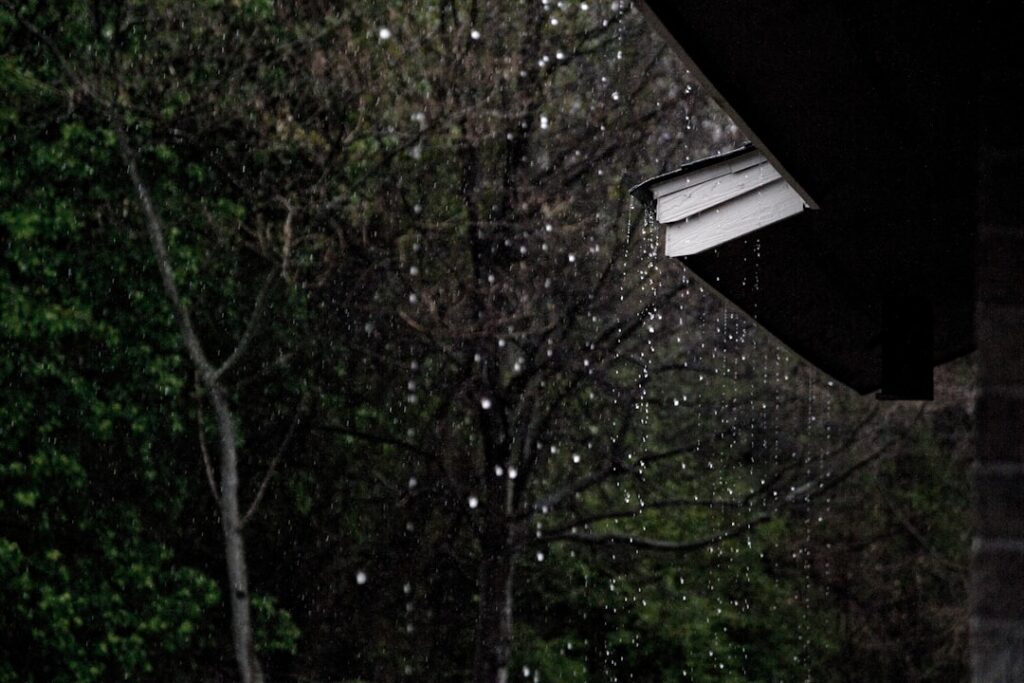
Your roof is half torn off, the crew is hustling, and the radar shows a green blob forty minutes out. Every homeowner who has ever replaced a roof has lived some version of this moment, and it raises the obvious question about roofing in the rain: can they keep working, should they, and what happens to your house if water gets in? The short answer is that reputable contractors do not install roofing in active rain, but they absolutely work around rain, and the difference between a professional outfit and a storm-chasing crew shows up most clearly in how they handle wet weather. Here is what actually happens, what is at risk, and what you should insist on.
- Why Rain and Roofing Do Not Mix
- What Good Contractors Actually Do
- What Happens if Your Roof Gets Rained On Mid-Job
- Can Any Roofing Work Happen in the Rain?
- Rain Delays, Contracts, and Your Schedule
- Regional Reality: Some Climates Roof Wet or Not at All
- A Homeowner's Rain-Week Checklist
- The Bottom Line
Why Rain and Roofing Do Not Mix
The core problem is not worker comfort; it is trapped moisture. Asphalt shingles must bond to a dry substrate, and the self-seal strips that glue each course to the one below need dry contact and eventually sun-driven heat to activate. Underlayment stapled over wet decking seals moisture inside the assembly, where it feeds mold, corrodes fasteners, and delaminates OSB. Wet OSB is the big one: oriented strand board swells at cut edges when soaked, loses fastener-holding strength, and does not fully flatten when it dries. Beyond the materials, adhesives behave badly in the wet. Ice-and-water shield will not stick to a damp deck, roofing cement skins over water instead of bonding, and sealants fish-eye. And a wet roof at a 6/12 pitch is genuinely dangerous footing; falls remain the leading cause of death in roofing, and OSHA data consistently attributes a share of them to slick surfaces.
What Good Contractors Actually Do
Professionals manage rain with sequencing, not bravado. The standard playbook looks like this:
- They watch hourly forecasts and tear off in sections. A disciplined crew never opens more roof than they can dry-in before the weather window closes. On a two-day job with afternoon storms forecast, that might mean stripping and papering one slope per morning.
- They dry-in immediately. “Dried in” means the deck is covered with underlayment, synthetic wrap or felt, with laps and edges fastened, plus ice-and-water membrane in valleys and at eaves. A properly dried-in roof will shed a typical storm without shingles on it for days or even weeks.
- They tarp as a backstop. Heavy woven poly tarps, battened down with furring strips (not just sandbags on a windy day), cover any open decking, ridge gaps, or exposed sections when rain arrives mid-task.
- They stop shingling when rain starts. Light drizzle during load-out or cleanup is one thing; nailing shingles onto a wet deck in steady rain is another, and good crews simply will not do it.
If you see a crew tearing off your entire roof at 8 a.m. with storms forecast at 2 p.m. and no tarps staged on site, that is your cue to ask hard questions immediately, not after your ceilings stain.
What Happens if Your Roof Gets Rained On Mid-Job
It depends entirely on what stage the roof was in. Rain on properly installed underlayment is a non-event; synthetic underlayments like GAF Tiger Paw or Owens Corning ProArmor are rated for 30 to 180 days of exposure. Rain on bare decking is a problem in proportion to how much fell and how fast it was dried afterward. A brief shower on plywood that gets squeegeed and air-dried that afternoon usually causes no lasting harm. Hours of soaking on OSB is worse: insist that the contractor check moisture content before covering it, and a moisture meter reading under about 16 percent is the common benchmark for closing it up. Rain into an open attic is the serious scenario, wet insulation, stained drywall, saturated framing, and it becomes an insurance conversation. Document everything with photos, and know that the contractor’s general liability policy, not your homeowner’s policy, is normally the coverage that responds to damage caused by an open roof. This is exactly why you verify a roofer’s liability insurance certificate before signing.
Can Any Roofing Work Happen in the Rain?
Some tasks tolerate weather better than others. Tear-off of a section that will be immediately tarped, deck repairs under a canopy of tarps, metal panel prep and trim cutting on the ground, and emergency leak mitigation, tarping, plugging a hole, redirecting water, all happen in the rain routinely. Emergency repairs deserve special mention: wet-surface products exist for exactly this, such as Henry 208R Wet Patch roof cement, which is formulated to bond to damp surfaces and even displace water. A wet patch job is understood to be a Band-Aid; the permanent repair still happens on a dry day. What should not happen in rain: installing shingles, ice-and-water shield, peel-and-stick membranes, EPDM or TPO adhesive work, and spray foam roofing, all of which depend on dry-surface adhesion.
Rain Delays, Contracts, and Your Schedule
Weather delays are normal and are written into every competent roofing contract as excusable delays, so expect the completion date to float. What you can reasonably demand is a dry-in guarantee in writing: no more tear-off than can be dried-in the same day, tarps on site, and the contractor responsible for interior damage from an open roof. Ask three questions before the job starts: What is your rain plan? Who monitors the forecast day-of? What happens if water gets inside? A professional answers all three without flinching, because they have lived it. Be more suspicious, not less, of a crew willing to shingle through steady rain to stay on schedule; the schedule they are protecting is theirs, and the moisture they are trapping is yours.
Regional Reality: Some Climates Roof Wet or Not at All
In Seattle, Portland, and the Gulf Coast summer storm season, waiting for a guaranteed dry 48 hours can mean waiting weeks, so local crews get very good at section-by-section tear-off and same-day dry-in, and inspectors see it constantly. That is a legitimate, code-compliant workflow. The practices that are never legitimate anywhere: papering over standing water or visibly saturated decking, shingling a wet deck to beat a storm, and leaving a torn-off roof overnight with nothing but a loose tarp. Climate changes the choreography, not the rules.
A Homeowner’s Rain-Week Checklist
If your roof replacement is scheduled during an unsettled stretch, a little preparation converts anxiety into leverage. Before tear-off day: photograph every ceiling and the attic so any later water staining has a clean before-and-after record, move stored items away from the attic floor’s center field, and confirm in writing who supplies and installs tarps if weather closes in. Ask for the crew lead’s cell number, not just the sales rep’s. During the job, check the roof each evening: underlayment should be fully fastened with no billowing sections, penetrations should be flashed or covered, and no bare decking should ever be visible at quitting time. If rain does catch the roof open, act on your side of the ledger too, push water off flat sections of tarp before it ponds, set buckets and plastic in the attic under any drip, and email the contractor a dated photo summary the same day. That email matters: liability claims settle on documentation, and a polite same-day record beats a heated phone call a week later. Finally, after the roof is finished, ask for the moisture readings or at least written confirmation that decking was dry at dry-in on any day rain interrupted work. A contractor who did it right will hand that over without friction.
The Bottom Line
Roofing in the rain is really three different questions. Can a crew work around rain? Yes, with sectional tear-off, fast dry-in, and staged tarps, and the best crews are excellent at it. Can shingles and membranes be installed in rain? No, adhesion and trapped moisture make it a warranty and mold problem you inherit. And what if rain catches your open roof? Dry it, meter the deck below 16 percent moisture before closing, document damage, and lean on the contractor’s liability coverage. Hire the roofer who talks about their rain plan before you ask, and a wet forecast becomes a scheduling nuisance instead of a disaster.