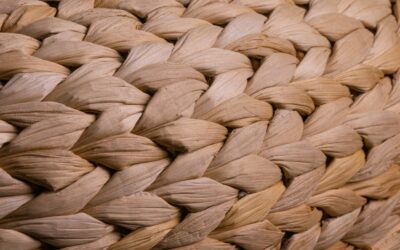
A round braided rug is one of the few floor coverings that earns its keep on construction alone, spiraling out from a tight center into concentric rings of coiled fiber. When you understand how a round braided rug is actually built, you can judge quality by touch, predict how long it will last, and clean it without pulling the coils apart. This guide starts at the loom-free braid itself and works outward to materials, sizing, and price.
How a Braided Rug Is Made
Braided rugs skip the loom entirely. A maker plaits three or more strands of fabric into a long continuous rope, then coils that rope in a flat spiral, stitching or lacing each new ring to the one before it. Because the braid grows from a single point, the round shape is the most natural outcome, which is why circles and ovals dominate the category while rectangles require extra shaping at the corners.
The lacing method matters. Hand-laced rugs are joined with a blunt needle and heavy thread woven between the coils, producing a flexible, reversible piece. Machine-stitched versions run thread straight through the braid, which is faster and cheaper but leaves a visible seam and reduces reversibility. Run your fingers along the underside: a clean, thread-free braid signals genuine lacing.
Tubular Versus Flat Braid
The single biggest construction decision is tubular versus flat braid, and it changes both the look and the feel underfoot.
Flat braid
Flat braid uses fabric strips folded so their raw edges tuck inward, then plaited flat. The result is a thin, dense, low-profile rug that lies close to the floor, resists tripping, and works well under doors and in kitchens. Flat-braid rugs are typically the most affordable and the easiest to toss in a wash.
Tubular braid
Tubular braid wraps fabric or yarn around a soft cord or fiber core before plaiting, giving each strand a rounded, padded profile. The finished rug is thicker, springier, and more cushioned, with a raised texture that reads as more traditional. Tubular construction hides wear better because the plush surface disguises crushed fibers, but it also traps more dust and costs more to produce.
Reversibility and Why It Extends Life
A true hand-laced braided rug is reversible, and that single feature can double its useful life. When one face shows a traffic path or a faded arc near a window, you flip it and expose a fresh side. Rotate a round rug a quarter turn every couple of months as well, since the circular shape spreads foot traffic evenly around the rings rather than down one lane. Machine-stitched rugs with a visible seam are usually one-sided and wear out faster in high-traffic spots.
Materials and How They Perform
Fiber choice drives price, feel, and maintenance more than any other factor. These are the four you will encounter most.
- Wool: The traditional choice. Naturally resilient, flame-resistant, and warm, wool springs back from crushing and hides soil in its crimped fibers. It is the priciest option and can shed at first.
- Jute: A plant fiber with a rustic, ropey look and a low price. Jute is coarse underfoot and hates moisture, so keep it in dry, low-traffic rooms.
- Cotton: Soft, washable, and casual. Cotton braided rugs are often flat-braid and small, perfect for a bathroom or entry where you can launder them.
- Polypropylene and other synthetics: Stain-resistant, fade-resistant, and inexpensive. Poly braids shrug off spills and sun, making them the smart pick for porches, sunrooms, and homes with kids or pets.
Farmhouse and Colonial Style
The braided rug is rooted in early American thrift, when households plaited worn clothing and fabric scraps into floor coverings. That heritage still defines its style lane. A round braided rug anchors farmhouse kitchens, colonial dining rooms, and cottage entryways, pairing naturally with painted wood furniture, wide-plank floors, and muted heathered palettes of cranberry, navy, sage, and oatmeal. Under a round pedestal table the circular shape echoes the tabletop, and in a reading nook a small round braid softens a hard corner without competing with patterned upholstery.
Common Round Sizes
Round braided rugs come in a predictable range of diameters, so measure your space and match it to one of these standards.
- 2 ft round: An accent for a sink, a chair, or a landing.
- 4 ft round: Fits under a small breakfast table or bistro set for two.
- 6 ft round: Seats a round dining table for four, with room for chairs to slide back.
- 8 ft round: A living-room anchor that carries the front legs of a seating group.
As a rule, allow at least 24 inches of rug beyond the edge of a dining table so chair legs stay on the rug when guests push back. For a round table, add 48 inches to the table diameter to find your ideal rug diameter.
Durability and Everyday Wear
Braided construction is inherently tough because there is no cut pile to shed or mat, only tightly coiled rope. The weak point is the lacing thread. If a stitch snaps, coils can start to separate, so repair a loose thread promptly with a curved upholstery needle before the gap spreads. Wool and polypropylene braids hold up for a decade or more in a busy household, while jute and lightweight cotton are better suited to gentle-use rooms.
Cleaning a Braided Rug
The coiled build changes how you clean. Follow these steps to protect the lacing.
- Vacuum with care: Use suction only or a low-pile setting. A spinning beater bar can catch and tear the braids, so avoid it entirely on tubular rugs.
- Shake and flip: Small rugs benefit from a good outdoor shake to release grit trapped between coils, followed by vacuuming both sides.
- Spot clean: Blot spills immediately with cold water and mild soap, working with the direction of the braid, never scrubbing across it.
- Machine wash small cotton rugs: Use cold water on a gentle cycle inside a mesh bag, then lay flat to dry so the coils do not stretch.
Never wring or twist a braided rug, and keep wool and jute out of soaking water, which loosens the coils and can cause the center to buckle.
Cost by Material
Price tracks fiber and construction closely. A synthetic flat-braid rug in a 4 ft round runs roughly $40 to $90. A comparable cotton round lands around $50 to $120. Wool commands the premium tier, with a quality 6 ft round wool braid ranging from $250 to $600 and an 8 ft round often exceeding $700. Jute sits at the budget end, from about $60 to $150 for a mid-size round. Hand-laced construction adds cost over machine stitching but buys you reversibility and a longer service life, which usually pays off over the years you keep the rug.
Rug Pads and Anti-Slip
A round braided rug benefits from a pad more than most floor coverings because its thin, flexible coils can shift and ripple on a hard floor. A quality felt-and-rubber pad cut an inch smaller than the rug all around grips the floor, cushions the braid, and keeps the coils from creeping toward one side of the room. On carpet, a thin low-profile pad stops the braid from sliding and traveling. Beyond safety, a pad reduces abrasion on the underside of the coils, which is exactly where hand-laced thread does its work, so it quietly protects the lacing that holds the whole spiral together.
Choosing the Right One for You
Match the rug to the room before you shop by color. For a high-traffic kitchen or a sunroom, choose a flat-braid polypropylene round you can hose off. For a formal dining room or a cozy den, invest in a tubular hand-laced wool round that flips and lasts. Measure first, add the recommended clearance, and confirm the rug is reversible if longevity is your priority. Do that, and a round braided rug will spiral quietly underfoot for years.