Soft circular shapes break up the boxy lines that dominate most rooms, and natural fiber adds warmth that synthetic rugs rarely match. Put those together and you get the round jute rug, a designer favorite for grounding a space with organic texture. Made from a renewable plant fiber, jute brings an earthy, neutral foundation that pairs with nearly any decor style. This guide covers what jute is, how to size and style a round one, where it works best, and how to keep it looking good.
What Is Jute
Jute is a natural fiber harvested from a fast-growing plant, making it one of the more sustainable rug materials available. Spun into yarn and woven, it produces a rug with a warm tan color, subtle sheen, and pleasant texture underfoot. Because it is a plant fiber, jute is biodegradable and eco-friendly, which adds to its appeal for homeowners wanting natural materials.
Why Choose a Round Shape
A round rug does decorating work a rectangle cannot. It softens square rooms, defines a circular conversation area, and works beautifully under round tables. In entryways, a round jute rug creates an inviting landing spot, and in a reading nook it anchors a single chair perfectly. The curve draws the eye and adds movement to spaces full of straight lines from walls, sofas, and cabinetry.
Common Weaves and Styles
Jute rugs come in several weave patterns, each with a slightly different look and feel:
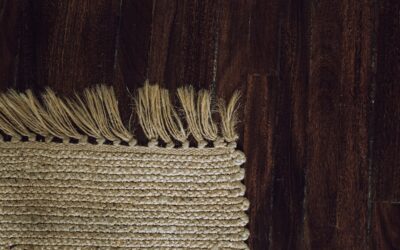
- Boucle or chunky braid: thick, rope-like loops for a bold, casual texture
- Flatweave: tighter and smoother, easier to clean
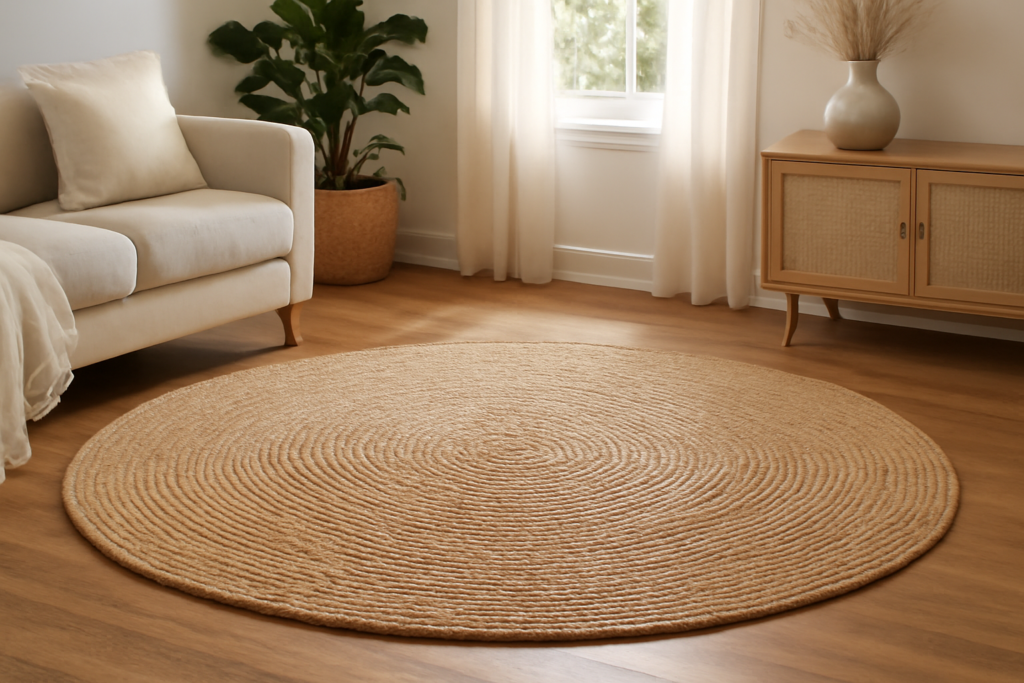
- Spiral or concentric: a popular round pattern that emphasizes the shape
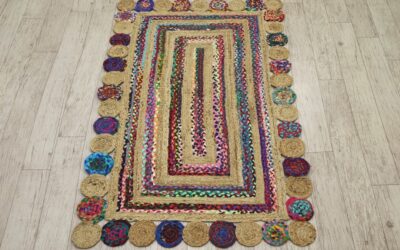
- Jute blends: mixed with cotton, wool, or chenille for added softness
Pure jute has a coarser hand, while blends feel softer underfoot, so consider where the rug will go when choosing.
Sizing Your Round Rug
Round rugs come in standard diameters, commonly 4, 5, 6, and 8 feet. To size correctly:
- Under a round dining table, choose a rug that extends about 24 inches beyond the table edge so chairs stay on it
- In a seating area, pick a size that touches or sits under the front of the furniture
- In an entryway, a 4- to 6-foot round usually fits well without crowding the door swing
Measure your space and consider taping out the circle on the floor to picture the scale before buying.
Where It Works Best
Jute loves dry, low-to-moderate traffic rooms. Living rooms, bedrooms, home offices, and dining areas are ideal. It also makes a great natural layer under a smaller patterned rug for a stylish layered look. What jute does not love is moisture, which leads to the next point.
What to Avoid
Jute is absorbent and not water-friendly, so keep it out of bathrooms, kitchens near the sink, mudrooms, and covered patios exposed to rain. Excess moisture can cause it to develop a musty smell, brown spots, or even mildew. Spills should be blotted, never soaked, and the rug should never be steam cleaned or soaked through.
Styling a Round Jute Rug
Jute’s neutral tone makes it one of the easiest rugs to decorate around. Its warm, sandy color anchors coastal, boho, farmhouse, and Scandinavian looks alike, and it pairs effortlessly with wood furniture, linen upholstery, and houseplants. For a layered designer effect, set a smaller patterned rug, a vintage kilim or a soft sheepskin, off-center on top of the round jute base to add color and contrast while keeping the natural foundation.
Use the round shape to create a defined zone, such as under a pedestal table in a breakfast nook or beneath a single statement chair. In a square or rectangular room full of straight lines, the circle introduces a welcome contrast that softens the whole space and draws the eye.
Jute vs Sisal and Other Natural Fibers
Jute is often confused with sisal, but they behave differently. Jute is softer and more comfortable underfoot, with a warmer tone, making it better for living rooms and bedrooms. Sisal is tougher and more durable, standing up to heavier traffic like hallways and stairs, but it feels coarser and is harder underfoot. Seagrass is smoother and slightly more moisture-tolerant than jute but also stiffer.
If softness and warmth are your priority and the room stays dry, jute is the natural pick. If you need maximum durability in a busy passageway, sisal may serve better. Many homeowners use jute where they sit and relax, and reserve sisal for harder-working zones.
Cleaning and Care
Caring for jute is simple if you treat it gently and keep it dry:
- Vacuum regularly without a rotating beater bar, which can snag and fray the fibers
- Shake out smaller rugs to remove loose dirt and shedding
- Blot spills immediately with a dry cloth, then a barely damp one if needed
- For deeper cleaning, use dry methods or a minimal-moisture spot clean
- Use a rug pad underneath to reduce slipping, cushion the coarse fibers, and protect the floor
Expect some shedding when the rug is new, which tapers off with regular vacuuming.
Cost and What to Look For
Round jute rugs are generally affordable compared with wool or hand-knotted pieces. A small 4-foot round might run $50 to $100, while larger 6- to 8-foot rounds typically land in the $100 to $300 range depending on weave density and any blend fibers. When shopping, check the weave tightness, since a denser braid wears better and sheds less. Confirm whether it is pure jute or a softer blend, look at the backing, and read reviews for notes on shedding and odor. A slightly higher-quality rug usually pays off in durability and a cleaner appearance over the years.
A Lasting Natural Foundation
A round jute rug is an affordable, eco-friendly way to add texture, warmth, and a softer geometry to your home. Choose the weave and size that fit your space, keep it in dry rooms, vacuum gently, and protect it with a pad. Treated right, this humble natural fiber rug brings a relaxed, organic foundation that complements styles from coastal to farmhouse to modern for years to come.