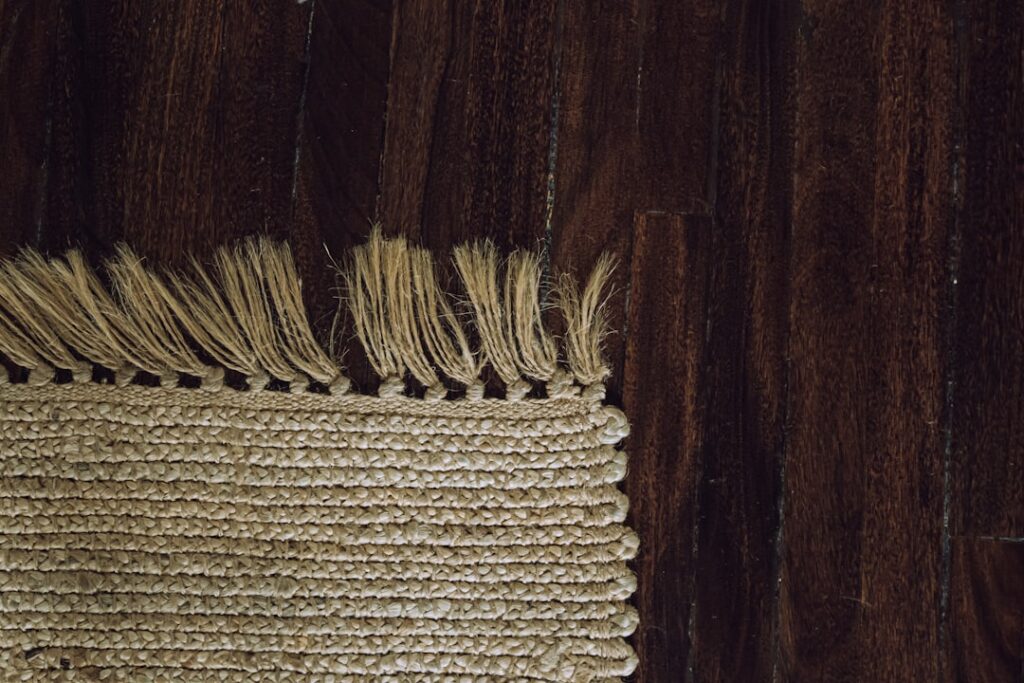
Natural-fiber rugs have quietly become the workhorse of layered, textured interiors, and jute leads the pack. A brown jute rug brings a warm, earthy, organic foundation to a room that manufactured synthetics simply cannot fake. The color reads as a soft, natural tan-to-cocoa depending on the fiber and dye, and it grounds everything from a boho living room to a coastal bedroom. But jute has real quirks, and buying one without understanding them leads to disappointment. I have laid plenty of natural-fiber rugs and steered clients away from a few rooms where jute makes no sense at all. Here is the honest guide.
What Jute Is and Why the Brown Tone Works
Jute is a plant fiber harvested from the stalks of the jute plant, grown mostly in India and Bangladesh. It is spun into soft, ropey yarn and woven into rugs, and it is one of the most sustainable and biodegradable rug materials you can buy. Undyed jute carries a natural warm tan-to-brown color, which is why brown jute looks so effortlessly organic; the color is largely the fiber’s own.
That natural brown is a design gift because it is a true neutral with warmth built in. Unlike a cool gray, brown jute adds coziness, and unlike a bright synthetic it never fights the rest of the room. It layers beautifully under smaller patterned rugs and pairs with wood, rattan, linen, and leather for that collected, natural look.
Jute Weaves and What They Mean
Not all jute rugs feel or perform the same, and the weave is the main variable. Knowing the styles helps you match the rug to the room.
- Boucle or looped weave: Tight loops create a soft, subtly textured surface that is comfortable underfoot and versatile.
- Braided: Thick braids coiled and stitched, giving a chunky, casual, farmhouse feel and good durability.
- Chunky or hand-woven flatweave: A visible basket-weave pattern that adds strong texture and reads more rustic.
- Jute blends: Jute mixed with wool or chenille for extra softness and stain resistance, a smart upgrade for living areas.
A tighter weave generally wears better and feels smoother, while chunky braids bring more visual texture. If comfort underfoot matters, a jute-wool blend or a boucle weave beats a coarse flatweave.
Durability and Where to Use It
Jute is reasonably durable and holds up to moderate foot traffic, making it a solid choice for living rooms, bedrooms, and home offices. It is softer than its cousin sisal, so it feels better on bare feet, but it is also a bit less rugged. The most important thing to understand is jute’s relationship with water: it does not like it.
Jute absorbs moisture readily, can develop watermarks or brown spots when it gets wet, and will rot or grow mildew if it stays damp. That rules it out for bathrooms, kitchens near the sink, mudrooms, covered patios, and anywhere spills are frequent or humidity is high. Keep brown jute in dry, low-to-moderate traffic living spaces and it will serve you well. For wet or high-traffic zones, choose a synthetic jute-look rug instead.
What a Brown Jute Rug Costs
Jute is one of the more affordable natural-fiber options, which adds to its appeal. Small accent and scatter sizes run $40 to $100. A standard 5×8 typically falls in the $100 to $250 range, and larger 8×10 rugs generally run $200 to $500 depending on weave, thickness, and whether it is a blend.
Hand-woven, chunky, or blended jute rugs sit at the higher end, while simple machine-assisted flatweaves are cheapest. Budget another $50 to $150 for a quality rug pad, which is especially important with jute because a pad cushions the somewhat firm fiber, protects your floor from the coarse backing, and keeps the rug from sliding.
Cleaning and Care
Jute care is all about keeping it dry. Vacuum regularly with the beater bar off or on a low setting, since aggressive brushing can pull and fuzz the fibers; suction alone lifts most dirt. Shed fibers are normal for the first few weeks, especially with chunky weaves, and taper off with time.
For spills, act fast: blot immediately with a dry cloth, never rub, and never soak the rug. Use as little moisture as possible on any spot, and dry the area thoroughly with a fan to prevent watermarks. Deep steam cleaning and machine washing are off the table because they saturate the fiber. For serious cleaning, a professional experienced with natural fibers is the safe route. Rotate the rug periodically so it wears and fades evenly.
Styling a Brown Jute Rug
Brown jute is a designer favorite for layering. Use a large jute rug as the base layer and float a smaller patterned or wool rug on top to add color and softness where you actually sit or step. This trick lets you enjoy jute’s texture while getting comfort and pattern where you want them.
On its own, brown jute anchors coastal, farmhouse, boho, and Scandinavian rooms beautifully. It plays off natural wood furniture, woven pendant lights, linen upholstery, and greenery. Because the color is a warm neutral, you can change throw pillows and accents seasonally without the rug ever clashing. For most dry living spaces, a brown jute rug is an affordable, sustainable, and endlessly flexible foundation that makes a room feel warm and grounded.
Jute vs. Sisal and Other Natural Fibers
Buyers routinely confuse jute with sisal, and choosing wrong leads to regret, so it is worth being clear on the differences. Jute is soft, warm-toned, and comfortable underfoot, but it is less durable and far more sensitive to moisture. Sisal, made from agave leaves, is much tougher and better for very high-traffic areas and stairs, but it feels coarse and scratchy and is harder on bare feet.
- Jute: Softest natural fiber, warm brown tone, best for dry living rooms and bedrooms. Avoid moisture.
- Sisal: Most durable, good for stairs and busy halls, but rough underfoot and still moisture-sensitive.
- Seagrass: Naturally somewhat stain- and moisture-resistant with a smooth, almost waxy feel; a good middle ground.
- Wool: Softest and most durable overall, but a manufactured pile rather than a coarse natural weave, and more expensive.
If you want the natural look in a spot that sees moisture or heavy traffic, seagrass or a synthetic jute-look rug outperforms real jute. For a soft, dry-room foundation, jute wins on comfort and price.
Buying a Brown Jute Rug That Lasts
A little scrutiny at purchase pays off. Check the weave density: a tighter, denser weave sheds less and wears longer than a loose, chunky braid, though the chunky look has its own rustic charm. Inspect the backing, since some jute rugs have a latex or cotton backing that adds stability but can trap moisture against a floor, making a breathable rug pad even more important. Confirm the color in person if you can, because “brown” jute ranges from pale wheat to deep cocoa depending on the fiber and any dye, and screens rarely show it accurately. Finally, be realistic about shedding for the first few weeks and about the rug’s dislike of water, and place it accordingly. Buy the right weave for the right room, add a good pad, and a brown jute rug rewards you with years of warm, natural texture.