Two design moves instantly warm up a room, and a round yellow rug pulls off both at once. The circle softens the hard right angles of walls and furniture, while yellow floods the space with the color our eyes read as sunlight. I have watched a single mustard-toned circle transform a boxy reading corner from forgettable to inviting in an afternoon. This guide covers the shades of yellow worth considering, how the round shape changes a room, the sizes that actually fit, materials that hold up, and how to style and care for one so it looks intentional rather than accidental.
Round rugs are having a moment for good reason. They break up the grid of a rectangular room and draw the eye toward a single focal point. Pair that shape with a warm, optimistic color and you get a floor piece that does real design work.
Why the Round Shape Matters
A rectangle echoes the walls and reinforces the boundaries of a room. A circle does the opposite. It introduces a curve that your eye follows around, softening the space and creating a natural gathering point. Designers reach for round rugs in spots where furniture already clusters around a center: under a pedestal dining table, beneath a nursery glider, in an entryway foyer, or anchoring a small reading nook. The circular footprint also handles tight or oddly shaped rooms gracefully, since there are no corners to run awkwardly into a doorway or baseboard. In a square room especially, a round rug relieves the monotony of parallel lines and makes the whole space feel more relaxed.
The Psychology of Yellow
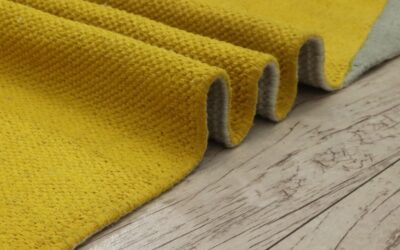
Yellow is the most visible color to the human eye, which is exactly why it feels so energizing. It is associated with warmth, optimism, and creativity, and even a modest dose lifts the mood of a room. That power cuts both ways, so the shade you choose determines whether the rug feels cheerful or overwhelming. A soft buttery yellow reads calm and cozy, ideal for bedrooms and nurseries. A saturated lemon or canary yellow makes a bold, playful statement in an entryway or kids’ space. Muted mustard and golden ochre bring a grounded, sophisticated warmth that suits living rooms and reading corners without shouting. Think of yellow as an accent that ties a palette together rather than a color that has to dominate.
Choosing Your Shade of Yellow
Not all yellows behave the same way with the rest of your room. Here is how the common families land.
- Mustard and ochre: deep, earthy, and forgiving. They hide soil well and pair beautifully with navy, terracotta, gray, and warm wood tones.
- Gold and amber: rich and slightly formal, lovely against jewel tones and dark furniture.
- Butter and pale yellow: soft and soothing, perfect for nurseries and bedrooms where you want warmth without energy.
- Lemon and canary: bright and lively, best used in smaller rooms or as a punchy focal point against white or gray.
If you are nervous about commitment, start with a mustard tone. It is the most versatile yellow, works with nearly every neutral, and shows everyday wear far less than a pale shade.
Sizes: Matching the Circle to the Room
Round rugs are measured by diameter, and choosing the right one is mostly about scale. Too small and the rug floats like an island; too large and it crowds the walls.
- 3 to 4 foot round: an accent piece for an entryway, under a small side table, or beside a bed.
- 5 foot round: the workhorse size, ideal under a small round dining table, in a nursery, or anchoring a reading nook with a single chair.
- 6 foot round: big enough to seat a bistro table with chairs fully on the rug, or to define a seating vignette in a living room.
- 8 foot round and up: a statement piece for a large open room or a full dining set, with the front legs of surrounding furniture resting on the edge.
A reliable rule: under a round dining table, add about 4 feet to the table’s diameter so chairs stay on the rug when pulled out. A 42-inch table wants at least a 7- to 8-foot round.
Materials That Last
The fiber determines how the rug feels underfoot and how it holds up to traffic and spills.
Wool
Wool is the premium choice. It is naturally soft, resilient, stain-resistant thanks to its lanolin coating, and it holds dyed color, including rich yellows, exceptionally well. A wool round rug costs more, often $150 to $600 depending on size, but it can last 20 years and springs back from crushing.
Jute and Natural Fibers
A jute or sisal round rug brings organic texture and a warm, sandy base tone that pairs naturally with golden yellows. These are affordable and beautifully casual, though they are rougher underfoot and dislike moisture, so keep them out of bathrooms and damp entries.
Synthetics
Polypropylene and polyester rounds are the budget-friendly, kid- and pet-proof option, often $40 to $150. They shrug off stains, clean easily, and come in the brightest, most saturated yellows. For a nursery or high-traffic entry, a washable synthetic is the practical pick.
Styling a Round Yellow Rug by Room
Placement makes or breaks the look. In a round yellow rug nursery, center it under the glider and crib zone so the warm circle grounds the room and gives baby a soft landing during tummy time; a butter or pale gold shade keeps the space calm. In an entryway, a 3- to 4-foot mustard round greets guests with warmth and hides tracked-in grit better than a pale rug. For a reading nook, tuck a 5-foot round under a single armchair and ottoman to carve out a cozy, defined retreat. In a living room, use a golden round to anchor a small conversation grouping, letting the front legs of a chair or two rest on the edge to tie the arrangement together.
Balance the color by echoing the yellow elsewhere in small doses, a throw pillow, a piece of art, a ceramic vase, so the rug feels like part of a plan. Against gray or white walls the yellow pops; against navy or forest green it glows.
Care and Maintenance
Keeping a yellow rug looking fresh takes a little routine. Vacuum weekly to lift grit before it grinds into the fibers, and rotate the rug a quarter turn every few months so sun and foot traffic wear it evenly, which matters because yellow shows fading. Blot spills immediately with a clean cloth and mild soapy water rather than rubbing, since aggressive scrubbing frays fibers and spreads stains. Use a rug pad underneath, which is essential on a round rug because the edges love to curl and slide. For wool, have it professionally cleaned every few years; most synthetics tolerate spot cleaning or, for smaller washable rounds, a gentle machine wash. Keep pale yellows out of direct all-day sun to protect the color.
The Bottom Line
A round yellow rug is one of the easiest ways to soften a room’s hard lines and pour in warmth at the same time. Choose a mustard or gold for versatility and forgiveness, a soft butter for calm bedrooms and nurseries, or a bright lemon for a playful punch. Size it to the furniture it anchors, pick wool for longevity or a washable synthetic for busy family spaces, and give it a rug pad and regular vacuuming. Get those pieces right and that cheerful circle will brighten your floor and your mood for years.