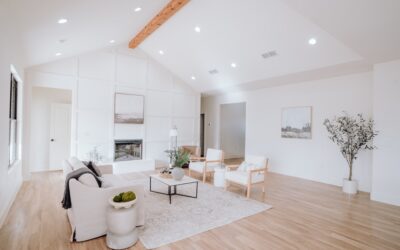
Walk into any “before” photo on Houzz and the giveaway is almost always the rug. A 5×7 floating in the middle of a 16×20 living room makes the entire space feel like a hotel waiting area — small, awkward, transient. Rug placement living room mistakes are also the easiest to fix without spending five figures on furniture, lighting, or paint. Get the size and orientation right and a $400 rug from RugsUSA can pull together a room that previously looked like furniture rentals dropped randomly into a box.
The Three Standard Layout Rules
Every interior designer learns the same three options for sofa-and-chair groupings:
- All legs on the rug — The rug extends past the front legs of every seating piece by 6 to 12 inches. Creates the most luxurious feel but requires the largest rug.
- Front legs on the rug — The rug starts under the front legs of the sofa and chairs. Most popular American layout because it works with mid-size rugs.
- Floating rug — Only the coffee table sits on the rug, with all furniture floating off of it. Reserved for very small rooms (under 10×12) or for area definitions in open-concept spaces.
Avoid the worst-of-both-worlds: a rug that touches the front legs of the sofa but stops short of the chair fronts. The visual line breaks and the room reads disjointed.
Sizing by Room Dimensions
A practical sizing chart that works in 90 percent of American living rooms:
- Room under 10×12 feet — 5×8 rug minimum, floating layout
- Standard 12×14 living room — 8×10 rug, front legs on layout
- Larger 14×18 living room — 9×12 rug, front legs or all legs on
- Great room 18×22+ — 10×14 or 12×15 rug, all legs on
- Open concept with a defined seating zone — Size to the seating arrangement, leaving 18-24 inches of bare floor between the rug edge and any walls or major thoroughfares
Rules for Sofas and Sectionals
For a standard 84-inch sofa, the rug should be at least 84 inches wide so it visually anchors the entire piece. An 8×10 (96-inch) rug under an 84-inch sofa leaves 6 inches of breathing room on each side, which reads balanced.
Sectionals demand a different math. Measure the entire footprint of the L or U shape, then add 24 inches to the width and depth. A standard 110×88 inch sectional needs a 9×12 rug minimum. Skip 8×10 — you will end up with a tail of sectional dangling onto bare floor.
Best Rug Materials for Living Rooms
- Hand-knotted wool — 25-50+ year lifespan. $1,500-$8,000 in 8×10. Restoration Hardware, ABC Carpet, Loloi Vista collection.
- Machine-loomed wool — 10-15 year lifespan. $400-$1,500 in 8×10. Ruggable Wool collection, Loloi II.
- Polypropylene — Pet and kid-proof, 5-10 year lifespan. $150-$500. nuLOOM, Safavieh Madison.
- Jute and sisal — Textural neutral base layer. $200-$600. Pottery Barn Heathered Chenille Jute. Sheds for the first 3 months.
- Polyester shag — Cheap and trendy but flattens within 18 months. Skip for primary living rooms.
Coffee Table and Walking Path Geometry
The coffee table needs at least 12 inches of clear rug visible around all four sides. If your coffee table measures 48×24 inches and sits on a 5×8 rug, you have under 12 inches on the long sides — too cramped. Either size up the rug to 8×10 or swap to a smaller round coffee table (36-inch diameter). Walking paths to and from the seating area should land entirely on the rug or entirely off — straddling the rug edge with a primary path causes premature wear and curling along that edge.
Layering Rugs for Visual Depth
The current trend is layering a smaller patterned rug over a larger natural-fiber base. Common pairing: a 9×12 jute base under an 8×10 vintage Persian or Moroccan rug. The jute frames the patterned rug like a mat frames artwork. Keep the layered rug centered and orient pattern lines parallel to the longer wall of the room. Skip layering if you have wheeled furniture (office chairs, stroller traffic) — the height difference creates trip hazards.
Rug Pads Are Not Optional
A quality rug pad does three jobs: prevents slip, protects floors from rug-back dyes, and adds 0.25 to 0.5 inches of cushion that extends the rug’s life by years. Felt-and-rubber combos like the Mohawk Home Dual Surface ($60-$120 for 8×10) work on every floor type. Pure rubber pads stain hardwood — avoid them entirely on prefinished wood and bamboo. Cut the pad 1 inch smaller than the rug on each side so the pad never peeks out.
Common Mistakes That Shrink Rooms
- Choosing a rug too small for the seating arrangement
- Centering the rug to the room instead of to the seating group
- Placing a busy patterned rug under heavily patterned upholstery
- Running rug pile against the dominant traffic direction (causes faster matting)
- Forgetting to leave 12 to 18 inches of floor visible between the rug and the surrounding walls
- Using a runner-shaped rug in a square seating arrangement
Cost Planning
Budget realistic numbers for a primary living-room rug:
- Entry-level synthetic 8×10: $200-$500
- Mid-range wool blend 8×10: $700-$1,500
- Premium hand-knotted 9×12: $3,000-$10,000+
- Quality rug pad: $60-$150
- Professional rug cleaning every 18-24 months: $4-$6 per square foot
A rug is the single largest piece of textile in most homes — sized correctly, it ties the room together for the next decade.