The single most common decorating mistake in American living rooms is a rug that’s too small, a postage stamp of fabric floating in the middle of the floor with furniture marooned around it. Choosing the right big rug for living room spaces does the opposite: it anchors the seating, defines the conversation area, and makes the whole room feel intentional and larger. This guide covers the sizing rules designers actually use, how to place furniture on a rug, and which materials hold up to real living-room traffic.
Why Bigger Almost Always Wins
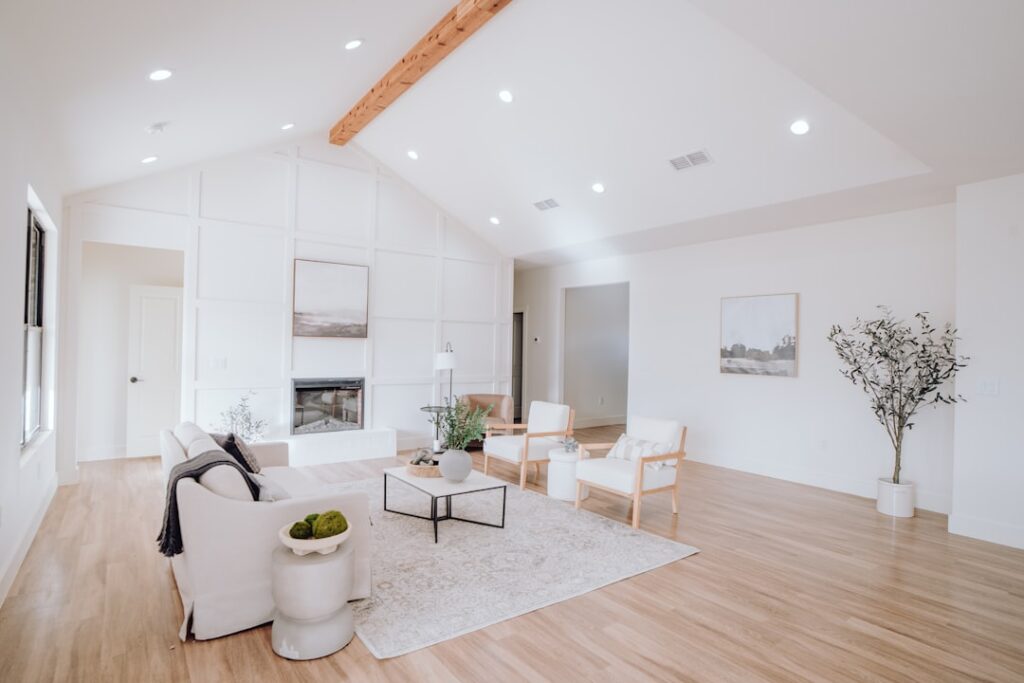
A rug is the visual foundation of a room. When it’s large enough to gather the furniture together, the eye reads the seating as one unified zone. When it’s too small, the furniture looks disconnected and the room feels choppy. As a rule, your rug should be big enough that at least the front legs of every major piece sit on it. That single guideline fixes most awkward layouts.
Going large also visually expands the floor. A rug that stretches close to the walls draws the eye outward, while a small rug shrinks the perceived footprint of the room.
Standard Sizes and What They Fit
Living-room rugs come in a handful of common dimensions. Match the size to your room and seating scale.
- 8 by 10 feet: The workhorse size for most living rooms. Fits a standard sofa plus two chairs with front legs on the rug.
- 9 by 12 feet: The go-to for larger or open-concept rooms. Lets you place all furniture legs fully on the rug.
- 10 by 14 feet and up: For great rooms and oversized layouts where a 9 by 12 still looks lost.
- 6 by 9 feet: Suitable only for small rooms or apartments, often too small once a full sofa-and-chairs set is in play.
When you’re between sizes, size up. A rug that’s slightly too big reads as generous; one that’s too small reads as a mistake.
The Three Placement Strategies
How much furniture you put on the rug defines the feel of the room.
- All legs on: Every furniture leg sits fully on the rug, with 8 to 18 inches of rug showing beyond the furniture on all sides. The most luxurious look, and it needs the biggest rug.
- Front legs on: The front legs of the sofa and chairs rest on the rug while the back legs sit on the floor. This ties the pieces to the rug and to each other and is the most practical choice for most budgets.
- All legs off: Only acceptable in very small spaces, where the rug floats in front of the seating. Use a rug at least as wide as the sofa to avoid the marooned look.
How to Measure for the Right Size
Don’t guess. Tape out the rug’s footprint on your floor with painter’s tape before you buy, then live with it for a day. Walk the room, sit on the sofa, and confirm the proportions feel right. Leave roughly 12 to 18 inches of bare floor between the edge of the rug and the walls so the floor frames the rug rather than the rug wall-to-walling the room. In an open-concept space, let the rug define the living zone and stop short of the dining or kitchen areas.
Choosing a Material That Lasts
A big rug is an investment, and living rooms see daily wear. Pick a fiber that matches your traffic and budget.
- Wool: The gold standard, naturally stain-resistant, resilient, and warm underfoot. Costs more but lasts decades.
- Polypropylene (olefin): Budget-friendly, stain- and fade-resistant, and easy to clean. Great for homes with kids and pets.
- Cotton and jute: Casual, textural, and affordable, but jute is rough underfoot and harder to clean.
- Nylon: Durable and resilient for high-traffic rooms, a strong synthetic option.
For homes with pets or kids, a low-pile, washable, or stain-resistant synthetic earns its keep. For a formal, lower-traffic living room, wool delivers a richness synthetics can’t match.
Layering and Shape Options
Rugs don’t have to be a single rectangle. Layering a smaller, textured rug over a large neutral base, often a flat-woven jute or sisal underneath a patterned wool or hide on top, adds depth and lets you bring in pattern without committing to a giant statement piece. It’s also a smart way to make a too-small rug you already own work in a bigger room. As for shape, rectangular rugs suit the vast majority of living rooms because they echo the room’s geometry and the lines of a sofa. Round rugs work in square seating areas or to soften a room full of straight lines, and they’re handy under a round coffee table or in a reading nook. Match the rug’s orientation to the room: in a long, narrow living room, run the rug the long way so it reinforces the space rather than fighting it.
Styling Your Big Rug
Pattern can hide everyday wear and crumbs, while a solid rug feels calm and modern but shows every speck. If your sofa and walls are busy, a quieter rug grounds the room; if the room is neutral, a patterned rug becomes the centerpiece. Always pair a large rug with a quality rug pad, it cushions underfoot, prevents sliding, and dramatically extends the rug’s life by reducing fiber crush. Size the pad about an inch smaller than the rug on all sides so it stays hidden, and choose a felt-and-rubber pad on hard floors for the best grip and cushion.
A big rug for living room spaces is one of the highest-impact, lowest-effort upgrades you can make. Get the size right, settle on a placement strategy, and choose a fiber suited to your life, and the room will instantly feel pulled together. At D and G Floors we tell clients that the right rug does more for a room’s comfort and proportion than almost any other single purchase, as long as you resist the urge to buy it too small.