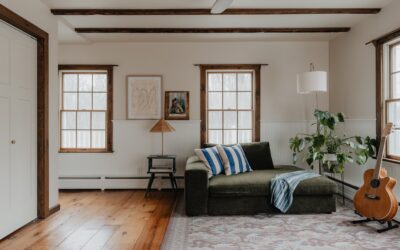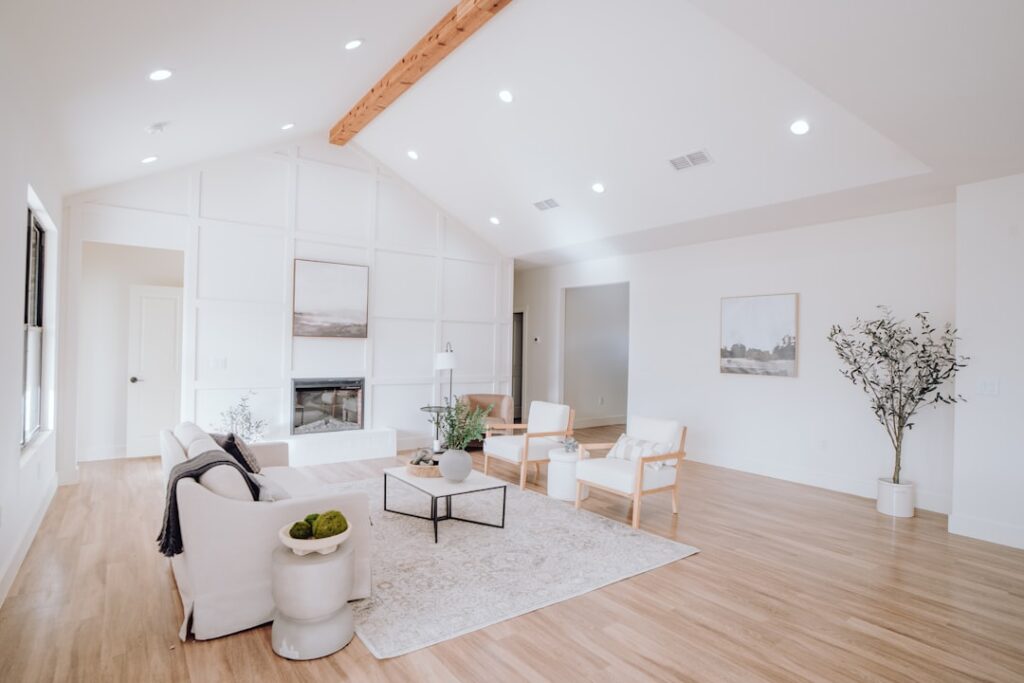
The single most common decorating mistake is a rug that is too small, floating in the middle of the room like a postage stamp under the coffee table. Getting the living room area rug size right instantly makes a space feel larger, more grounded, and professionally designed, while the wrong size makes even expensive furniture look cheap and disconnected. The good news is that rug sizing follows clear rules based on your room dimensions and furniture layout. This guide covers the standard sizes, the placement rules designers actually use, and how to measure so you buy the right rug the first time.
- Standard Area Rug Sizes
- The Golden Rule: Bigger Is Almost Always Better
- The Three Placement Layouts
- Sizing to Your Sofa
- How to Measure Your Room and Layout
- Special Cases: Open Plans and Long Rooms
- Common Sizing Mistakes to Avoid
- Choosing a Rug Pad and the Right Thickness
- Layering Rugs for Extra Coverage
- The Bottom Line
Standard Area Rug Sizes
Rugs come in a handful of standard dimensions, and knowing them helps you shop efficiently.
- 5′ x 8′: small; suits apartments and compact seating areas
- 6′ x 9′: small-to-medium; works for modest living rooms
- 8′ x 10′: the most popular living room size; fits most standard rooms
- 9′ x 12′: large; ideal for spacious or open-plan living rooms
- 10′ x 14′ and larger: extra-large for great rooms and open floor plans
For most living rooms, the choice comes down to 8′ x 10′ versus 9′ x 12′. When in doubt, size up. An oversized rug looks intentional and expands the space, while an undersized one shrinks it.
The Golden Rule: Bigger Is Almost Always Better
If you take away one principle, make it this: err on the side of a larger rug. A rug should anchor the entire seating arrangement, not just peek out from under the coffee table. As a baseline, leave a border of bare floor of roughly 8 to 24 inches between the rug’s edge and the walls, so the rug fills the room’s central zone without running wall to wall. Around 18 inches of exposed floor on each side is a classic, balanced look. Too much bare floor and the rug looks marooned; too little and the room feels cramped.
The Three Placement Layouts
How much of your furniture sits on the rug defines the whole look. There are three accepted approaches, and each calls for a different size.
1. All Legs On (Most Spacious Look)
Every piece of furniture, sofa and chairs included, sits fully on the rug, with the rug extending several inches beyond the furniture on all sides. This creates a cohesive, luxurious, defined room and is the designer favorite for larger spaces. It requires the biggest rug, usually 9′ x 12′ or larger, so budget accordingly.
2. Front Legs On (Most Popular and Balanced)
Only the front legs of the sofa and chairs rest on the rug, with the back legs on bare floor. This ties the seating together while using a more moderate rug size, typically 8′ x 10′. It is the most versatile and forgiving layout and works in the majority of living rooms. Aim to have the rug extend under the front third of each seat.
3. All Legs Off (Smallest, Use With Care)
The rug floats in front of the seating with no furniture legs on it, defining a central zone under the coffee table. This works only in small rooms or apartments and only if the rug is still large enough to sit under the coffee table with generous margin, at least 5′ x 8′. Done with too small a rug, this is the layout that looks like a mistake.
Sizing to Your Sofa
Your sofa is the anchor, so size the rug to it. A key rule: the rug should be wider than the sofa, extending about 6 to 8 inches beyond each armrest so the seating group looks framed rather than pinched. For a standard 84-inch (7-foot) sofa, that means a rug at least 8 feet wide. If you have a sectional, measure its full footprint and choose a rug that lets at least the front legs sit on it while extending beyond the outer edges of the seating.
How to Measure Your Room and Layout
Do not guess. A few minutes of measuring saves an expensive return.
- Measure the length and width of the room, then subtract about 18 inches from each side to find the ideal maximum rug footprint.
- Arrange your furniture the way you want it, then measure the outer boundary of the seating group.
- Use painter’s tape or newspaper on the floor to outline your candidate rug size and live with it for a day.
- Confirm the rug will extend beyond the sofa’s arms and under the chosen furniture legs before you buy.
The tape trick is the pro move; seeing the actual footprint on your floor prevents almost every sizing error.
Special Cases: Open Plans and Long Rooms
Open-concept spaces need extra thought. In a combined living and dining area, use separate rugs to define each zone rather than one giant rug, and make sure the living room rug is large enough to hold its seating group so it does not look lost in the open space. For long, narrow rooms, a runner-proportioned or larger rectangular rug oriented along the room’s length keeps the proportions balanced. In a very large great room, do not be afraid of a 10′ x 14′ or bigger rug; a too-small rug in a big room is the most jarring mismatch of all.
Common Sizing Mistakes to Avoid
A few errors show up again and again.
- Buying too small: the number-one mistake; the rug should unite the furniture, not hide under the coffee table alone
- Rug narrower than the sofa: makes the seating look oversized and awkward
- Running it wall to wall: that is carpet, not an area rug; leave a border of bare floor
- Ignoring traffic flow: make sure walkways and door swings clear the rug edges
Choosing a Rug Pad and the Right Thickness
Sizing gets the most attention, but the rug pad underneath affects how the rug looks and lasts. A quality pad, cut about an inch smaller than the rug on each side, keeps the rug from sliding, adds cushioning, and protects the floor beneath. On hardwood, use a felt-and-natural-rubber pad rather than solid PVC, which can discolor a finish over time. Pad thickness also matters for function: a low-profile pad of about 1/4 inch works under doors and in high-traffic paths, while a plusher 3/8-inch pad adds comfort in a formal living room. If your rug sits partly under furniture in a front-legs-on layout, a firmer pad keeps the furniture from creating an uneven dip at the rug’s edge. It is a small purchase, usually $30 to $80 depending on size, that noticeably improves how a correctly sized rug performs day to day.
Layering Rugs for Extra Coverage
If you already own a rug that is too small, or you love a smaller patterned rug that will not cover the seating group, layering is a designer trick that solves the size problem stylishly. Place a large, neutral, low-pile rug, such as a natural jute or a plain sisal in the 8′ x 10′ or 9′ x 12′ range, as the base to satisfy the sizing rules, then center your smaller decorative rug on top. The base rug provides the proper footprint that anchors the furniture, while the top rug adds color and personality. This approach works especially well in big or open-plan rooms and lets you keep a favorite rug that would otherwise look marooned. Just keep the base rug thin so the layered look stays flat and does not become a trip hazard, and make sure the combined footprint still follows the same edge and furniture-leg guidelines as a single rug would.
The Bottom Line
Getting the living room area rug size right comes down to a few simple rules: choose 8′ x 10′ or 9′ x 12′ for most rooms, keep the rug wider than your sofa with 6 to 8 inches past each arm, leave roughly 18 inches of bare floor around the edges, and pick a placement layout that matches your room’s size. When you are unsure, go bigger and tape out the footprint first. Nail the size and an area rug will pull your entire living room together and make the whole space feel finished.