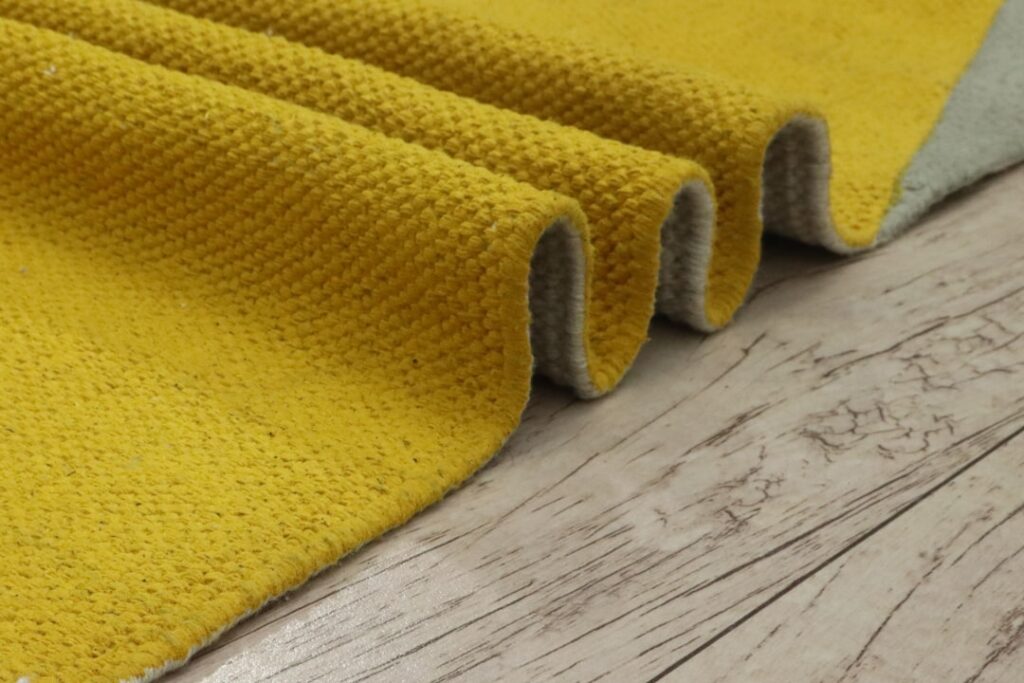
A flat, uniform rug fills a room. A textured one gives it character. A textured rug uses varied pile heights, mixed weaves, and tactile materials to create depth, dimension, and that inviting feeling underfoot that a smooth rug can’t match. Whether it’s the looped ridges of a high-low design, the chunky braids of jute, or the plush shimmer of a shag, texture adds visual interest without committing to a loud color or busy pattern. That’s why designers reach for textured rugs in neutral rooms, they bring warmth and sophistication while keeping the palette calm.
What Makes a Rug “Textured”
Texture comes from how a rug is constructed, not just what it’s made of. Some rugs combine high and low pile to form raised patterns you can feel with your feet. Others use chunky, irregular weaves, knotted loops, or carved designs that catch light differently across the surface.
The payoff is dimension. A solid gray flat-weave can look flat and lifeless, but the same color in a high-low or hand-knotted texture reads rich and intentional. Texture lets a neutral rug carry a room, which is exactly why it’s so popular in modern, minimalist, and Scandinavian-inspired spaces.
Types of Textured Rugs
The construction defines the look and feel. Here are the styles you’ll encounter most.
- High-low (cut-and-loop): mixed pile heights form raised patterns and a sculpted surface. Subtle and versatile.
- Shag: long, plush fibers for maximum softness and a cozy, casual feel.
- Braided and chunky knit: thick, rope-like weaves with bold, tactile dimension, great for farmhouse and coastal looks.
- Hand-knotted and Berber-style: dense knots or loops with natural irregularity and durability.
- Natural fiber (jute, sisal, seagrass): coarse, organic texture that adds warmth and an earthy, grounded feel.
Choosing Texture by Room
Match the texture to how the room is used. In a living room, a medium high-low or a plush shag adds comfort where you lounge, though deep shag can be hard to vacuum if it’s a high-traffic zone. Bedrooms are the natural home for soft, deep-pile textures you want to sink your feet into first thing in the morning.
For dining rooms and entryways, choose a flatter texture like a tight loop or natural fiber, since chairs slide easier and dirt sweeps off more readily. A chunky braided jute handles an entry’s grit well. The general rule: the more traffic and furniture movement a room sees, the lower and tighter the texture should be.
Best Materials for Textured Rugs
Material affects durability, feel, and care as much as the weave does.
- Wool: naturally resilient, soft, and stain-resistant, holds texture beautifully and lasts for decades. The premium choice.
- Jute and sisal: affordable, eco-friendly, and full of natural texture, but rough underfoot and sensitive to moisture.
- Polypropylene (olefin): budget-friendly, stain-resistant, and great for high-traffic or outdoor use, less luxurious feel.
- Cotton: soft, washable, and casual, best in low-traffic spots and great for flat-textured washable rugs.
- Viscose/blends: adds silky sheen and softness, but stains easily, so reserve it for low-use areas.
Styling a Textured Rug
Texture is a designer’s quiet trick for adding interest without clutter. In a room full of smooth surfaces, leather sofas, glass tables, painted walls, a textured rug introduces a tactile contrast that makes the whole space feel more layered and considered.
Stick to a neutral textured rug, ivory, gray, beige, taupe, when you want the texture itself to be the feature, then let color come from pillows and art. If your furniture is already busy or patterned, a subtle high-low texture grounds the room without competing. Layering a smaller textured rug over a large flat-weave or natural-fiber base is another favorite move for adding depth in living rooms and bedrooms.
The Importance of a Rug Pad
Textured rugs, especially heavier wool and natural-fiber styles, need a quality rug pad underneath. A pad keeps the rug from sliding, adds cushioning that protects the fibers, and lets air circulate so the rug and floor stay healthy. On hard floors, a non-slip felt-and-rubber pad is ideal.
For natural-fiber rugs like jute and sisal, a pad is especially important because the coarse backing can scratch hardwood and laminate. Size the pad about an inch smaller than the rug on all sides. It’s a small expense that meaningfully extends the life of a rug and prevents both slips and floor damage.
Cleaning and Maintaining Textured Rugs
High-low and deep textures trap more dust and debris than flat rugs, so regular vacuuming matters. Use a vacuum with adjustable height and, for delicate or looped textures, turn off the beater bar or use a suction-only setting to avoid pulling loops, snagging a loop can run a whole row.
Blot spills immediately rather than rubbing, which can mat the fibers and push stains deeper. Natural-fiber rugs hate moisture, so clean them with as little water as possible and dry thoroughly to prevent mildew. For wool and synthetics, periodic professional cleaning keeps the texture lofted and fresh. Rotate the rug every few months so wear and sun fading stay even.
Choosing the Right Size and Placement
Texture won’t save a rug that’s the wrong size, and sizing trips up more people than any other rug decision. In a living room, the rug should be large enough that at least the front legs of your sofa and chairs sit on it, which visually ties the seating group together. A too-small rug floating in the middle of the floor makes the whole room feel disjointed, no matter how beautiful the weave.
In a bedroom, run the rug under the lower two-thirds of the bed so you step onto softness on both sides, and let it extend 18 to 24 inches past the bed’s edges. Under a dining table, size the rug so chairs stay on it even when pulled out, generally 24 inches of rug beyond the table on all sides. Get the dimensions right first, then let the texture do its work, and a quality textured rug holds its dimension and good looks for many years, anchoring a room with warmth no flat rug can replicate.