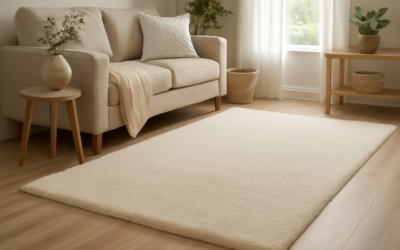
A cream textured rug brings warmth to a room without the visual noise of a bold pattern, and the texture does a lot of the design work that color alone can’t. Where a flat cream rug can look plain or wash out against light walls, a textured one catches light differently across loops, ridges, or shag fibers, creating shadow and depth even in an all-neutral palette. That said, cream is a light color, and light colors show dirt and stains faster than mid-tone or patterned rugs, so picking the right texture and fiber matters more than it might for a busier design. Here’s what to know before you buy one and how to keep it looking good once it’s in your home.
Understanding the Texture Types
Not all “textured” rugs are built the same way, and the construction affects both looks and durability. Loop pile rugs, sometimes called Berber-style, use uncut yarn loops of consistent or varying height to create a nubby, casual surface that hides footprints well. Shag rugs use long, loose fibers, typically 1.5 to 3 inches, for a soft, plush look, but they trap dirt and pet hair deep in the pile and need more frequent vacuuming. Carved or sculpted rugs combine cut and looped pile in the same weave to form a subtle raised pattern, often geometric or botanical, that reads almost like an embossed design from a few feet away.
Bouclé-style rugs use a curled, knotted yarn that gives a chunky, hand-knit appearance and has become popular in the last few years for its cozy, lived-in feel. High-low weaves combine a flat, low-cut base with raised sections, usually in a geometric or trellis pattern, giving you texture and a subtle design at once without introducing strong color contrast. Each of these constructions behaves differently underfoot and cleans differently, so it’s worth handling a sample in person if you can before committing to a large size.
Why Cream Still Shows Dirt Despite the Texture
A common misconception is that texture “hides” soil the way a busy pattern does. Texture hides shape and outline, so a crumb or a pet hair doesn’t stand out in silhouette, but it does very little to hide color contrast. A dark coffee spill or a muddy paw print will still show clearly against cream fibers, textured or not, because the stain’s color is what draws the eye, not its shape. The advantage texture does offer is that everyday dust, light footprints, and minor surface debris blend into the shadows created by the loops or shag, so the rug looks presentable between deeper cleanings even though it’s technically collecting the same amount of dirt as a flat rug would.
Best Materials for a Cream Rug
Wool is often the top pick for a cream textured rug because its natural fibers resist staining better than synthetics at a surface level, and wool’s crimped structure hides soil reasonably well even in a low, flat construction. A wool cream rug in a standard 8×10 size typically runs $700 to $2,200 depending on weave and origin.
Polypropylene, sold under names like Everstrand or similar branded synthetics, has become the practical choice for busy households because many versions are now fully machine washable or can be sprayed down with a garden hose. These run $150 to $500 for an 8×10 and hold up well to spills if you catch them quickly. Viscose, often blended with wool or cotton to create a silky sheen in carved or high-low designs, looks beautiful but is one of the worst performers for stain resistance and high traffic; it’s better suited to a formal living room or bedroom than a mudroom-adjacent hallway. Wool-viscose blends split the difference, offering some of viscose’s sheen with better durability, typically priced $500 to $1,500.
Styling a Cream Textured Rug with Neutrals
The appeal of cream is that it pairs with almost every other neutral without competing for attention. Against white or light gray walls, a cream textured rug adds just enough warmth to keep a room from feeling sterile, especially when paired with warm wood tones like oak or walnut furniture. In a room with beige or greige walls, choose a rug with visible texture depth, like a shag or carved weave, so the rug doesn’t disappear into the wall color entirely.
- Pair with black or dark walnut furniture for contrast that keeps the room from feeling flat.
- Layer a smaller patterned runner or vintage-style rug on top for a collected, designed look.
- Add texture elsewhere too, like linen curtains or a woven pouf, so the rug doesn’t feel like the only textured element in the room.
- Use warm-toned lighting, around 2700K to 3000K, to bring out the golden undertones common in cream wool.
Common Sizes and What They’re Used For
Cream textured rugs are available in most standard sizes: 5×8 for a bedroom nightstand runner setup, 8×10 for a mid-size living room, 9×12 for larger family rooms, and runners in 2.5×8 or 2.5×10 for hallways. Round versions, typically 6 or 8 feet in diameter, work well under a round dining table or in a reading nook. Because cream is so versatile, it’s one of the easier colors to size up or down without worrying about the color clashing with existing decor.
Cleaning Cream Fibers Without Damaging Them
Vacuum a cream textured rug at least twice a week, since dust and pet dander show more visibly against light fibers than they would on a darker rug. Use a vacuum with adjustable height or no beater bar on shag and loop styles, since an aggressive beater bar can snag and pull loops loose over time.
For spot cleaning, blot with a clean white cloth and cold water first; heat can set certain stains permanently into wool and viscose fibers. A solution of mild dish soap diluted in water works for most surface spills, but always test on a hidden corner first, since cream shows any residue discoloration far more obviously than darker colors would. Because stains are so visible on cream, most homeowners get a professional deep clean every 12 to 18 months, which typically costs $100 to $250 for an 8×10 rug depending on fiber and local pricing, and it resets the rug’s appearance far better than repeated spot treatments alone.
When to Replace Rather Than Clean
If a cream rug has developed permanent yellowing, usually from prolonged sun exposure or old pet stains that have oxidized, professional cleaning often can’t fully reverse the discoloration. Wool rugs tend to hold their structure and color better over 10 to 15 years of use than synthetic shag styles, which can mat down and dull within 3 to 5 years in high-traffic homes. If vacuuming and spot cleaning aren’t restoring the rug’s brightness anymore, it’s usually more cost-effective to replace it than to keep paying for deep cleanings that produce diminishing results.
A Few Final Buying Tips
Order a physical swatch before buying a large cream textured rug whenever possible, since screens tend to render cream anywhere from a warm ivory to a cool off-white depending on your monitor’s calibration, and the difference matters against your existing wall color. Check the pile height listed in the product description too; anything above 1 inch qualifies as a shag or plush weave and will need a more powerful vacuum setting than a low, flat loop construction. Finally, ask about the backing material, since a rug with a natural jute or cotton backing tends to breathe better and resist mildew in humid climates compared to a rubberized synthetic backing, which can trap moisture underneath if the rug ever gets wet.