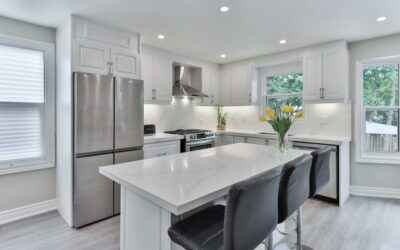
The question of whether to put a rug under dining table or not divides homeowners more than almost any other decor decision. One camp loves the warmth, sound absorption, and finished look a rug brings to a dining room. The other camp has spent one too many nights scrubbing spaghetti sauce out of wool fibers and swears they will never trap food under furniture again. Both are right, depending on the room, the rug, and how you actually live. This guide lays out the real trade-offs, the sizing math that trips most people up, and the materials that make a dining rug practical rather than a maintenance nightmare.
There is no universal right answer, but there is a right answer for your situation. Once you weigh how you use the space, whether you have kids or pets, and what floor sits underneath, the decision usually becomes obvious.
The Case for a Rug Under the Table
A rug defines the dining zone, and that matters most in open-concept homes where the kitchen, dining, and living areas share one continuous floor. Anchoring the table on a rug visually separates the eating area and makes the whole layout feel intentional rather than like furniture floating in a sea of flooring. Designers reach for this trick constantly because it works.
Comfort and acoustics are the next arguments. A rug softens the hard echo of a room full of tile or wood, taking the clatter off scraping chairs and clinking dishes so conversation carries better. Underfoot, it adds warmth in winter, which is welcome in a room where you sit still for an hour at a time. On cold hardwood or tile, that cushion is a genuine quality-of-life upgrade.
There is also a protective angle. A rug shields the floor beneath the table from chair-leg scratches and the occasional dropped dish, which is worth real money if you have expensive hardwood underneath. Add a good rug pad and you get grip, extra cushion, and a barrier that keeps the rug from sliding when someone pushes back from the table.
The Case Against It
Spills are the honest counterargument, and they are relentless in a dining room. Wine, gravy, crumbs, and greasy fingerprints all find their way onto the one textile you cannot easily throw in the washer. Families with young kids or a full holiday table know that a light-colored wool rug under the table is an invitation to permanent stains.
Chairs are the other daily annoyance. Every time someone sits down or stands up, the chair legs have to drag across the rug, catching on the pile and bunching the edge. On a thick or loosely woven rug this becomes a constant fight, and over time the traffic paths where chairs move show visible wear. Cleaning under the table also means moving the table and chairs to vacuum or spot-treat, which is more work than sweeping a bare floor.
Finally, not every floor needs the help. If you have beautiful tile or a floor you specifically chose to show off, covering the centerpiece of the room with a rug can work against the design you paid for.
If You Choose a Rug: Get the Size Right
Sizing is where most dining rugs fail, and the rule is simple: the rug must be large enough that the back chair legs stay on the rug even when guests are seated and scooted out. If pulling out a chair drops its legs off the edge, the rug is too small and every meal becomes a wobbling annoyance.
The math is easy once you know it. Measure your table, then add at least 24 inches, and ideally 30 inches, of rug on every side to accommodate pulled-out chairs. Some quick reference points:
- 4-person table (about 40×40): aim for an 8×8 or 8×10 rug.
- 6-person rectangular table: an 8×10 rug is the common minimum, 9×12 is safer.
- 8-person long table: go to 9×12 or larger.
- Round table: a round rug echoes the shape; size it so chairs stay on when pulled out.
Match the rug shape to the table shape as a starting point, and always account for the fully extended table if you use leaves for holidays.
Choose a Material That Can Take a Meal
Material choice decides whether a dining rug is practical or a regret. Low-pile and flatweave rugs are the winners here because chairs glide over them and spills sit on the surface long enough to blot up rather than soaking deep into a plush pile. Skip thick shag under a dining table entirely.
For durability and stain resistance, indoor-outdoor polypropylene rugs are the pragmatic champion; many can be hosed off or even scrubbed, which is exactly what you want under a table full of kids. Machine-washable rugs designed for dining and kitchen use have also become widely available and solve the cleaning problem outright. If you love natural fiber, a tight low-pile wool resists stains reasonably well and hides crumbs, while jute and sisal look great but stain easily and are hard to clean, so approach those with caution in a heavy-use home.
The Bottom Line
So, rug under dining table or not? Choose the rug if you want to warm up a hard floor, define a dining zone in an open plan, quiet the room, and protect the floor, and you are willing to pick a washable or low-pile material and size it generously. Skip the rug if you have very young kids, a floor you want to showcase, or simply no patience for spot-cleaning textiles after every meal, and instead lean on chair-leg felts and area lighting to define the space.
Whichever way you lean, the failure mode is always the same: a rug that is too small, too plush, or too precious for the way real dinners happen. Get the size and material right, and a dining rug earns its place. Get them wrong, and you will be back to a bare floor within a year.
Frequently Asked Questions
What kind of rug is best under a dining table?
A low-pile or flatweave rug in a stain-resistant material is best, because chairs glide over it and spills sit on the surface long enough to blot. Indoor-outdoor polypropylene and machine-washable rugs are the most practical for families, since they can be scrubbed or hosed off. Avoid thick shag entirely; chairs catch on it and spills sink deep where you cannot clean them.
How big should a rug under a dining table be?
Measure your table and add at least 24 inches, ideally 30 inches, of rug on every side so the back chair legs stay on the rug even when guests are seated and scooted out. For a six-person rectangular table that usually means an 8×10 rug at minimum, with 9×12 being safer. Match the rug shape to the table shape as a starting point.
Is it okay to not put a rug under the dining table?
Absolutely. Skipping the rug is a perfectly good choice if you have young kids, a floor you want to show off, or no patience for spot-cleaning after every meal. Bare tile or hardwood under a table is easy to sweep and mop and never traps crumbs. The right answer depends on your priorities, not on any decorating rule.