
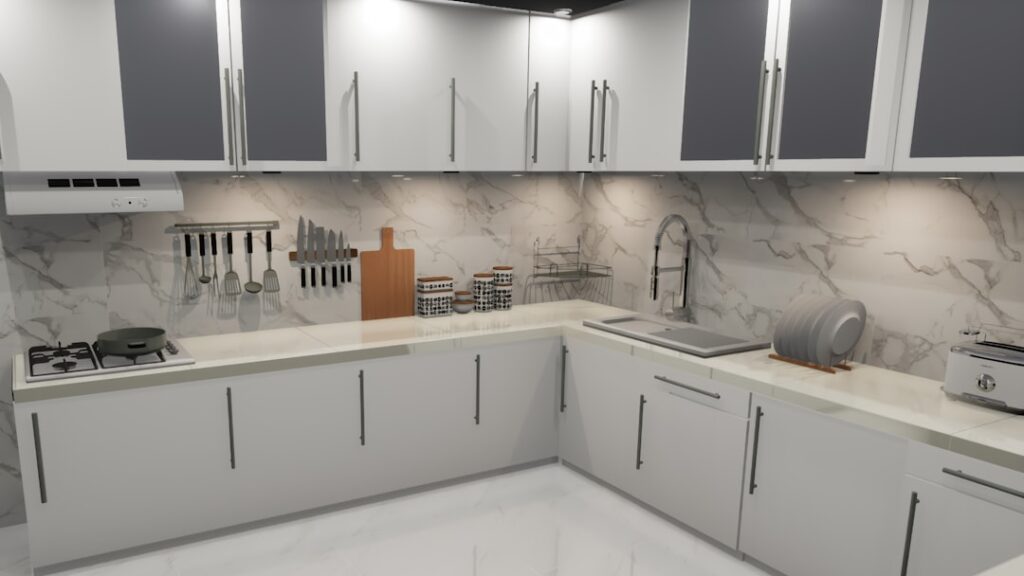
White kitchens have ruled for fifteen years and the market is tired. Walk into any Parade of Homes since 2024 and you will see the same shift: muted greens paired with warm-toned wood, sometimes both, sometimes one accent against the other. A sage green and wood kitchen hits the design sweet spot — soft enough to read as neutral, warm enough to avoid the cold gray fatigue of the late 2010s, and forgiving enough that you can refresh it in a decade without ripping out cabinets. The risk is overcooking the look into something that feels like a 1990s country kitchen. The fix is restraint.
Part of our Kitchen Remodeling guide — explore the full guide →
- Why Sage Works So Well with Wood
- Picking the Right Sage Paint Color
- Where to Put the Green
- Cabinet Quality That Holds Painted Sage
- Countertops That Bridge the Two Tones
- Hardware and Fixtures That Finish the Look
- Flooring Choices That Support, Not Compete
- Lighting and Trim Details
- Realistic Budget Snapshot
Why Sage Works So Well with Wood
Sage sits in the cool side of the green spectrum but contains enough yellow undertone to harmonize with warm woods like white oak, walnut, and rift-sawn cherry. The eye reads it as a near-neutral, which is why interior designers reach for it when they want color without commitment. Pair it with the right wood tone and the kitchen feels grounded rather than trendy. Pair it with a cold blue-toned gray oak and the whole room reads disjointed.
Three wood tones partner reliably with sage:
- White oak with a natural or light wax finish — the cleanest, most modern pairing
- Walnut — adds richness for transitional or mid-century kitchens
- Knotty alder or rustic hickory — for farmhouse or cabin aesthetics
Picking the Right Sage Paint Color
Not every green labeled sage actually reads sage on the wall. Lighting, north or south exposure, and the LRV (light reflectance value) of the paint all shift the tone significantly. The colors below are tested workhorses in real kitchens, not just color cards:
- Sherwin-Williams Evergreen Fog SW 9130 — 2022 Color of the Year, dusty and slightly gray
- Benjamin Moore Saybrook Sage HC-114 — warmer, more traditional
- Farrow and Ball Pigeon No. 25 — moody and slightly cooler, expensive at $115 a gallon
- Sherwin-Williams Sage SW 2860 — the classic, true to its name
- Benjamin Moore October Mist OC-52 — softer, almost gray-green, very forgiving
Buy three sample pots before committing. Paint 2-foot square samples on different walls and check them at 8 a.m., noon, and after dark under your actual kitchen lighting. A sage that looks perfect on Instagram can read mint or murky in person.
Where to Put the Green
The most successful sage and wood kitchens follow a clear rule: one feature gets the color, the rest stay neutral. Three layouts work consistently:
Lower cabinets sage, uppers wood — grounds the room visually, lets the wood breathe at eye level, and hides the inevitable scuffs of daily use down low. This is the most common modern layout.
Island sage, perimeter wood — turns the island into the focal point. Works best in open-concept floor plans where the island doubles as a divider.
All cabinets sage, wood floating shelves or hood — the most committed version of the look. Save it for larger kitchens with good natural light, because saturated cabinets in a small dim space close the room down.
Cabinet Quality That Holds Painted Sage
Painted finishes show every imperfection. Cheap MDF cabinets with thin paint chip and yellow within five years. For a sage and wood kitchen that holds up, spec:
- Solid maple or birch face frames and doors (not MDF) for painted boxes
- White oak veneer or solid for natural wood cabinets — quarter-sawn or rift-sawn cuts read most refined
- Conversion varnish or post-catalyzed lacquer factory finish, not water-based brushed paint
Semi-custom lines like KraftMaid, Decora, and Shiloh handle painted sage well. Big-box stock cabinets often use cheaper substrates and show their flaws within a year.
Countertops That Bridge the Two Tones
The countertop sits between sage and wood and either ties them together or breaks the room apart. Three reliable picks:
White or off-white quartz — Caesarstone Cloudburst Concrete, Cambria Brittanicca Warm, or Silestone Eternal Bella all run $60 to $95 per square foot installed. The neutral surface lets the sage and wood do the talking.
Soapstone or honed black granite — anchors the look with a moody contrast. Soapstone runs $70 to $120 per square foot installed and develops a patina over years.
Butcher block on the island only — pulls in extra wood tone and works as a working surface, though it requires monthly mineral oil. Maple butcher block from Lumber Liquidators or John Boos costs $30 to $80 per square foot.
Avoid busy granites with strong yellow or pink undertones. They fight sage and add visual noise.
Hardware and Fixtures That Finish the Look
Brass and matte black both work with sage, but they create different moods. Unlacquered brass from Rejuvenation or House of Antique Hardware warms the room and patinas naturally — pulls and knobs run $14 to $40 each. Matte black hardware from Top Knobs or Emtek pushes the kitchen modern and graphic, with similar pricing. Pick one finish and stick with it across cabinet pulls, faucet, and lighting. Mixing finishes in a small space rarely succeeds.
For the faucet, Kohler Artifacts in Vibrant Brushed Brass at $400 to $700 or Brizo Litze in Matte Black at $500 to $900 both hold up for years and look intentional with sage cabinets.
Flooring Choices That Support, Not Compete
The floor is the largest visual surface in a kitchen. Compete with the cabinets and you lose. White oak engineered hardwood in a 6 or 7-inch plank at $7 to $12 per square foot installed reads warm and modern. For wet areas, large-format porcelain tile in a soft warm gray (Daltile Emerson Wood or Marazzi Knoxwood at $4 to $8 per square foot) ties the look together without yelling.
Skip dark wide-plank floors. They make sage read sickly and shrink the room visually.
Lighting and Trim Details
Two pendants over the island, an under-cabinet LED strip for task work, and warm 2700K bulbs everywhere. Pendant picks under $400 each that look great with sage and wood include the Schoolhouse Isaac, the Cedar and Moss Cascade, and the West Elm Sculptural Glass Globe.
Trim and ceilings should stay light to balance the saturated cabinet color. Benjamin Moore Simply White OC-117 or Sherwin-Williams Pure White SW 7005 keeps things crisp.
Realistic Budget Snapshot
For a 180-square-foot kitchen with sage lowers and wood uppers, expect to land in this range for a full remodel:
- Semi-custom cabinets in painted sage and natural white oak: $14,000 to $24,000
- White quartz countertops: $3,500 to $5,500
- White oak engineered flooring: $2,000 to $3,500
- Brass or black hardware and fixtures: $1,200 to $2,500
- Paint, lighting, and accessories: $1,500 to $3,000
A sage green and wood kitchen done with restraint should still feel current ten years from now — that is the real test of a design, not whether it photographs well today.


