
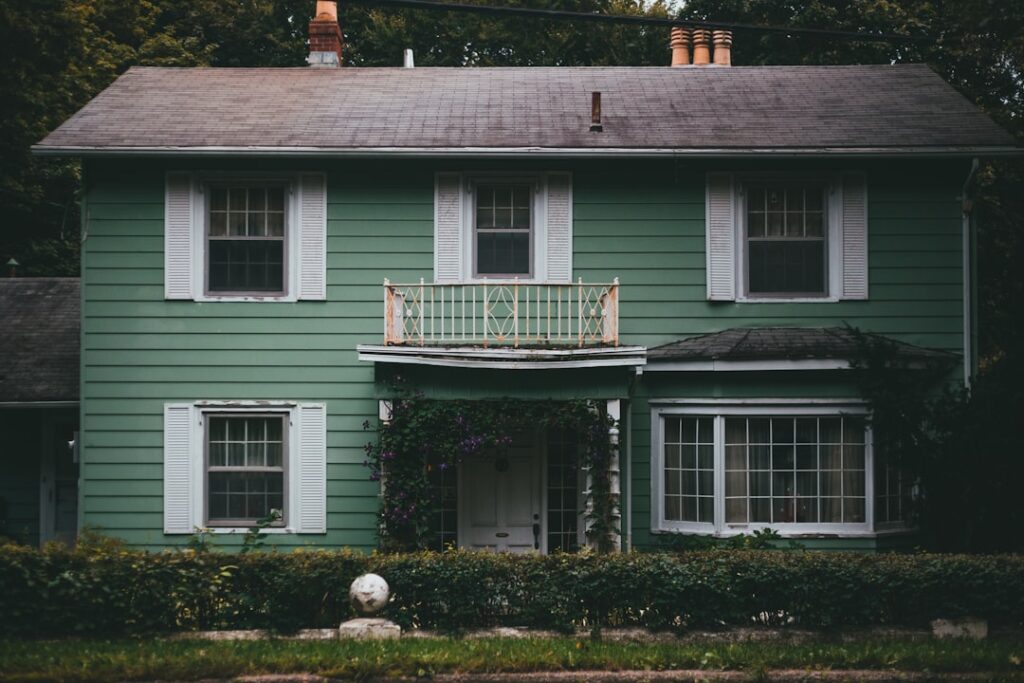
Sage green exterior house paint has quietly become one of the most-requested siding colors in the country, and for good reason: it reads as calm and natural, flatters nearly every architectural style, and sits comfortably against greenery, brick, and stone alike. This muted, gray-tinged green is soft enough to feel timeless yet distinctive enough to stand out from the sea of beige and gray homes. If you are considering it for your siding, here is how to choose the right shade and pair it beautifully.
Part of our Paint & Walls guide — explore the full guide →
Why Sage Green Works Outside
Sage sits between green and gray, which is exactly why it succeeds outdoors where bolder greens can overwhelm. Its muted, earthy quality blends with landscaping instead of fighting it, and its gray undertone keeps it sophisticated rather than loud. Sage also shifts pleasantly with the light, cooler and grayer on an overcast day, warmer and greener in full sun, so the house looks alive across changing weather. That versatility is why designers reach for it on everything from cottages to modern farmhouses.
Top Sage Green Paint Colors
These are proven exterior sages from major brands worth putting on your test list:
- Sherwin-Williams Evergreen Fog — a warm, versatile gray-green that reads sage and was a color-of-the-year pick.
- Benjamin Moore October Mist — a soft, silvery sage that leans gentle and elegant.
- Sherwin-Williams Softened Green — a light, airy sage for a subtle look.
- Benjamin Moore Saybrook Sage — a slightly deeper, classic sage with staying power.
- Farrow & Ball Card Room Green — a richer, more dramatic sage for accents or moodier facades.
Undertones vary from gray to yellow to blue, so two sages that look similar on a chip can read very differently on a full wall.
Trim, Door, and Accent Pairings
Sage is a team player, and the trim you choose sets the whole mood:
- Crisp white trim — the classic, clean pairing that brightens the sage and suits farmhouse and cottage styles.
- Creamy off-white — softer and warmer than bright white, ideal for a cozy, traditional feel.
- Warm wood accents — natural wood doors, beams, or garage doors bring organic warmth against the green.
- Black trim or a black door — sharp, modern contrast for a farmhouse or transitional home.
- Charcoal or bronze — grounds the sage and pairs well with dark rooflines.
For a front door, warm tones like terracotta, mustard, or a deep navy all pop handsomely against sage siding.
Which Home Styles Suit Sage
Sage is remarkably adaptable, but it shines on certain styles. Craftsman and cottage homes love its earthy, historic character. Modern farmhouses use it with black trim for the popular high-contrast look. Colonials and traditional homes wear it with white trim and shutters. Even mid-century and ranch homes take a lighter, grayer sage well. About the only place to be careful is a home surrounded by heavy tree cover, where a very muted sage can disappear into the landscape, there, lean slightly lighter or add crisp trim for definition.
Coordinating With Roof and Stone
Your fixed elements, roof, brick, and stone, should guide the exact sage you pick, since you cannot easily change them. Sage pairs naturally with gray and black roofs and with weathered brown shingles. It complements natural stone and warm-toned brick, though it can clash with orange-red brick, so test carefully there. Pull the sage swatch right up against the roof and any stone in daylight before committing; a shade that looks perfect on the siding can fight your roof color.
How to Test Before You Commit
Exterior color is high-stakes because repainting a whole house is expensive, so test thoroughly:
- Buy sample pots of your top two or three sages and paint large swatches, at least two feet square, on different sides of the house.
- View them in morning, midday, and evening light, since sage shifts dramatically with the sun.
- Check each against your roof, trim, brick, and landscaping, not against bare siding alone.
- Look at the samples on both a sunny and a cloudy day before deciding.
- Step back to the curb, exterior color reads completely differently from a distance than up close.
Light vs. Deep Sage: Choosing the Right Depth
Sage spans a wide range from barely-there silvery green to rich, saturated forest tones, and the depth you pick changes the whole feel of the house. Lighter sages, like October Mist or Softened Green, keep a home feeling airy and blend gently into most surroundings, a safe, broadly appealing choice that also makes a smaller house feel larger. Deeper sages, such as Card Room Green or a moody Saybrook Sage, make a bolder statement and pair dramatically with white or black trim, but they can overwhelm a home already shaded by heavy tree cover.
Consider your home’s size and setting. A large facade can carry a deeper sage without feeling dark, while a modest bungalow often looks best in a mid-to-light tone. Sun exposure matters too: a shaded, north-facing home reads darker and grayer, so lean lighter, while a bright, south-facing wall can handle a richer sage that would look heavy elsewhere. When in doubt, going one shade lighter than your instinct usually pays off, because exterior color always reads darker across a full wall than it does on a small chip.
Sheen and Durability for Exteriors
Color is only half the decision; the sheen and paint quality determine how long your sage looks good. Most exterior body coats use a satin or low-luster finish, which resists dirt and mildew while hiding minor surface imperfections better than a glossy sheen. Reserve higher gloss for trim, doors, and shutters, where it adds crispness and wipes clean. Invest in a quality 100 percent acrylic exterior paint with good fade resistance, because greens can be prone to fading under intense UV if you buy a cheap product. Proper prep, cleaning, scraping, priming bare spots, matters as much as the paint, since even the best sage will peel prematurely over a poorly prepared surface. A well-applied premium coat should hold its color and protect your siding for a decade or more.
The Bottom Line
Sage green exterior house paint delivers a calm, natural, and enduring look that flatters cottages, farmhouses, colonials, and ranches alike. Choose your exact shade by its undertone and how it plays with your fixed roof and stone, pair it with white, cream, wood, or black trim to match your style, and always test large swatches in real daylight before you paint. Get those steps right and sage gives your home understated curb appeal that will not feel dated in five years.


