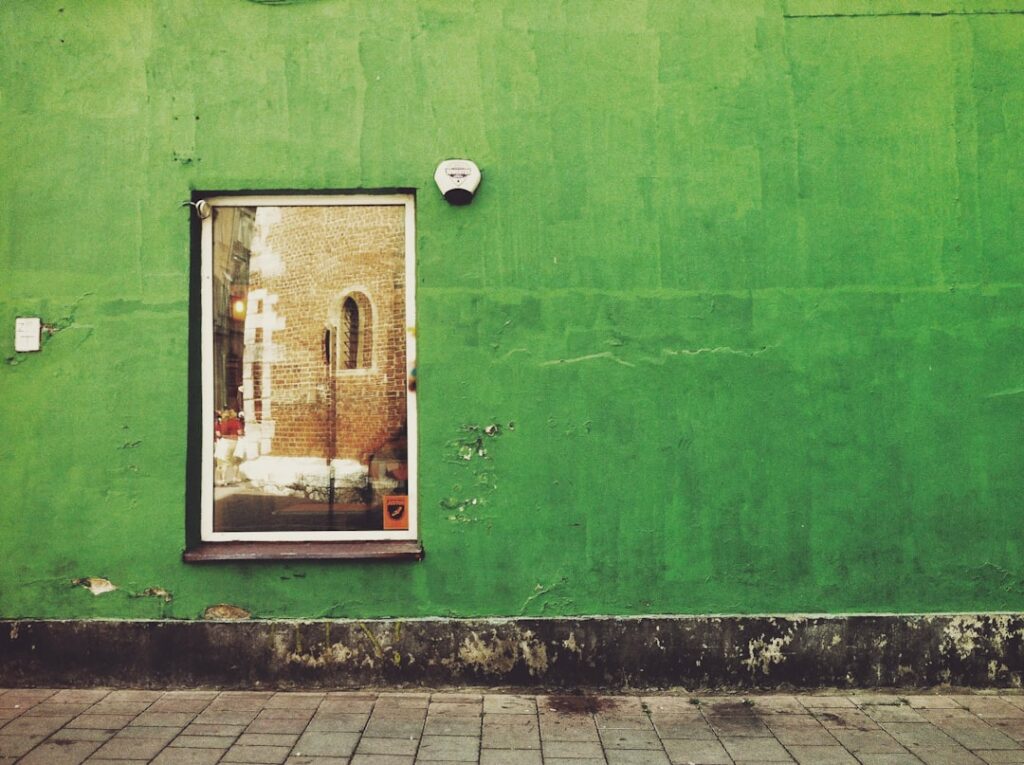
Green is having a moment on the outside of the house, and for good reason: no other color blends so naturally with the landscape around it. The best green exterior paint colors range from soft, sage-washed neutrals that whisper to deep forest and near-black greens that make a bold, sophisticated statement. Because green sits in nature, it flatters brick, stone, and wood in a way few colors can, and it reads as timeless rather than trendy.
Part of our Paint & Walls guide — explore the full guide →
Choosing the right green for a whole house is a bigger commitment than an interior wall, since sun, landscaping, and permanent materials like roofing and stone all interact with it. Here are the shades that consistently perform, organized by depth, with the trim pairings that make them sing.
- Why Green Works Outside
- Soft Sage and Muted Greens for Whole-House Body
- Deep Forest and Hunter Greens for Drama
- Green for Doors and Shutters Only
- Choosing the Right Green for Your House
- Trim and Accent Pairings
- The Right Paint and Finish
- Matching Green to Your Home’s Architecture
- How Green Behaves Across Climate and Exposure
- Understanding LRV Before You Commit
- Prep and Finish for a Lasting Result
Why Green Works Outside
Exterior color has to hold up against a huge, complex backdrop of sky, trees, lawn, and hardscape, and green harmonizes with all of it. That is the core reason green exterior paint colors feel so settled on a house; the color already exists in the surrounding environment, so the home looks rooted rather than imposed. Green also spans an enormous range of moods, from cottage-soft to dramatic and moody, which means there is a green for nearly every architectural style.
Soft Sage and Muted Greens for Whole-House Body
For siding and the main body of the house, most homeowners want a green that reads almost as a warm neutral. These muted, gray-green sages are the safest and most popular whole-house choices.
- Sherwin-Williams Evergreen Fog (SW 9130): a hugely popular gray-green, soft and versatile, a former Color of the Year
- Benjamin Moore October Mist (1495): a hushed silvery sage that flatters stone and white trim
- Sherwin-Williams Pewter Green (SW 6208): a deeper gray-green with a moody edge, great for doors and accents
- Benjamin Moore Saybrook Sage (HC-114): a warm, earthy mid-sage that suits cottage and craftsman homes
These pair beautifully with white or cream trim and warm wood or black accents. Evergreen Fog in particular has become a go-to because it shifts gracefully from green to gray depending on the light, so it works in almost any exposure.
Deep Forest and Hunter Greens for Drama
If you want a house that turns heads, a deep saturated green delivers richness that never looks cheap. These work as a full-body color on the right architecture or as a striking door and shutter color anywhere.
- Benjamin Moore Hunter Green (2041-10): a classic, rich forest green for doors, shutters, or a bold body
- Sherwin-Williams Rosemary (SW 6187): a deep grayed evergreen that feels current and sophisticated
- Benjamin Moore Essex Green (HC-188): a near-black green, the traditional choice for shutters on white and brick homes
Deep greens look especially handsome against white trim, natural stone, and brass or black hardware. On a brick house, a dark green door instantly adds character without committing the whole exterior to color.
The Black-Green Trend
Blackened greens like Essex Green and Sherwin-Williams Dard Hunter Green read black from the curb and green up close, giving you the drama of a dark house with a subtle warmth that pure black lacks. They pair strikingly with copper gutters and warm-toned stone.
Green for Doors and Shutters Only
Not ready to paint the whole house? Green is at its most versatile as an accent. A green front door is a welcoming, classic statement that works on nearly any siding color, from white to gray to brick red. For shutters, the historic pairing of dark green against a white or light-colored house is a look that has never gone out of style. Try Hunter Green or Essex Green on the door of a neutral house and you get maximum impact for the price of a single quart.
Choosing the Right Green for Your House
Green shifts dramatically outdoors, so a few checks prevent regret. First, consider your fixed elements: the roof color, stone or brick, and any permanent trim. Your green has to live with those for decades, so hold samples against them. Second, account for light and landscaping; a house surrounded by mature trees gets green-tinted light that can push a sage toward drab, so lean slightly warmer in heavily shaded lots.
- Buy quart samples and paint large 2-by-2-foot swatches on at least two sides of the house.
- View them in morning, midday, and evening light, since exterior color changes hour to hour.
- Check the swatches against your roof, stone, and existing trim, not just the siding.
- Look at them on both the sunny and shady sides; the same green can look completely different.
Trim and Accent Pairings
The trim color makes or breaks an exterior green. Crisp white trim keeps sage and forest greens fresh and classic. Warm cream or off-white softens the contrast for a cottage feel. For a modern look, pair a deep green body with black trim, gutters, and window frames. Add natural wood on the door or porch posts, and the whole palette pulls from nature in a way that feels effortless.
- Sage body: white trim, black or bronze accents, wood door
- Forest body: white or cream trim, brass or copper details
- Green door only: works on white, gray, tan, or brick houses
The Right Paint and Finish
Whatever shade you choose, specify a premium exterior product like Sherwin-Williams Duration or Emerald, or Benjamin Moore Aura Exterior, at roughly $60 to $80 a gallon, for fade resistance and durability. Use a low-lustre or satin finish on the body and a satin or semi-gloss on trim, shutters, and doors so they wipe clean and shed water. Among the many green exterior paint colors available, the one that lasts is always the quality formula tested against your own light and materials before you commit the whole house.
Matching Green to Your Home’s Architecture
The right green depends as much on your home’s style as on your personal taste. A Craftsman bungalow with deep eaves and natural wood elements loves warm olive and moss tones that echo its earthy roots. A Colonial or Cape Cod carries a deep hunter or Essex green with dignity, especially on shutters set against a light body. Modern and mid-century homes look sharp in cool gray-greens like Pewter Green paired with black window frames and a flat roofline.
Coastal and shingle-style houses are where soft sages such as Saybrook Sage truly shine, blending with sea grass and weathered cedar. Farmhouses split the difference beautifully, handling everything from a pale sage body to a bold black-green accent on a barn door or garage. Match the saturation to the formality of the home: the more traditional and symmetrical the architecture, the deeper and more classic the green can go without looking out of place.
How Green Behaves Across Climate and Exposure
Where your house sits changes how a green paint reads and how long it lasts. A north-facing wall receives cool, indirect light all day, which pushes greens toward their blue and gray undertones and can make a soft sage look almost gray. A south or west wall bakes in warm afternoon sun that amplifies the yellow in a color, so an olive can read noticeably more golden and lively than the chip suggested.
Climate matters for durability too. In the humid Southeast, mildew-resistant additives and a satin sheen help green siding resist the organic staining that thrives in warm, wet air. In the intense high-altitude sun of the Mountain West or the desert Southwest, UV fade is the enemy, so a premium line with strong fade inhibitors earns its cost. In freeze-thaw climates, proper surface prep and a paint with good flexibility prevent the cracking that lets moisture behind the coating.
Understanding LRV Before You Commit
Light Reflectance Value, or LRV, is the single most useful number on any paint chip, and most homeowners ignore it. LRV runs from 0 for black to 100 for pure white and tells you how much light a color bounces back. For siding, an LRV in the 15 to 45 range gives you a color with real depth that still shows its green character in shade. Soft sages sit near the top of that band, olives and mosses in the middle, and dramatic forest and hunter greens fall below an LRV of 20.
That low number carries a practical warning: deep greens under an LRV of 20 absorb heat, so on a sun-blasted southern wall they can run 15 to 20 degrees Fahrenheit hotter than lighter siding around them. On older vinyl siding especially, that heat can cause warping, so confirm your material can handle a dark color before committing.
Prep and Finish for a Lasting Result
No green survives a lazy prep job. Wash the siding to strip chalk, dirt, and mildew, scrape and sand any failing paint, prime bare wood and stains, and caulk gaps before a single finish coat goes on. Green pigments in particular rely on organic and phthalo colorants that can fade faster than earth tones, so a sound, sealed surface and a UV-resistant premium paint are what buy you a decade-plus of good color instead of three years.