Green has quietly replaced gray as the most-specified bathroom wall color in mid-tier and premium remodels since roughly 2022, and the trend shows no sign of cooling. Green bathroom walls read as restful and timeless when the shade, finish, and adjacent materials are chosen with care. The decision tree splits across saturation level — sage and seafoam for soft modern looks, forest and emerald for richer traditional spaces — and across the practical question of moisture resistance, which determines whether you can paint at all or need to commit to tile.
Sage and Seafoam — The Soft Modern Whites
Sherwin-Williams Evergreen Fog (SW 9130) is the most-photographed bathroom green of the past three years. The shade reads as warm gray-green that shifts toward sage in north light and toward dove gray under warm bulbs. Benjamin Moore Saybrook Sage (HC-114) sits in the same family with slightly more yellow undertone.
For a fresher take, Farrow & Ball Mizzle (266) and Pavilion Gray (242) read as cooler and more European. All four colors pair well with white subway tile, warm brass hardware, and natural oak vanities. The soft palette tolerates north-facing windows and small spaces without darkening the room.
Forest and Hunter for Drama
Benjamin Moore Hunter Green (2041-10) and Sherwin-Williams Pewter Green (SW 6208) deliver the deep saturated greens that anchor traditional and English country bathrooms. Pewter Green especially reads beautifully on full-height walls behind a clawfoot tub or freestanding vanity. The shade contains enough gray to avoid the dated late-1990s “forest green” trap.
Farrow & Ball Studio Green (93) and Calke Green (34) work similarly with slightly more nuanced undertones — Studio Green is nearly black in low light, while Calke Green stays brighter in afternoon sun. Expect $115 to $135 per gallon for Farrow & Ball versus $75 to $95 for Benjamin Moore Aura or Sherwin-Williams Emerald in matching custom colors.
Emerald and Jewel Tones
For powder rooms or windowless half baths where drama is the goal, jewel-tone emerald greens deliver the impact a small bathroom needs to feel intentional. Sherwin-Williams Greens (SW 6748) and Benjamin Moore Forest Green (2047-10) push the saturation higher. The color reads as confident rather than tentative in spaces under 35 square feet.
Pair the saturated greens with brass hardware, warm-toned brass faucets from Brizo Litze or Kohler Artifacts, and a backlit mirror to keep the small space from feeling cave-like. The jewel-tone walls work best on all four walls — accent walls in saturated greens often look like the homeowner ran out of paint.
Paint Finish Selection
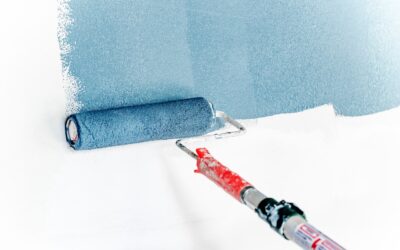
Bathrooms demand washable finishes that resist humidity. Specify a satin or semi-gloss finish for the bulk of the wall area. Benjamin Moore Aura Bath & Spa at $85 to $95 per gallon delivers a matte finish formulated specifically for humid environments. The matte reads more sophisticated than the standard satin sheen.
For traditional looks, a semi-gloss finish on the trim with satin on the walls creates the appropriate hierarchy. Sherwin-Williams Emerald Trim Enamel and Benjamin Moore Advance both deliver the durability semi-gloss needs to handle frequent cleaning. Skip flat finishes entirely in bathrooms — the finish absorbs moisture and breeds mildew within two seasons.
Tile Pairings That Work
White subway tile in 3 by 6 or 4 by 8 inch format remains the safest backsplash for any green wall. The crisp white grounds the green and gives the eye a place to rest. For a more contemporary look, scale up to 4 by 12 handmade ceramic from Heath Ceramics or Fireclay Tile at $28 to $42 per square foot retail.
For richer compositions, pair forest or emerald walls with veined Carrara marble tile on the shower surround. The cool gray veining in the marble cools the warmth of the deep green and creates a more sophisticated palette than the trendier all-tile-no-paint approach. Honed Calacatta from Daltile or MSI runs $9 to $18 per square foot for the basic 12 by 24 inch tile.
Vanity and Cabinet Coordination
Natural oak vanities — quarter-sawn white oak especially — pair beautifully with sage and seafoam greens. The warm wood tone reads as a complement rather than a contrast. Custom oak vanities from Signature Hardware or Restoration Hardware at $1,400 to $3,800 anchor the soft green palette.
For deeper greens, painted vanities in soft white (Benjamin Moore White Dove OC-17, Sherwin-Williams Alabaster SW 7008) provide the necessary brightness. Avoid painting the vanity the same color as the walls — the room reads as one continuous green blob rather than as a layered design.
Hardware and Faucet Finishes
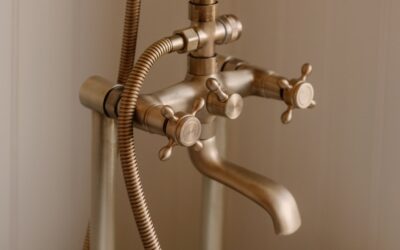
Brass and gold finishes have dominated green bathroom hardware since 2020. Unlacquered brass from Rejuvenation or Schaub develops a warm patina that softens against the green walls. Champagne bronze from Delta Trinsic or Brizo Litze delivers a similar effect at a lower price point.
Avoid mixing brass with chrome or polished nickel in the same bathroom — the finishes fight rather than complement. If the existing showerhead or tub filler is chrome, plan a full hardware swap rather than mixing. Expect $280 to $680 for a coordinated faucet, drain, and accessory set in matching brass.
Lighting Considerations
Green walls read very differently under different color temperatures. Warm bulbs at 2700K push sage toward yellow-green and forest toward olive. Cool bulbs at 4000K read more accurately and bring out the blue undertones the paint designer intended. For bathrooms, default to 3000K LED — warm enough for skin tones, cool enough to keep the greens accurate.
Layer the lighting between a central ceiling fixture, vanity sconces at face height, and a backlit mirror for the most flattering composition. Avoid relying on overhead lighting alone — the resulting shadows make every imperfection in skin and grout pattern more obvious. Lutron Caseta dimmers at $50 per dimmer let the bathroom shift from bright morning routine to soft evening soak.
Common Mistakes to Avoid
Skip mint-green and bright lime-green for bathroom walls. Both shades read as dated within five years and almost never appraise well at resale. Stick to the sage-seafoam, hunter-pewter, or emerald families that have demonstrated 50-plus year staying power in classic American design.
Do not paint the ceiling the same green as the walls in a small bathroom. The continuous color compresses the perceived height and can make a 7-foot ceiling feel like 6 feet. Instead, paint the ceiling in a soft white or in the same green at 25 percent saturation to keep the room from closing in.