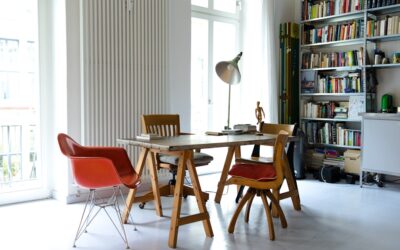
The Nordic countries spend much of the year in darkness, so they have turned outdoor lighting into an art of quiet warmth rather than brightness. Scandinavian outdoor lighting is about clean geometric forms, honest materials, and a soft glow that welcomes you home instead of floodlighting the yard. Get the approach right and your exterior feels calm, intentional, and inviting even on the darkest winter evening.
Part of our Windows & Doors guide — explore the full guide →
The Principles Behind the Look
Scandinavian design rests on a few consistent ideas, and outdoor lighting follows all of them. Simplicity comes first: fixtures are unadorned, with clean lines and no fussy detail. Function is never sacrificed for style, so every light earns its place by actually illuminating a path, door, or seating area.
The third principle is warmth. Nordic lighting avoids the cold, blue-white glare of typical security lights in favor of a warm amber tone that makes stone, wood, and skin look good. That warmth is what separates the style from generic minimalism.
Materials That Define the Style
Authentic Scandinavian fixtures use natural, durable materials that weather gracefully:
- Blackened or galvanized steel: Matte black powder-coated metal is the signature, offering crisp silhouettes that stand up to snow and salt air.
- Aluminum: Lightweight and corrosion-resistant, ideal for coastal and freeze-thaw climates.
- Wood accents: Teak or treated timber posts and mounts add organic warmth to an otherwise metal fixture.
- Frosted or clear glass: Simple glass diffusers soften the light without decorative etching.
Materials are meant to age honestly. A galvanized fixture that dulls or a teak post that silvers is part of the aesthetic, not a defect to hide.
Signature Fixture Types
A handful of fixture shapes recur across Nordic exteriors. Cylindrical and cubic wall sconces flank front doors in clean, symmetrical pairs. Bollard lights with slim, tapered profiles mark walkways and garden edges without visual clutter. Downlight-only fixtures that wash a wall or cast light onto the ground reduce glare and light pollution.
Pendant lanterns with minimal frames appear over porches and outdoor dining areas, echoing the interior love of a single well-chosen hanging light. The common thread is restraint: one or two considered fixtures rather than a scattering of mismatched ones.
Getting the Light Temperature Right
Color temperature is where many outdoor schemes go wrong, and it is where the Scandinavian approach is most specific. Aim for warm white in the 2200K to 2700K range. That warm glow feels like candlelight or a low winter sun, exactly the cozy atmosphere the style is built around.
Avoid anything above 3500K outdoors here, since cool white reads harsh and institutional against natural materials. Where possible, choose fixtures with dimming so you can drop the light even lower for evening ambiance.
Placement and Layering
Nordic lighting layers gentle pools of light rather than blasting the whole yard from one source. Think in terms of what each light is for:
- Entry: A matched pair of sconces at the door for a welcoming, symmetrical arrival.
- Paths: Low bollards or recessed step lights spaced to guide the eye, not to over-illuminate.
- Gathering areas: A soft overhead pendant or a string of warm bulbs over a patio or deck.
- Accent: A discreet uplight on a birch tree or a downwash on a stone wall to add depth.
Restraint is the rule. A few well-placed warm pools of light feel far more sophisticated than a brightly lit facade.
Energy Efficiency and Practical Concerns
Efficiency is deeply Scandinavian, so LED sources dominate the category. Look for fixtures rated for wet locations and, in northern climates, ones tested to handle deep cold and moisture. A weatherproof rating of IP44 or higher suits most exposed positions, with IP65 for fixtures taking direct rain and spray.
Many homeowners add photocell or timer control so lights come on at dusk and off at a set hour, and low-voltage systems make DIY path lighting genuinely approachable. Solar options exist too, though battery output can struggle through long, dim northern winters.
Lighting for Long Dark Seasons
The Scandinavian approach was shaped by geography, and that history offers practical lessons for anyone in a northern climate. With daylight scarce for months, the goal is to create warm focal points that draw you outward rather than flooding everything at once. A softly lit entry and a glowing path feel purposeful in a way a single bright floodlight never does.
This is where the concept of hygge, that sense of cozy contentment, extends outdoors. A warm pendant over a covered patio or a lantern by the door turns a cold, dark evening into something inviting. Even a modest cluster of low-wattage warm lights can make a winter yard feel cared for instead of abandoned.
Common Mistakes to Avoid
A few errors undo the whole effect. The most frequent is choosing cool-white bulbs that read blue and clinical against natural wood and stone; stay warm, at 2700K or below. The second is over-lighting, scattering too many fixtures until the restraint that defines the style disappears into glare.
- Do not mix fixture styles and finishes, which breaks the clean, cohesive look.
- Avoid uplighting everything, since downward and grazing light is more in keeping with the subtle Nordic feel.
- Skip decorative, ornate fixtures that fight the minimalist ethos.
When in doubt, use fewer fixtures of higher quality and keep the light low and warm. Editing down is more Scandinavian than adding more.
Bringing the Style Home
You do not need a modernist house to use this look. A pair of matte-black cube sconces at the door, warm 2400K bulbs, and a few low bollards along the walk instantly bring the calm, functional feel of Scandinavian outdoor lighting to almost any home. Start with the entry, keep the light warm and low, and let simplicity do the work. The result is an exterior that feels less like a display and more like a genuine welcome.