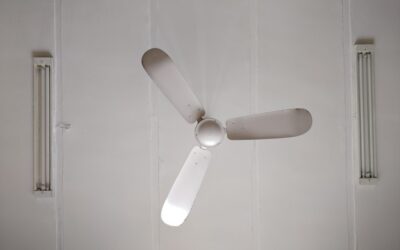
Not every room that needs a breeze has the wiring or ceiling box for a traditional fan, and that is where a screw in ceiling fan shines. These clever fixtures thread directly into an existing light-bulb socket, delivering air movement and often built-in LED lighting without any electrical wiring, junction box, or professional installation. For renters, rooms with only a socket, or anyone avoiding a complex project, they are an appealing shortcut.
This guide explains how socket-mounted fans work, their strengths and limits, sizing and airflow expectations, and how to install one safely in minutes.
- What Is a Screw-In Ceiling Fan?
- How They Work
- Key Benefits
- Limitations to Understand
- Choosing the Right Size and Style
- Installation Steps
- Controlling the Fan
- Ideal Uses and Rooms
- Screw-In Fan Versus Traditional Ceiling Fan
- Safety and Weight Considerations
- Noise, Airflow, and Realistic Expectations
- Features Worth Looking For
- Is It the Right Choice?
What Is a Screw-In Ceiling Fan?
A screw-in fan combines a bladed fan and usually an LED light into a single unit with a standard threaded base, the same base as a light bulb. Instead of hard-wiring a fan into a ceiling junction box, you simply remove the existing bulb and screw the fan in its place. Power comes through the existing socket, and most models include a remote control to adjust speed and lighting. Many use flexible or folding blades to move air while staying compact.
How They Work
These fixtures rely on the electrical connection already present in your light socket. Because that circuit was designed for a bulb, the fan uses a small, efficient motor sized to that power draw. The result is gentle air circulation rather than the strong downdraft of a full-size wired fan. Most models are controlled by remote or a wall switch, and the integrated LED provides room lighting so you do not lose your light fixture in the trade.
Key Benefits
The appeal of a screw in ceiling fan comes down to simplicity and flexibility:
- No wiring required: installs in minutes with no electrician.
- Renter-friendly: easily removed and reinstalled without altering the home.
- Combines light and air: keeps your ceiling light while adding circulation.
- Affordable: far cheaper than installing a wired fan where no box exists.
- Low profile: good for rooms with lower ceilings.
Limitations to Understand
These fans solve a specific problem but are not a substitute for a full-size fan in every situation. Keep realistic expectations:
- Gentler airflow: they circulate air but cannot match the cooling power of a large wired fan.
- Socket weight limits: the fixture hangs from the socket, so heavier units may not suit fragile or old fixtures.
- Best for small rooms: ideal for bedrooms, offices, closets, and nurseries rather than large living areas.
- Ceiling height matters: the fan hangs a few inches below the socket, which reduces clearance.
Choosing the Right Size and Style
Screw-in fans come in various blade spans and designs. Match the fan to the room and fixture:
- Measure the space around your existing fixture to confirm the blades will clear walls, shelves, or a ceiling slope.
- For small rooms up to about 150 square feet, a compact model is usually enough.
- Look for adjustable color temperature if you want warm light for bedrooms and cooler light for workspaces.
- Choose folding-blade models for the easiest shipping and installation, or rigid blades for a more traditional look.
Installation Steps
Installing one of these fans is genuinely simple, but a few safety habits matter because you are working overhead near electricity.
- Turn off the wall switch and, ideally, the breaker for that circuit.
- Let any existing bulb cool, then unscrew and remove it.
- Screw the fan’s threaded base into the empty socket just as you would a bulb, snug but not overtightened.
- If the model has folding blades, unfold and lock them per the instructions.
- Restore power, pair the remote if included, and test each speed and the light.
Always use a stable ladder, and confirm the socket and fixture are in good condition before hanging any weight from them. If the fixture wobbles or the socket is cracked, repair it first.
Controlling the Fan
Most screw-in fans include a handheld remote that adjusts fan speed, light brightness, and sometimes color temperature. Some also respond to the wall switch with tap sequences, though this can be less intuitive. If your room’s light is on a dimmer switch, check compatibility, because dimmers can interfere with the fan’s electronics. A standard on/off switch is the safest pairing.
Ideal Uses and Rooms
A screw in ceiling fan works best where you want light air circulation and already have a ceiling light but no fan wiring. Great candidates include:
- Bedrooms and guest rooms for gentle overnight airflow.
- Home offices and craft rooms to keep air fresh.
- Nurseries and small closets where a big fan would be overkill.
- Rental units where permanent changes are not allowed.
Screw-In Fan Versus Traditional Ceiling Fan
It helps to be clear about what you gain and give up compared with a hard-wired fan. A traditional ceiling fan mounts to a rated electrical box, connects to household wiring, and moves far more air with larger blades and a stronger motor. A screw-in fan trades that power for radical simplicity. Consider the differences:
- Airflow: a wired fan cools a whole room; a screw-in model gently circulates air in a small space.
- Installation: a wired fan often needs an electrician and a fan-rated box; a screw-in fan installs in minutes with no tools.
- Weight capacity: a wired fan hangs from reinforced framing; a screw-in fan is limited by the socket’s rating.
- Reversibility: a screw-in fan comes right back out, ideal for renters.
If you need serious cooling in a large room and have the wiring, a traditional fan wins. For convenience and rooms without fan wiring, the screw-in model is the practical answer.
Safety and Weight Considerations
Because these fans hang from a light socket that was designed to hold only a bulb, respecting the weight limit is essential. An old or cracked socket, a loose fixture, or a fixture already stressed by a heavy shade may not safely support even a lightweight fan. Before installing, confirm the fixture is firmly mounted and the socket is in good condition. Choose a fan that stays within the socket’s rated load, and never force the base or overtighten it, which can crack the socket housing. If the fixture wobbles when you gently test it, secure or replace it before adding a fan.
Noise, Airflow, and Realistic Expectations
Setting expectations prevents disappointment. Screw-in fans are quiet by nature because their motors are small, which is a plus for bedrooms and nurseries where a loud fan would disturb sleep. That same small motor, however, means the breeze is gentle rather than powerful. In a hot climate or a large room, a screw-in fan supplements rather than replaces air conditioning or a full-size fan. Used in the right space, though, the soft, steady circulation is often exactly what a small room needs to feel fresh and comfortable without the cost and hassle of wiring.
Features Worth Looking For
Not all socket-mounted fans are equal, and a few features meaningfully improve the experience. When comparing models, look for:
- Adjustable color temperature: switch between warm light for relaxing and cool light for working.
- Dimmable lighting: control brightness independently of the fan speed.
- Multiple fan speeds: more settings let you fine-tune the breeze.
- Remote or app control: convenient adjustment without a wall switch.
- Reversible airflow: some models push air down in summer and pull it up in winter to redistribute warm air.
- Quiet operation: important for bedrooms and nurseries where noise disrupts sleep.
Reading the specifications closely helps you avoid a bare-bones unit that only spins at one speed with fixed lighting. A model with adjustable light color, a proper remote, and multiple fan speeds costs only a little more but delivers far more everyday usefulness. Also check the fixture’s overall drop and blade span against your ceiling height and room layout so the fan fits comfortably and clears any nearby shelving, doors, or the swing of a ceiling-mounted fixture.
Is It the Right Choice?
Socket-mounted fans fill a real gap for homeowners and renters who need affordable, wiring-free air movement. They will not replace a powerful hard-wired fan in a large living room, but for small and medium rooms they deliver welcome circulation and lighting in a single, easy install. If you value convenience, portability, and a project you can finish in minutes without an electrician, a screw in ceiling fan is a smart, low-cost upgrade that makes a stuffy room noticeably more comfortable.