Selecting carpet can feel overwhelming when you are staring at a wall of samples that all seem similar yet carry very different price tags. The truth is that a great carpet purchase comes down to matching four things to your life: the right fiber, the right pile style, the right padding, and the right price. Get those aligned with how each room is actually used, and you will end up with flooring that feels wonderful and holds up for years. This guide breaks the whole decision down step by step.
- Start With How the Room Is Used
- Understanding Carpet Fibers
- Choosing a Pile Style
- Do Not Overlook the Padding
- Reading Density and Face Weight
- Budgeting for Your Carpet Project
- Matching Carpet to Each Room
- Understanding Carpet Warranties
- Carpet and Indoor Air Quality
- How Much Carpet to Order
- Final Tips for a Smart Purchase
Start With How the Room Is Used
Before you fall in love with a color, define the room’s demands. A formal guest bedroom used a few nights a year has almost nothing in common with a family room where kids, pets, and snacks collide daily. Ask yourself how much foot traffic the space gets, whether pets and children are in the picture, how much natural light hits the floor, and whether spills are likely. Your answers steer every other choice. High-traffic areas need durable fibers and dense low-pile construction, while bedrooms can prioritize plush softness over toughness.
Understanding Carpet Fibers
Fiber is the single biggest driver of performance and price. The four main options each have a personality:
- Nylon: The most durable and resilient synthetic, great for busy homes and stairs. Handles traffic and bounces back well, though it costs more than other synthetics.
- Polyester (PET): Luxuriously soft and highly stain-resistant with rich color, but less resilient, so it can flatten in heavy traffic. Excellent value for bedrooms.
- Triexta: A newer fiber blending softness with strong stain and wear resistance, popular for family homes with pets.
- Wool: The natural luxury option, soft, warm, and long-lasting, but the most expensive and more sensitive to harsh cleaning.
For most active households, nylon or triexta offers the best balance of durability and comfort, while polyester wins on budget-friendly softness.
Choosing a Pile Style
Pile refers to how the yarn loops are cut or left uncut, and it shapes both look and feel:
- Plush / Saxony: Smooth, even cut pile with a formal, velvety look. Shows footprints and vacuum marks.
- Textured cut pile: Twisted fibers that hide footprints and soil, making it the versatile family favorite.
- Frieze: Tightly twisted, casual, and highly durable, excellent at masking wear.
- Berber / loop: Uncut loops that resist crushing and hide dirt, ideal for high-traffic zones, though snags can pull.
- Cut-and-loop: Combines cut and looped yarns to create patterns and texture that disguise soil.
When selecting carpet for stairs and hallways, textured or looped styles wear best. For bedrooms, a plush or soft textured pile feels most inviting.
Do Not Overlook the Padding
The cushion beneath your carpet is invisible but critical. Good padding extends carpet life, adds comfort, improves insulation, and reduces noise. Cheap thin pad lets carpet backing flex and wear out prematurely, sometimes voiding the warranty. As a general rule, use 7/16-inch to 1/2-inch thick padding with a density around 6 to 8 pounds for living areas, and firmer, thinner pad on stairs. Expect to spend $0.50 to $1.50 per square foot on quality padding. It is one of the smartest places to avoid cutting corners.
Reading Density and Face Weight
Two spec numbers predict durability. Face weight measures the ounces of fiber per square yard, while density measures how tightly those fibers are packed. Higher numbers generally mean a longer-lasting carpet. Press your fingers into the sample and bend it backward: if you can easily see the backing grinning through, the carpet is loosely constructed and will crush faster. A denser sample resists this. Density often matters more than face weight, so favor a tightly tufted carpet even if its weight number looks modest.
Budgeting for Your Carpet Project
Knowing real numbers keeps expectations grounded. Installed carpet costs typically fall in these ranges:
- Builder-grade polyester: $2 to $4 per square foot installed.
- Mid-grade nylon or triexta: $4 to $8 per square foot installed.
- Premium and wool: $8 to $15 or more per square foot installed.
A 300-square-foot living room in a solid mid-grade carpet often totals $1,200 to $2,400 with padding and labor. Always get the price including removal of old flooring, furniture moving, and any subfloor prep, since these add-ons surprise many buyers.
Matching Carpet to Each Room
Different spaces reward different priorities. Use these quick guidelines when selecting carpet room by room:
- Bedrooms: Soft polyester or plush nylon; comfort outranks toughness.
- Living and family rooms: Durable textured nylon or triexta that hides traffic.
- Stairs and hallways: Dense low-pile nylon or frieze for maximum wear resistance.
- Basements: Solution-dyed synthetics that resist moisture and fading.
- Home offices: Low-pile styles that roll chairs easily.
Understanding Carpet Warranties
Carpet warranties can be reassuring, but they are only as good as the fine print, so read them before you buy. Most carpets carry several separate warranties, each with its own terms and conditions:
- Wear warranty: Covers fiber loss, usually defined as losing more than 10 percent of the pile over a set number of years. Note that visible matting is often not covered under wear.
- Stain and soil warranty: Protects against specific stains, though it typically excludes pet accidents, bleach, and mustard-type dyes.
- Texture retention warranty: Covers matting and crushing, and is arguably the most meaningful for how the carpet will actually look over time.
- Manufacturing defect warranty: Covers flaws in the carpet itself.
Nearly all warranties require professional installation, correct padding, and documented regular cleaning to stay valid, so keep your receipts and follow the maintenance schedule.
Carpet and Indoor Air Quality
Carpet often gets blamed for allergens, but the reality is more nuanced. Because carpet traps dust, dander, and pollen in its fibers, those particles stay out of the air you breathe until you vacuum them up, which can actually benefit some households compared with hard floors that let particles recirculate. The key is consistent maintenance. Vacuum at least weekly with a machine that has a quality filter, deep-clean once or twice a year, and address spills quickly to prevent mold. If a family member has severe allergies, look for low-pile, densely constructed carpets that hold fewer particles and are easier to clean thoroughly. Choosing quality padding and keeping indoor humidity moderate further reduces the conditions that allergens and dust mites favor.
How Much Carpet to Order
Estimating quantity correctly avoids both costly overbuying and frustrating shortfalls. Measure each room’s length and width, multiply for square footage, and then add roughly 10 percent for waste, seams, and pattern matching. Carpet is sold in broadloom rolls, typically 12 feet wide, which affects how seams fall in your room and can influence how much you need. Stairs consume more carpet than their footprint suggests, often requiring an extra square foot or two per step for the tread and riser wrap. A professional measure from your retailer nails down the exact amount and plans seam placement to keep them out of high-traffic sightlines. It is wise to keep a leftover remnant after installation, since having matching carpet on hand makes future patch repairs far easier if a section gets stained or damaged beyond cleaning.
Final Tips for a Smart Purchase
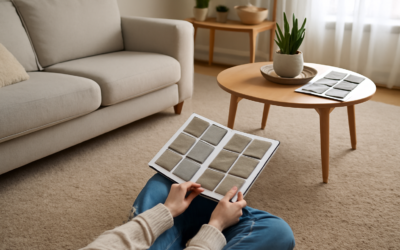
Before you sign, bring samples home and view them in your own lighting at different times of day, because store lights distort color. Check the warranty details for wear, stain, and texture retention, and note what maintenance is required to keep it valid. Buy a little extra carpet for future repairs, and hire an experienced installer, since even the best carpet fails when stretched or seamed poorly. Selecting carpet successfully is really about balancing beauty, durability, and budget against how you truly live. Take your time, compare the specs behind the samples, and you will bring home a floor that feels great underfoot and keeps looking good for many years to come.