A high-water alarm going off at 2 a.m. rarely means the pump is dead. In many cases, septic pump repair starts with something simple: a tripped breaker, a float tangled on its cord, or an effluent screen packed with solids. Knowing how to work through those checks safely, from outside the tank and with the power off, can save you an emergency call fee and tell you exactly what to report when you do need a pro.
The key rule comes first: a homeowner never climbs into, leans into or puts their head over an open septic or pump tank. The gases inside, including hydrogen sulfide and methane, can displace oxygen and overcome a person in minutes, and would-be rescuers often become second victims. Everything in this guide happens at the control panel, the breaker box and the riser lid, and anything that requires reaching into the tank belongs to a licensed septic contractor.
- Septic Pump Repair Starts With Knowing Your System
- First Steps When the Alarm Sounds
- Electrical Safety Before You Touch Anything
- Floats, Screens and Clogs: The Usual Culprits
- Septic Pump Maintenance That Prevents Failures
- Troubleshooting Symptoms at a Glance
- Repair and Replacement Costs
- When to Call a Licensed Professional
- Frequently Asked Questions
Septic Pump Repair Starts With Knowing Your System
Not every septic system has a pump. Gravity systems simply let effluent flow downhill to the drain field. Pumped systems are common where the drain field sits higher than the tank, where a mound or drip system is used, or where the home is on a low-pressure sewer. There are two main types you’re likely to be dealing with.
- Effluent pumps sit in a separate pump chamber or dosing tank after the septic tank. They move mostly liquid effluent, usually through a filter or screen, to the drain field or mound in timed or float-controlled doses.
- Grinder pumps handle raw sewage directly from the house, macerating solids with cutting blades and pushing the slurry uphill to a septic tank or a pressurized municipal line.
Both are controlled by float switches that turn the pump on and off and trigger a high-water alarm, which usually lives in a control panel mounted on the house or a post near the tank. A red light and horn on that panel is the first sign something is wrong.
First Steps When the Alarm Sounds
Start by silencing the alarm with the button on the panel; the light will usually stay on until the water level drops. Then cut water use in the house immediately. No laundry, no dishwasher, short showers or none at all. A pump tank typically has one day or less of reserve capacity once the alarm trips, and every gallon you send down the drain uses up that margin.
Next, work through the simple checks in order:
- Check the breaker. Look at the main electrical panel and the pump control panel. Many systems have separate breakers for the pump and the alarm. A tripped pump breaker explains a lot of alarm calls.
- Reset once only. If the pump breaker has tripped, reset it one time. If it trips again right away, stop. Repeated tripping points to a shorted motor, damaged cord or water in a splice box, and that needs an electrician or septic pro.
- Check the control panel switch. Many panels have a hand-off-auto switch. It should sit in auto. Some homeowners or service techs leave it in off after maintenance.
- Listen and watch. With the panel in auto and the breaker on, the pump should run when the water level is high. A hum without pumping, or no sound at all, narrows the problem.
- Check the GFCI. If the pump plugs into a GFCI-protected outlet, press reset. A GFCI that won’t hold points to a ground fault in the pump or cord.
If the alarm clears and the pump cycles normally after a breaker reset, keep water use light for a day and watch for a repeat. If not, move on to the float and screen checks, still without entering the tank.
Electrical Safety Before You Touch Anything
Septic pumps run on line-voltage power, usually 120 or 240 volts, in a wet environment, which is about the worst combination for shock risk. Before opening a control panel cover, handling a float cord or unplugging a pump, turn off the breaker and confirm power is off with a non-contact voltage tester. Keep the control panel dry, stand on dry ground, and never handle cords with wet hands.
Don’t try to diagnose a pump by testing live circuits or probing terminals while powered. Any electrical checks beyond resetting a breaker, such as continuity checks on a float with power disconnected or replacing a splice, are best left to a licensed electrician or septic service tech. The same goes for any new circuit or outlet for a pump: that’s licensed electrician work, and outdoor receptacles need GFCI protection and weather-rated covers.
Floats, Screens and Clogs: The Usual Culprits
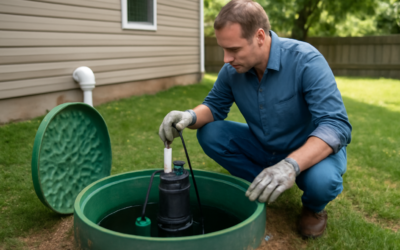
Float problems cause a large share of pump failures. A float can hang up on the pump discharge pipe, the power cord or another float, so it never rises to the “on” position. Float cords can also slip in their holders, changing the on and off levels. Looking through the open riser lid from a standing or kneeling position, with the lid set safely aside and no part of your head over the opening, you can often see whether a float is wedged or hanging at an odd angle.
Many pump vaults use a screened housing or an effluent filter to keep solids away from the pump intake. When that screen clogs, the pump runs but can’t move water, or it short-cycles and overheats. Cleaning a pump screen usually means lifting the vault or filter out of the tank with a handle or pull pipe, which is often a job for a septic contractor, since it involves raw effluent and proper disposal. A septic effluent pump vault with an accessible filter handle makes this much easier, and it’s worth asking about during a replacement.
With grinder pumps, the most common clogs come from things that should never go down a drain: so-called flushable wipes, paper towels, feminine products, dental floss and grease. These wrap around the cutter and jam the impeller. Clearing a jammed grinder requires pulling the pump, and should be done by a technician.
Septic Pump Maintenance That Prevents Failures
Good septic pump maintenance is mostly about keeping solids out of the pump chamber and catching wear early. Plan on these routines:
- Have the septic tank pumped on schedule, usually every 3 to 5 years depending on tank size and household size, so solids don’t carry over into the pump chamber.
- Have the effluent filter and pump screen cleaned at every pumping, or annually on heavily used systems.
- Test the alarm monthly by pressing the test button on the panel, if it has one.
- Keep the control panel closed, dry and free of insects and wasp nests.
- Spread laundry across the week instead of doing five loads on Saturday.
- Keep wipes, grease and chemicals out of the drains entirely.
For septic grinder pump maintenance specifically, add an annual inspection of the cutter assembly and check valve by a service tech, and pay attention to any change in run time or noise. A grinder that runs longer than usual often has worn cutters or a failing check valve.
Troubleshooting Symptoms at a Glance
Alarm on, pump silent, breaker fine: Likely a stuck or failed “on” float, a failed motor, or a tripped thermal overload inside the pump. Call a septic contractor.
Pump runs constantly: A stuck “off” float, a failed check valve letting water flow back into the chamber, or groundwater leaking into the tank. Constant running burns out motors quickly, so switch to off at the panel if the tech advises it and schedule service.
Pump hums but doesn’t move water: Clogged intake screen, jammed impeller, or frozen or blocked discharge line. Turn off power and call for service.
Breaker trips repeatedly: Shorted motor, damaged cable or water in a junction box. Don’t keep resetting it; that’s an electrical fault.
Sewage odor near the tank or backups in the house: Stop water use and call a pro right away, since the tank may be surcharged.
Repair and Replacement Costs
Costs vary widely by region and pump type, so treat these as general ranges. A service call to diagnose a septic tank pump repair often runs a few hundred dollars. Replacing a float switch is usually a modest repair. A new effluent pump installed commonly falls in the range of roughly $800 to $2,500, while a grinder pump replacement tends to run higher, often $1,500 to $4,000 or more when you include labor and parts. Control panel replacement, new wiring or a failed check valve adds to the total. Pumping the tank, which is often needed before pump work, is a separate charge.
When to Call a Licensed Professional
Call a licensed septic contractor for anything that requires opening the pump chamber beyond a visual check, pulling or replacing a pump, clearing a jammed grinder, cleaning a pump vault, or dealing with backups. Many counties require a permit and a licensed installer for pump replacement or any change to the system. Call a licensed electrician for repeated breaker trips, damaged cables, new circuits or panel work. And again, never enter a septic or pump tank, and never let anyone else do so without confined-space training and equipment.
When you call, tell the contractor what the alarm is doing, whether the breaker tripped, what you heard from the pump, and how long it has been since the tank was pumped. That information speeds up any septic pump repair and often keeps the bill down.
Frequently Asked Questions
Why is my septic alarm going off?
The alarm means water in the pump tank has risen too high. Common causes are a tripped breaker, a stuck float, a clogged pump screen, a failed pump or simply too much water use at once.
Can I reset my septic pump myself?
You can reset a tripped breaker once and make sure the panel switch is on auto. If the breaker trips again or the pump won’t run, stop and call a septic or electrical pro.
How long does a septic pump last?
Effluent pumps commonly last around 7 to 15 years with good maintenance. Grinder pumps often fall in a similar range but wear faster when wipes, grease and debris go down the drains.
How much water can I use when the septic alarm is on?
As little as possible. Most pump tanks hold roughly a day or less of reserve after the alarm trips, so skip laundry and dishes and limit flushing until the problem is fixed.
Is it safe to open a septic tank to look at the pump?
You can remove a riser lid and look from a standing or kneeling position, but never lean in or put your head over the opening. Tank gases can be deadly, so any work inside belongs to a pro.