The phrase sump pump for septic tank gets searched constantly, but it hides an important distinction that can save you from a costly mistake. A true sump pump for septic tank use is not the same as the basement sump pump that clears groundwater, and installing the wrong type leads to clogs, failures, and health hazards. What most homeowners actually need is an effluent or sewage pump matched to their septic system’s layout, especially when the drain field sits uphill from the tank. This guide explains the different pump types, when your septic system needs one, how to size and install it, and what the job costs so you make the right call the first time.
- Sump Pump vs. Effluent Pump vs. Sewage Pump
- When Does a Septic System Need a Pump?
- How the Pump Fits the System
- Sizing the Pump Correctly
- Installation and Key Components
- Cost, Maintenance, and Lifespan
- Signs Your Septic Pump Is Failing
- Maintenance That Extends Pump Life
- Hiring a Pro and Knowing the Rules
Sump Pump vs. Effluent Pump vs. Sewage Pump
Confusing these three is the root of most septic pump problems. They are built for different jobs and different solids:
- Sump pump: designed to move clean or gray groundwater out of a basement sump pit. It handles little to no solids and should never pump raw septic effluent.
- Effluent pump: moves the relatively clear liquid effluent from the second chamber of a septic tank or a dosing tank to the drain field. It handles small suspended solids up to about 3/4 inch.
- Sewage / grinder pump: handles raw wastewater with larger solids, moving it from a home or lift station into the septic tank when the tank sits higher than the plumbing.
For septic applications, you almost always want an effluent pump (for tank-to-field) or a sewage pump (for house-to-tank), not a basement sump pump. Using a plain sump pump on septic effluent clogs it fast and can push under-treated waste to the surface, a genuine health hazard. Match the pump to the fluid and solids it will handle.
When Does a Septic System Need a Pump?
Most septic systems run on gravity: waste flows downhill from the house to the tank, then out to the drain field. A pump enters the picture only when gravity cannot do the job. Common triggers include:
- Uphill drain field: the leach field sits higher than the septic tank, so effluent must be lifted to reach it.
- Uphill or distant house connection: the home’s plumbing sits below the tank inlet, requiring a sewage pump to lift waste into the tank.
- Mound or pressure-dosed systems: engineered systems that require a pump to dose effluent evenly across an elevated sand mound.
- Long horizontal runs: where the field is far enough that gravity flow stalls.
If your lot is flat or slopes conveniently toward the field, you likely have a gravity system and need no pump at all. A licensed septic professional or your county health department’s permit records can confirm what your system is designed to do.
How the Pump Fits the System
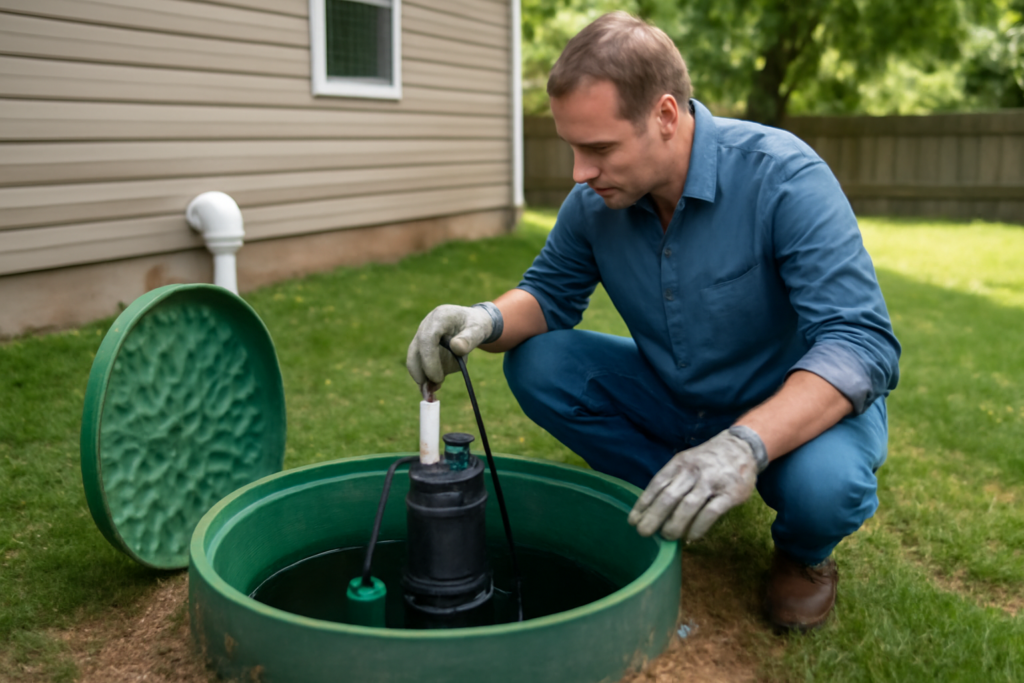
In a pumped septic setup, effluent leaves the main septic tank and enters a separate pump chamber or dosing tank. Inside sits the effluent pump, a float switch, and the discharge piping. As effluent fills the chamber, the float rises; at a set level it triggers the pump, which sends a measured “dose” of effluent up to the drain field, then shuts off when the float drops.
This dosing approach actually protects the drain field. Instead of a slow trickle that overloads one spot, the pump delivers timed, even doses that distribute effluent across the whole field, extending its life. Mound and pressure-distribution systems depend entirely on this pumped dosing to function.
Sizing the Pump Correctly
An undersized pump cannot lift effluent to the field; an oversized one wastes energy and can flood the field. Two numbers drive sizing:
- Total dynamic head (TDH): the vertical lift plus friction losses in the pipe. Measure the elevation from pump to field and add friction based on pipe length and diameter.
- Flow rate (GPM): the gallons per minute the system needs to dose properly, set by the field’s design.
A typical residential effluent pump moves 20 to 60 gallons per minute against 10 to 30 feet of head, drawing 4/10 to 1 horsepower. Pressure-distribution mound systems often need higher head to build pressure in the field laterals. This sizing should be done by a septic designer or engineer against your system’s approved plans, not guessed, because the field design depends on getting the dose right.
Installation and Key Components
Septic pump installation is a job for a licensed septic contractor and, in most areas, requires a permit and inspection. A proper install includes several critical components:
- The effluent or sewage pump rated for the fluid and matched to the sizing calculations.
- A float switch to trigger the pump, plus a high-water alarm float as a backup warning.
- A check valve on the discharge line to stop effluent from draining back into the chamber.
- A high-water alarm, an audible and visual alert that warns you before the chamber overflows if the pump fails.
- A dedicated, GFCI-protected circuit for the pump.
The high-water alarm is not optional; it is your early warning that the pump has failed before sewage backs up into the house or surfaces in the yard. Confirm it works during install and test it periodically.
Cost, Maintenance, and Lifespan
Budget realistically. A quality effluent or sewage pump costs $200 to $600, and complete professional installation, including the chamber, floats, alarm, wiring, and piping, typically runs $1,500 to $4,000 depending on excavation and system complexity. Replacing just a failed pump in an existing chamber is cheaper, often $500 to $1,200 installed.
A septic pump generally lasts 7 to 15 years. Extend it with basic care: keep the tank pumped on schedule (every 3 to 5 years) so solids never reach the effluent pump, avoid flushing wipes, grease, and non-degradable items, and test the high-water alarm twice a year. If the alarm sounds, treat it as urgent and call a septic pro immediately. Choosing the correct pump type, sizing it against your system’s design, and installing the required alarm and check valve are what separate a septic system that runs quietly for a decade from one that fails messily and expensively.
Signs Your Septic Pump Is Failing
Because the pump lives in a buried chamber out of sight, learning its warning signs helps you act before a backup. The clearest alarm is, literally, the high-water alarm; if it sounds or its light comes on, the chamber is filling faster than the pump can empty it, and you should call a septic professional the same day. Other red flags appear around the property first.
Watch for slow drains and gurgling fixtures throughout the house, which signal that effluent is not moving out of the system properly. Soggy, unusually green patches or standing water over the drain field can mean the pump is over-dosing or the field is failing. Sewage odors near the tank or in the yard, or the sound of the pump running constantly or short-cycling on and off, all point to a pump or float problem. Catching any of these early, and never ignoring the high-water alarm, is the difference between a routine pump replacement and raw sewage backing up into your basement.
Maintenance That Extends Pump Life
A septic pump generally lasts 7 to 15 years, and simple habits push it toward the long end of that range. The most important is keeping the septic tank pumped on schedule, typically every 3 to 5 years depending on household size, so that solids are removed before they can migrate into the effluent chamber and clog or burn out the pump. A pump forced to handle solids it was never designed for fails early.
Be careful what goes down the drain, since everything eventually reaches the pump. Never flush so-called flushable wipes, feminine products, paper towels, grease, coffee grounds, or harsh chemicals; wipes in particular are notorious for tangling in and killing effluent and sewage pumps. Test the high-water alarm at least twice a year by lifting its float, and have a professional inspect the pump chamber, floats, and check valve during your regular tank pumping. Keeping the drain field clear of heavy vehicles, deep-rooted trees, and excess surface water protects the whole system the pump feeds.
Hiring a Pro and Knowing the Rules
Septic work is heavily regulated, and for good reason: a failing system is a public-health and groundwater hazard. In most jurisdictions, installing or replacing a septic pump, chamber, or any part of the system requires a licensed septic contractor and a permit, often with an inspection before the chamber is buried. Local health department records also document exactly what type of system you have, gravity, pumped, mound, or pressure-distribution, which removes the guesswork about what pump you need.
When hiring, choose a contractor who sizes the pump against your system’s approved design rather than grabbing a generic unit, and who includes the essentials: the correctly rated effluent or sewage pump, a check valve, dual floats, a high-water alarm, and a dedicated GFCI-protected circuit. Ask about warranty on both the pump and the labor. Doing it by the book costs more up front than a quick unpermitted swap, but it protects your property, your family’s health, and the value of your home. Get the pump type, sizing, alarm, and installation right, and a sump or effluent pump for your septic tank quietly does its job for a decade or more, keeping wastewater flowing safely to the field no matter how your lot slopes.