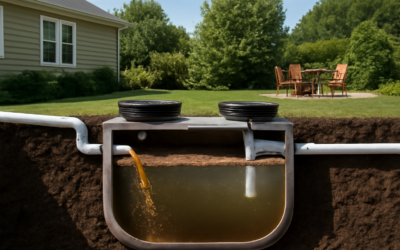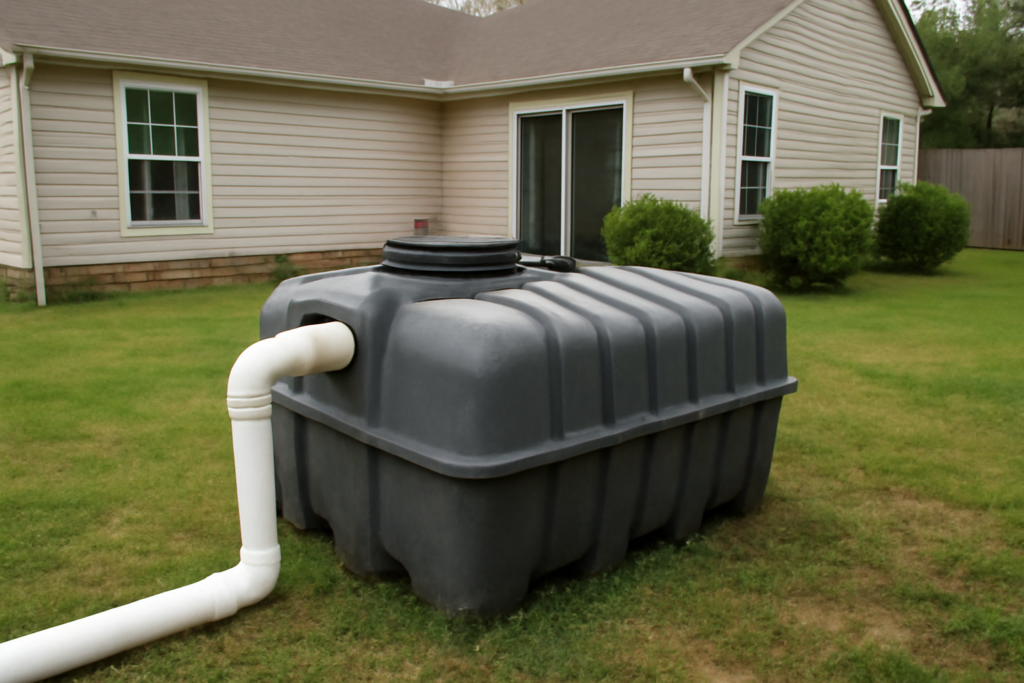
When your soil won’t perc or your water table sits too high, a conventional buried system is off the table, and that’s where an above ground septic tank setup comes in. The phrase is a bit of a catch-all: it usually means a raised or mound system, or in some cases a holding tank, engineered to handle wastewater where you simply can’t put a standard leach field underground. I’ve helped site plenty of these on difficult lots, and the honest reality is they’re more involved, more regulated, and pricier than a standard system. Here’s what an above ground septic tank actually is, when you need one, and what it costs.
What “Above Ground” Actually Means
There’s no such thing as a septic tank literally sitting on your lawn. What people mean falls into two categories:
- Mound (raised) systems: The tank is still buried, but the drainfield is built up above natural grade in a large engineered mound of sand and gravel. Effluent is pumped up into the mound, where it filters down through the sand before reaching native soil. This is the true “above ground” septic most homeowners mean.
- Holding tanks: A sealed tank collects all wastewater with no drainfield at all. Nothing discharges to the ground; a truck pumps it out on a schedule. Used where no drainfield is possible.
Both exist because the ground can’t do the job on its own, either the soil percolates too slowly, too fast, or the seasonal high water table is within a couple feet of the surface.
When You Need One
A soil evaluation and perc test decide this, not a homeowner’s preference. You’re a candidate for a raised or mound system when:
- Your seasonal high water table sits within about 2 to 4 feet of the surface, so a buried field would flood.
- You have shallow bedrock with not enough soil depth for a conventional trench.
- Your soil is heavy clay that percs too slowly or coarse sand that drains too fast to treat effluent.
- You’re on a small or steep lot where a full-size conventional field won’t fit.
A holding tank is the fallback when even a mound won’t work, common for cabins, seasonal properties, or extremely restricted lots.
How a Mound System Works
The flow is a three-stage process. Wastewater leaves the house and enters a buried septic tank (typically 1,000 to 1,500 gallons) where solids settle and are broken down. Liquid effluent then flows to a separate pump chamber with a submersible effluent pump and float switches. Because the drainfield sits uphill and above grade, gravity won’t do it, so the pump doses effluent up into the mound in timed batches. Inside the mound, effluent trickles through a layer of engineered sand, gets treated by soil bacteria, and finally disperses into the native soil below. That sand layer is what makes treatment possible where the ground alone can’t handle it.
Permits and Professional Design Are Mandatory
This is not a DIY project, and in nearly every jurisdiction it can’t legally be. A mound or raised system requires:
- A site and soil evaluation with perc testing and a determination of your seasonal high water table.
- An engineered design stamped by a licensed engineer or certified septic designer, sized to your home’s bedroom count and daily flow.
- A county or state health department permit before any excavation begins.
- Installation by a licensed septic installer, followed by inspection and sign-off.
Skipping the permit and design isn’t just risky, it’s illegal in most states and can force a full teardown. The engineering exists because these systems fail badly and contaminate groundwater if sized or built wrong.
What It Costs
Expect to pay more than a conventional system, because there’s more equipment, more material, and mandatory engineering. Rough figures:
- Mound system, installed: $15,000 to $30,000, and higher on tough sites, driven by the volume of imported sand and the pump chamber.
- Holding tank system: $5,000 to $12,000 to install, but ongoing pumping is the real cost.
- Engineering and permits: $1,500 to $4,000 on top, depending on your county.
The mound’s high price comes largely from trucking in and placing the specified sand fill, which can be dozens of cubic yards.
Maintenance and Pumping
Raised systems have moving parts a conventional system doesn’t, so maintenance matters more:
- Pump the septic tank every 3 to 5 years, sooner for heavy use, to keep solids from reaching the pump chamber and clogging the mound.
- Test the effluent pump and float switches annually; a failed pump backs wastewater up fast.
- Don’t drive or build on the mound, and keep it planted in grass, never trees, whose roots wreck the sand bed.
- Watch water use. Mounds are sensitive to overloading; a leaking toilet or oversized guest load can saturate the field.
Holding tanks are the opposite trade-off: low install complexity, but a truck empties them every few weeks to a couple months depending on household size, and pumping fees add up fast, often $200 to $400 a visit.
Sizing an Above Ground System
Size is dictated by your home’s bedroom count, which the health department uses as a proxy for daily wastewater flow, not by square footage. Rough figures a designer works from:
- A 3-bedroom home is typically rated at around 360 gallons per day and needs a 1,000-gallon septic tank minimum.
- A 4-bedroom home jumps to roughly 480 gallons per day and a 1,250 to 1,500-gallon tank.
- The mound footprint scales with flow and soil type; a typical residential mound covers 1,000 to 3,000 square feet of yard, which surprises a lot of homeowners.
Add a bedroom later and you may have to re-permit and enlarge the system, so if you plan to expand the house, tell the designer up front and build in the capacity now.
Cold Climate Considerations
Raised systems live partly above grade, which makes them more exposed to freezing than a deep buried field. In northern climates, designers and installers protect them by:
- Building the mound with adequate cover soil and maintaining a healthy grass insulating layer over winter.
- Insulating the pump chamber and force main where effluent could sit and freeze during a cold snap.
- Encouraging steady, consistent water use, since a vacant house with no warm water flowing is far more likely to freeze than an occupied one.
Leaving snow cover intact over the mound actually helps, since snow insulates. Don’t plow or compact it. For seasonal cabins, ask your designer specifically about freeze protection before you build.
The Bottom Line
A word on protecting your investment once it’s in the ground: what you flush and pour down the drain directly affects a mound’s lifespan. Keep grease, wipes labeled “flushable,” paint, and harsh chemicals out of the system, since they clog the sand bed or kill the bacteria doing the treatment work. Space out laundry loads so you don’t dump 200 gallons through the pump chamber in one afternoon. And keep surface runoff, roof gutters, and sump discharge routed well away from the mound, because extra water saturating the field is a leading cause of premature failure.
An above ground septic tank system, almost always a mound, is what you install when the ground can’t treat wastewater the conventional way. It’s engineered, permitted, professionally installed, and more expensive to build and maintain, but on a high-water-table or poor-soil lot it’s often the only compliant option short of a holding tank you pump forever. Start with a soil evaluation, hire a licensed designer, pull the permit, and budget realistically. Do it right and a mound system will protect your groundwater and serve a household for 20-plus years. Cut corners and you’ll be paying for a redo, plus fines, before long. Keep the as-built drawing and permit paperwork with your home records too, because the next buyer’s inspector will ask for them, and a documented, well-maintained mound is far easier to sell than a mystery system in the backyard.