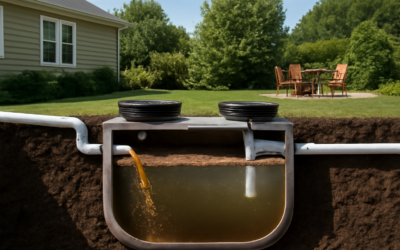
Most septic problems are not a dead system. They are a broken baffle, a cracked inlet pipe, a failed effluent pump or a lid that has started to crumble, and each of those has a septic system repair cost that is a fraction of a full replacement. Typical repairs run from roughly $150 for a riser lid swap to $2,000-$5,000 for a pump chamber overhaul, while drain field work can climb well past $10,000. The trick is identifying which component actually failed before anyone quotes you a new system.
Homeowners usually find out something is wrong from slow drains, gurgling toilets, a sewage odor in the yard or soggy, unusually green grass over the drain field. Those symptoms overlap, so a diagnostic visit with a tank inspection and, often, a camera run through the lines is the first real expense. Once the failed part is known, the price range narrows quickly.
- Septic System Repair Cost at a Glance
- Tank Component Repairs: Baffles, Lids and Risers
- Pipe, Pump and Distribution Box Repairs
- Septic Tank Leak Repair and Drain Field Costs
- Septic System Maintenance Cost vs Repair
- Repair or Replace? A Practical Decision Guide
- Troubleshooting Common Symptoms Before You Call
- When to Call a Licensed Professional
- Septic Line Repair: What Happens on Site and How to Stay Safe
- Frequently Asked Questions
This guide breaks down itemized repair prices, the factors that push a quote up or down, and the point at which repeated repairs stop making financial sense compared with replacing the tank or field.
Septic System Repair Cost at a Glance
The national spread for septic system repair cost is wide because the word “repair” covers everything from a plastic fitting to excavating an entire leach field. Use these ranges as planning numbers, not bids. Rural areas with more septic contractors often price lower than suburban markets where only a few licensed installers operate.
| Repair | Typical range | Notes |
|---|---|---|
| Inlet or outlet baffle | $150 – $700 | Includes digging to the tank if no riser |
| Lid or riser replacement | $150 – $800 | Concrete lids cost more than plastic |
| Inlet or outlet pipe repair | $500 – $2,500 | Depth and length drive price |
| Effluent or sewage pump | $800 – $2,500 | Plus float and alarm work |
| Tank crack or leak repair | $1,000 – $4,000 | Only if the tank is structurally sound |
| Distribution box | $600 – $2,500 | Often paired with pipe work |
| Drain field repair or rejuvenation | $2,000 – $10,000+ | Full field replacement costs far more |
Expect a separate diagnostic charge of about $100-$400 for an inspection, and $250-$600 if a camera inspection of the lines is added. Many companies credit part of that fee toward the repair if you hire them.
Tank Component Repairs: Baffles, Lids and Risers
Baffles keep floating scum and settled sludge inside the tank so only clarified liquid moves to the drain field. When a concrete baffle erodes from hydrogen sulfide gas or a plastic tee breaks off, solids start escaping toward the field, which is how a $300 fix turns into a $10,000 problem. Replacing a baffle usually means pumping the tank first, then installing a new PVC sanitary tee or baffle assembly. Budget $150-$700, with pumping billed separately at a few hundred dollars.
Lids fail from age, freeze-thaw cycles and vehicles driving over the tank. A cracked concrete lid is a genuine fall hazard, so it should be replaced promptly rather than covered with plywood. Adding risers that bring access to grade costs around $300-$800 installed and pays for itself over time because future pumping and inspections no longer require digging.
- Plastic riser and lid kits are lighter and cheaper but need secure screws or locking lids so children cannot open them.
- Concrete risers are heavier, resist lawn equipment and suit high-traffic yards.
- Effluent filters can be added at the outlet baffle for about $100-$400 installed and protect the drain field from fine solids.
Pipe, Pump and Distribution Box Repairs
Pipe problems show up as backups into the house, standing sewage near the tank or roots found during a camera inspection. A short broken section of inlet pipe between the house and tank may cost $500-$1,200 to excavate and replace. Longer runs, deeper lines or pipes under driveways and patios push repair septic pipe quotes toward $2,500 or more because of restoration work.
Systems with a pump chamber, common where the drain field sits uphill or on mound systems, add mechanical parts that wear out. An effluent pump replacement runs about $800-$2,500 including labor, depending on horsepower and whether the discharge plumbing, check valve and float switches are also replaced. A high-water alarm alone is often $150-$400. If the alarm keeps sounding after a pump swap, the float, the control panel or a wiring problem may be the cause, and those electrical repairs belong to a licensed electrician or the septic contractor’s certified technician.
The distribution box splits flow evenly among the drain field trenches. When it settles or tilts, one trench gets flooded while others sit dry. Leveling or replacing a D-box runs roughly $600-$2,500, and it is one of the better-value repairs because it can restore a struggling field without touching the laterals.
Septic Tank Leak Repair and Drain Field Costs
A septic tank leak repair makes sense only when the tank is otherwise solid. Small cracks in a concrete tank can be sealed with hydraulic cement or an epoxy product after pumping and cleaning, typically $1,000-$4,000 depending on access and the extent of damage. Steel tanks that have rusted through, and concrete tanks with multiple structural cracks or a collapsing top, are usually replacement candidates rather than repair jobs.
Drain field repairs span the widest range. Clearing a clogged lateral with jetting may cost a few hundred to $1,500. Rejuvenation treatments such as aeration or fracturing the soil can run $1,500-$5,000, with mixed results depending on soil type. Replacing a portion of the field, or adding trenches, often lands in the $5,000-$10,000 range, and a full new field can exceed $10,000-$20,000 in difficult soils or where an engineered mound is required.
What drives drain field prices higher
- Clay or high water table soils that require engineered designs
- Permit, perc test and design fees required by your county health department
- Limited access for excavators, fences, trees or steep slopes
- Landscape restoration, including sod, irrigation and hardscape
Septic System Maintenance Cost vs Repair
Routine septic system maintenance cost is modest compared with any repair. Pumping every three to five years, a basic inspection and an effluent filter cleaning typically total a few hundred dollars per visit. Skipping that schedule is the most common reason homeowners face baffle failures and clogged fields, because sludge builds up until solids overflow the outlet.
Day-to-day habits matter as much as the pumping schedule. Spread laundry loads across the week, fix running toilets and dripping faucets quickly, keep grease and wipes out of drains, and avoid parking or building over the tank and field. Divert roof downspouts and surface water away from the drain field so the soil can accept effluent.
- Keep a simple map of the tank, lids, D-box and field.
- Log each pumping date and what the technician observed about sludge and scum levels.
- Ask for baffle and filter condition notes at every service visit.
- Budget a small annual amount toward future pump or component replacement.
Repair or Replace? A Practical Decision Guide
Full septic replacement commonly costs $5,000-$15,000 for a conventional system and more for mound or advanced treatment units. That makes the math simple for single-component failures: fix the baffle, pump or pipe. The decision gets harder when multiple problems stack up at once.
- Repair when the tank is structurally sound, the drain field still accepts water and the problem is isolated to one part.
- Consider partial replacement when the tank is fine but the field is saturated and failing across several trenches.
- Replace when a steel tank is rusting through, a concrete tank has major cracks, the field has failed completely, or repair costs would exceed about half of a new system.
Before signing off on any quote, compare the total septic system repair cost against the age and remaining life of the tank and field, not just today’s invoice.
Age matters too. A system nearing 25-30 years with a history of backups may be a better replacement candidate even if today’s failure is small, especially if you are planning to sell and a transfer inspection is coming.
Troubleshooting Common Symptoms Before You Call
A few observations help the contractor diagnose the issue faster and can keep the service call shorter. Do not open the tank yourself, but you can safely note what is happening inside the house and on the surface of the yard.
- Only one fixture is slow: likely a household drain clog, not the septic system.
- Every drain is slow or gurgling: points to the main line, a full tank or a blocked inlet baffle.
- Pump alarm sounding: reduce water use immediately and call for service; the chamber is filling.
- Wet, spongy or smelly area over the field: suggests the field is saturated or a lateral has broken.
- Sewage odor near the tank: may mean a cracked lid, missing gasket or damaged riser.
When to Call a Licensed Professional
Septic repairs are licensed work in most states and counties. Many jurisdictions require permits for pipe replacement, tank repair and any drain field work, along with inspection by the local health department before backfilling. A licensed septic contractor pulls those permits, follows setback rules from wells and property lines, and documents the repair, which matters when you sell the home.
Never enter a septic tank, lean into an open tank or put your head over the opening. Tanks hold toxic, oxygen-depleted gases such as hydrogen sulfide and methane that can cause collapse and death within minutes, and several would-be rescuers are lost each year the same way. Pumping, inspection and interior repairs should be done by a licensed septic professional with proper equipment. Keep children and pets away from open lids, and have any pump panel or alarm wiring handled by a licensed electrician or qualified septic technician.
Plumbing connections inside the house, such as the main building drain feeding the tank, fall under plumbing code. If a repair involves those lines, shut off water use in the home and hire a licensed plumber when you are unsure of the work.
Septic Line Repair: What Happens on Site and How to Stay Safe
The pipes that connect the house to the tank, and the tank to the drain field, fail more often than the tank itself. Septic line repair follows a set sequence, and knowing it helps you judge a contractor’s plan and keep your family safe while the system is open.
Common Causes of Line Failure
- Root intrusion: Tree and shrub roots find joints and small cracks, then expand until flow is blocked.
- Settling and sags: Soil movement under the pipe creates low spots where solids collect.
- Crushed pipe: Vehicles, heavy equipment or new landscaping over the line can collapse older pipe.
- Separated joints: Freeze and thaw cycles or shifting soil can pull fittings apart at the tank inlet or outlet.
How a Licensed Septic Contractor Diagnoses the Problem
A licensed septic contractor will usually locate the tank, pump it if needed to see the inlet, and run a camera through the line to find the exact spot and type of damage. Ask for the footage and a written note on the location and depth. That detail shows whether a short section or the whole run needs new pipe.
Call 811 Before Digging
Septic lines often share yard space with water service, electric feeds and gas lines. Call 811 or file an online request a few business days before any excavation so utility companies mark their buried lines. Confirm the marks are in place before work begins.
Never Enter or Lean Into a Septic Tank
Septic tanks hold toxic, oxygen-depleted gases such as hydrogen sulfide and methane. People have died within minutes after entering a tank or leaning over an open one, and would-be rescuers are often overcome as well. Follow these rules:
- Never climb into a tank, even a recently pumped one.
- Never put your head or upper body over or into an open tank.
- Keep lids secured and locked, and keep children and pets away from open access points.
- If someone collapses near or inside a tank, call emergency services and do not go in after them.
Permits, Inspection and Records
Many county or state health departments require a permit for septic line work, and some require an inspection before the trench is backfilled. A licensed septic contractor will know the local rules. Keep the permit, inspection sign-off and a sketch showing where the new pipe runs, since those records help with future pumping visits and when you sell the home.
Handling Sewage Exposure
If wastewater surfaces during the repair, wear waterproof gloves and boots, wash hands thoroughly afterward, and keep people and pets away from wet areas until the contractor cleans up and the soil dries.
Protecting the Repaired Line
Keep vehicles off the pipe route, avoid planting trees near it and space out heavy water use.
Frequently Asked Questions
How much does a typical septic repair cost?
Most homeowners spend somewhere between $600 and $3,000 on a common septic repair such as a baffle, pipe section, pump or distribution box. Drain field work and major tank repairs cost more, and a full replacement is a separate, much larger budget.
Does homeowners insurance cover septic repair?
Standard policies usually exclude wear, lack of maintenance and gradual failure. Sudden damage from a covered event, such as a tree falling on the tank, may be covered, so check your policy and ask about optional service line endorsements.
Can a leaking septic tank be repaired?
Yes, if the tank is structurally sound. Small cracks in concrete tanks can be sealed after pumping, but badly corroded steel tanks or tanks with multiple structural cracks are usually replaced instead.
How long do septic repairs take?
Component repairs like baffles, lids and pumps are often finished in one day. Pipe and drain field repairs can take several days, plus time for permits and health department inspection.
How can I lower future septic repair bills?
Pump on schedule, install risers and an effluent filter, spread out water use, keep wipes and grease out of drains, and keep vehicles and structures off the tank and drain field.